
New York, May 27, 2026, 11:03 EDT
SanDisk shares lost ground on Wednesday even after Barclays lifted its rating and nearly doubled its price target, a fresh sign that Wall Street is still trying to catch up with one of the fastest moves in the AI trade. The stock was down about 2.0% at $1,557.74 after touching $1,674.30 earlier in the session.
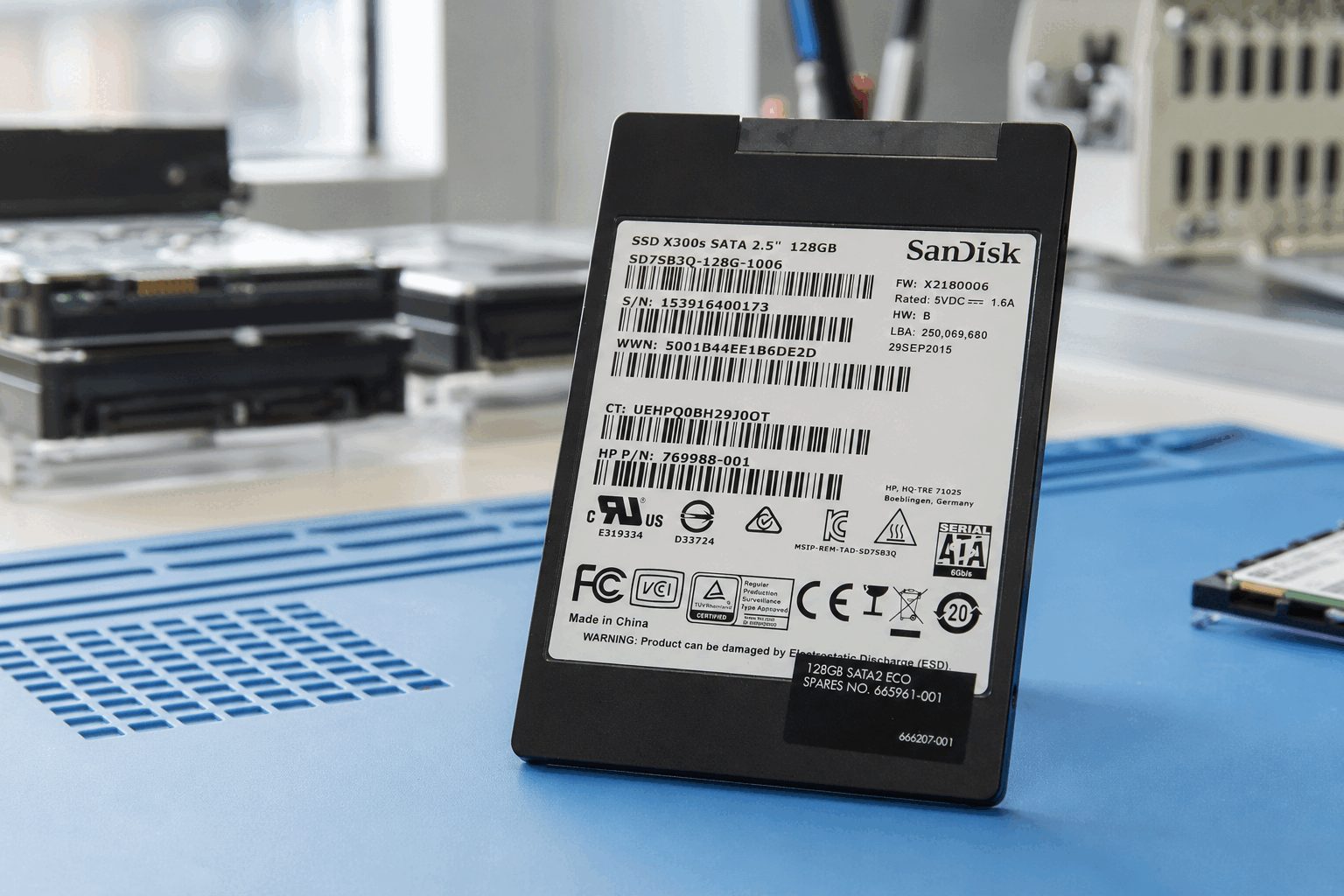
The fight is over memory supply. AI data centers need more NAND flash, a type of storage chip used in solid-state drives, and buyers are now competing for parts that once moved through a more routine, boom-and-bust cycle. Ian Foddering, vice president of Europe at SHI, called pricing and quoting “a moving feast” as hyperscalers stockpile chips and suppliers shift wafer capacity toward higher-margin products. IT Pro
That matters now because SanDisk is trying to prove it is not just riding another memory upcycle. Investors are testing whether long-term customer deals can make the former Western Digital flash unit less cyclical, barely 15 months after it began regular Nasdaq trading as an independent company under the SNDK ticker.
Barclays analyst Tom O’Malley upgraded SanDisk to Overweight from Equal Weight and raised his target to $2,300 from $1,200, citing contract innovation and better revenue visibility. He wrote that memory and storage are the “most attractive vertical below accelerators,” referring to AI chips such as GPUs that speed machine-learning work. Seeking Alpha
The new contracts are the center of the bull case. Three deals signed in the latest quarter provide about $42 billion of minimum contractual revenue, and five signed contracts carry more than $11 billion in financial guarantees, Investing.com reported. SanDisk has said the agreements combine supply assurance for customers with stronger revenue protection for the company.
Analysts still look behind the stock. Barron’s reported that 79% of firms polled by FactSet rate SanDisk a Buy, but the average target price of $1,684 has been dragged below the share price by the speed of the rally. O’Malley wrote that the contracts are the “most desired” type in the ecosystem because they give customers supply visibility and SanDisk guaranteed revenue. Barron’s
The numbers explain why the stock has not traded like a normal chip winner. SanDisk said fiscal third-quarter revenue jumped 97% from the prior quarter to $5.95 billion, while GAAP net income rose to $3.62 billion, or $23.03 a diluted share. Datacenter revenue rose 233% sequentially, and the company forecast fourth-quarter revenue of $7.75 billion to $8.25 billion.
Chief Executive David Goeckeler called the quarter a “fundamental inflection point” and said the shift toward multi-year customer engagements was driving “structurally higher and more durable earnings power.” That is the message investors have latched onto: SanDisk is selling scarce capacity, not just chips. Sandisk Corporation
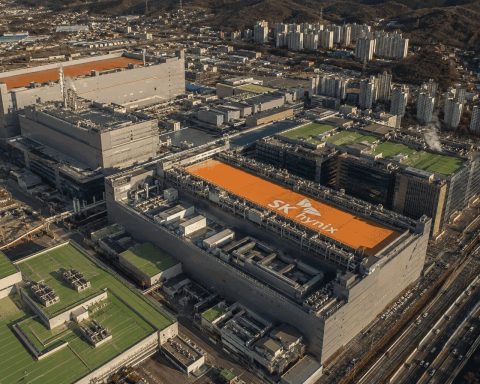
The broader market is tight, too. TrendForce said the combined revenue of the top five NAND flash suppliers rose 83.7% quarter over quarter in the first quarter of 2026, topping $38.9 billion, as AI server demand and hard-disk-drive shortages pushed more orders into enterprise SSDs. Samsung led the market, SK Hynix ranked second, and SanDisk tied Micron for fourth with a 13.9% share.
SanDisk has also moved to secure production. In January, it and Kioxia extended their Yokkaichi joint venture agreements through December 2034, with SanDisk agreeing to pay $1.165 billion from 2026 to 2029 for manufacturing services and continued supply availability.
But the risk is not gone. Seeking Alpha contributor Hunting Alphas wrote on Wednesday that NAND spot prices have paused and Chinese competitors are adding capacity, a warning that the upcycle could end earlier than bulls expect. If AI server orders slow, or if customers push back on prices after locking in enough supply, the same operating leverage that helped SanDisk on the way up could work against it.
For now, SanDisk is being priced less like a commodity memory supplier and more like a bottleneck in the AI build-out. That leaves the company with momentum, and not much room for a clean miss.
Related articles: NASDAQ:SNDK