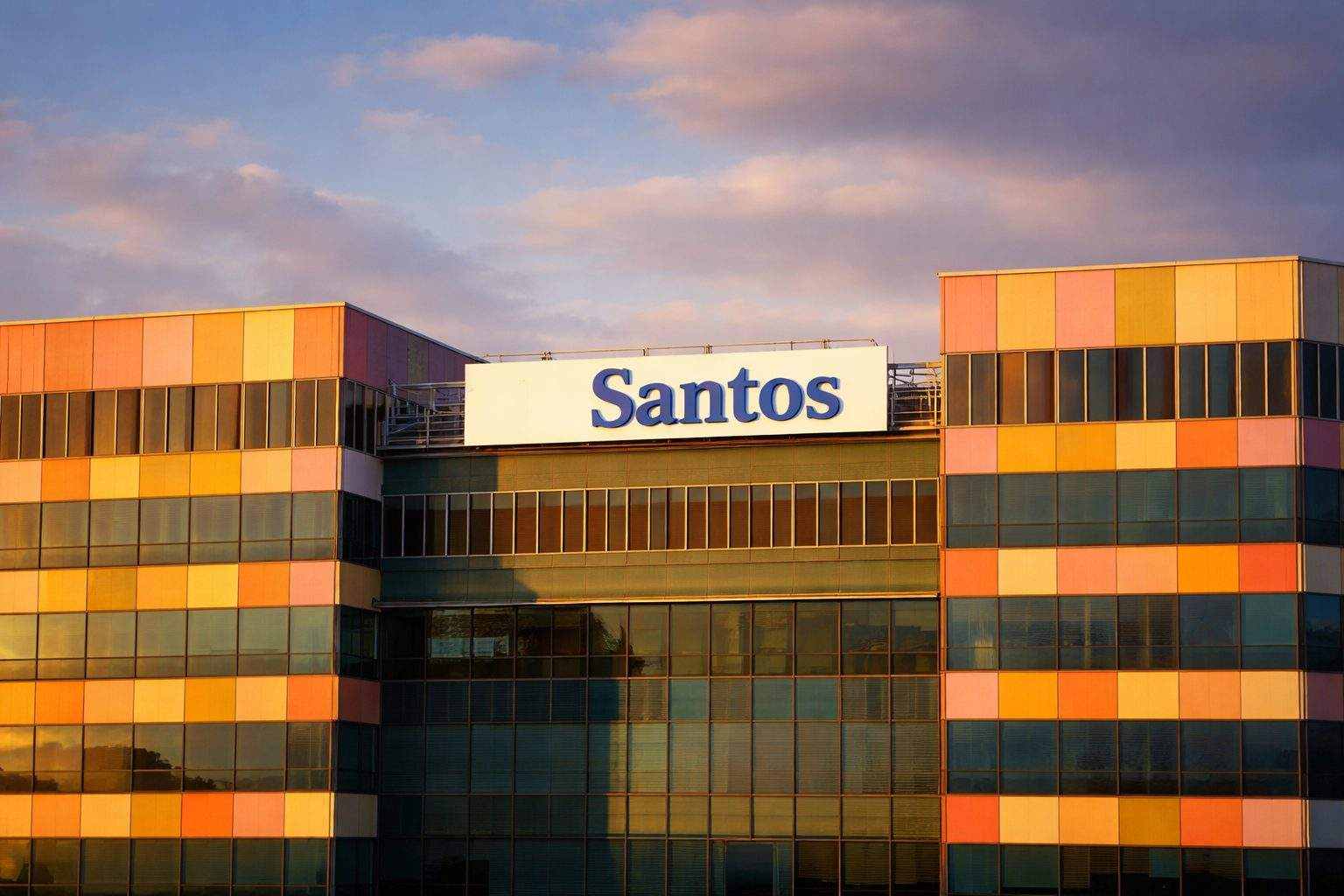
Sydney, Feb 23, 2026, 18:01 AEDT — Market closed.
- Santos slipped 2.3% to finish at A$6.78, with the stock trading ex-dividend.
- The Federal Court has published its reasons in the landmark case centered on Santos and its net-zero statements.
- Investors keep an eye on the dividend schedule—and any sign that ACCR might pursue an appeal.
Santos Ltd (STO.AX) closed down 2.3% at A$6.78 on Monday, slipping after the shares went ex-dividend. Investors buying the stock from this day forward won’t receive the upcoming payout. The company’s final dividend stands at 14.57 Australian cents per share, with payment slated for March 25. Intelligent Investor
Investors reacted as the Federal Court released its detailed reasons for tossing out the high-profile “greenwashing” case against Santos — shorthand for inflated climate claims. The market lost ground: the ASX 200 slipped 0.6%. Brent crude shed 1.3% to $70.84 a barrel. Santos reiterated its stance on “transparent, accurate and compliant reporting”. ABC News
The dividend calculation is key. When a stock goes ex-dividend, prices typically fall about the same as the payout—traders usually discount much of that and shift their attention to the next catalyst.
Santos announced a final dividend of 10.3 U.S. cents per share, according to S&P Capital IQ data. The record date lands on Feb. 24. The company also scheduled its annual general meeting for April 15. MarketScreener
Justice Brigitte Markovic tossed out arguments challenging the credibility of Santos’ transition material, stating: “The evidence does not suggest that Santos merely plucked figures out of the air or that it made assumptions without foundation.” judgments.fedcourt.gov.au
The Australasian Centre for Corporate Responsibility, the group behind the lawsuit, said it needs time to review the ruling before making any calls on what comes next. “This case was always about market integrity and ensuring rigour in disclosures,” co-CEO Brynn O’Brien said. ACCR
Santos shares have been moving amid turbulence linked to operational issues and its cost structure. Just last week, the company announced plans to cut around 10% of its workforce and is taking another look at segments of its Australian portfolio, following an annual underlying profit that fell short of forecasts. Reuters
The legal fight could still drag on. An appeal would reopen questions about how far energy firms can push net-zero targets and “clean fuel” claims—right as regulators and investors ramp up scrutiny on disclosures.