
NEW YORK, April 3, 2026, 08:00 EDT.
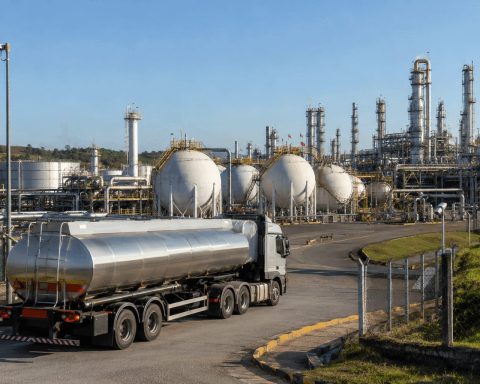
Stocks on Wall Street bounced off session lows Thursday, with the S&P 500 and Nasdaq eking out modest gains. Oil prices, though, surged. U.S. West Texas Intermediate crude logged its biggest single-day rally since 2020, after President Donald Trump announced plans for stepped-up military action against Iran. Brent finished the day at $109.03 a barrel, U.S. crude at $111.54.
It’s front and center for investors this week: everything is riding on the timing of the Strait of Hormuz reopening. Roughly 20% of global oil trade moves through those waters, and with U.S. gasoline prices topping $4 a gallon, next week’s inflation data lands as the first real test of how quickly the war is pushing up costs for consumers.
No clean reversal here. After Trump’s Wednesday address—tough talk, but no timeline for ending hostilities or clearing the strait—the market took an early dip. That two-day “Hormuz Hope” rally? Momentum fizzled out. Still, the Dow slipped just 61 points, while the S&P 500 edged up 0.1% and the Nasdaq ticked 0.2% higher; all three major indexes managed to post gains for the shortened week. The Wall Street Journal
Oil’s shift was striking. Backwardation intensified, with spot barrels fetching a premium over later deliveries—clear evidence of tight supply. According to Reuters, May WTI jumped as much as $16.70 over June, marking a record spread.
Headlines dominated trader focus. “The market is pricing off oil,” said Doug Huber at Wealth Enhancement Group. For TD Securities’ Prashant Newnaha, everything hinges on whether Hormuz reopens. BCA Research’s Felix-Antoine Vezina-Poirier, meanwhile, pushed for keeping perspective: “stick to the facts,” he said, as Tehran and Washington sent out conflicting messages. Reuters
Losses hit unevenly. United Airlines slid 3%, Carnival gave up 3.5% with travel names tied to fuel costs under pressure. Tesla sank 5.4% after missing its quarterly delivery targets.
With rhetoric taking a back seat, attention turns to data. Economists polled by Reuters are penciling in a 0.9% month-over-month jump in the March consumer price index, set for release April 10. Strip out food and energy, and core CPI is forecast to climb 0.3%. BNP Paribas flagged that the first impact from higher oil should be visible in motor fuel figures. Madison Investments’ Patrick Ryan sees a hotter report as a likely drag on stocks.
Shoppers are already feeling the pinch. Patrick De Haan flagged the jump this week in U.S. average gas prices past $4 a gallon—the first time that’s happened since 2022. He sees prices running to $4.25 or even $4.45 as soon as next week, and if a solution for reopening Hormuz stays elusive, a shot above $5 within a month isn’t out of the question. Diesel, the backbone for hauling freight and goods, could smash its 2022 record inside two weeks, De Haan added.
Still, the risks on the downside are significant. J.P. Morgan is flagging oil with the potential to spike to $120–$130 in the short run, even breaking above $150 if the Hormuz bottleneck lasts through mid-May. That scenario, the bank warns, could squeeze demand and dial up recession odds. Dallas Fed President Lorie Logan, meanwhile, noted that a quick resolution to the conflict might limit economic fallout, but she described the outlook as uncertain.
With U.S. and most European exchanges closed Friday for Good Friday, attention shifted to oil, futures, and Asian trading. Japan’s Nikkei added 1.3%. South Korea’s Kospi jumped 2.7%. S&P 500 futures, on the other hand, edged down roughly 0.3%—a signal that while some buyers are stepping in, there’s little conviction the oil shock has run its course.
Related articles: NASDAQ:UAL