Updated December 3, 2025
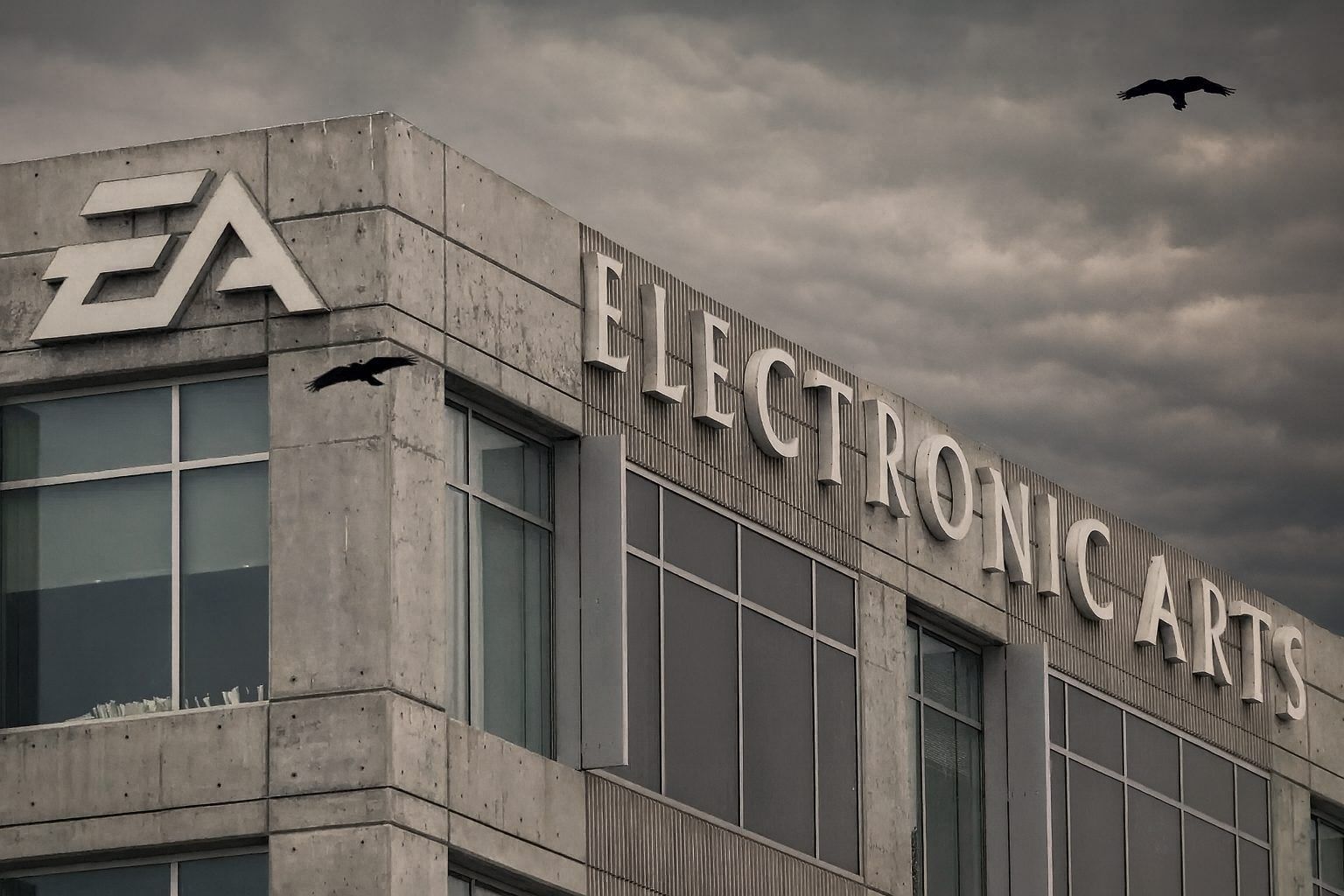
Electronic Arts, the publisher behind FIFA’s successor EA Sports FC, Battlefield 6, The Sims and Madden NFL, is on the brink of becoming a quasi‑state‑owned company.
New regulatory filings show that if a planned $55 billion leveraged buyout goes through, Saudi Arabia’s Public Investment Fund (PIF) will end up owning 93.4% of EA, with private‑equity firm Silver Lake holding 5.5% and Jared Kushner’s Affinity Partners just 1.1%.Los Angeles Times+2PC Gamer+2
Because PIF is also a major investor in the funds run by both Silver Lake and Affinity, analysts say the Saudi sovereign wealth fund will effectively control one of the West’s largest game publishers.
Here’s where the deal stands today, what’s new in the December 3 wave of reporting, and how the takeover could reshape the global games industry.
The new filing that changed the story: PIF’s 93.4% stake
Until this week, EA and its buyers had described the deal as a three‑way consortium between PIF, Silver Lake and Affinity Partners, without saying who would actually be in charge.
A recent filing with Brazil’s antitrust regulator, first reported by The Wall Street Journal and picked up by outlets including the Los Angeles Times, PC Gamer and GamesRadar, finally spelled out the ownership split:
- PIF: 93.4%
- Silver Lake: 5.5%
- Affinity Partners: 1.1%Los Angeles Times+2PC Gamer+2
The Brazilian filing also confirms the basic financing structure already disclosed to US investors:
- Total deal value: about $55 billion
- Equity contribution: $36.4 billion
- New debt: $20 billion, arranged primarily by JPMorgan
- PIF is rolling over an existing stake of roughly 9.9% (worth about $5.2 billion) and putting up around $29 billion in new equity.The Wall Street Journal+1
Shareholders will receive $210 in cash per EA share, a roughly 25% premium to the stock price before reports of the deal emerged in late September.Reuters+1
On paper, Silver Lake and Affinity are partners; in practice, they’ll be minority investors alongside a state fund that not only owns the vast majority of EA, but also has “significant” stakes in their own investment vehicles.The Wall Street Journal+1
A record‑breaking leveraged buyout – and a bet on IP
The EA transaction is widely described as:
- The largest all‑cash sponsored “take‑private” deal in history
- The biggest leveraged buyout ever done in the gaming sectorMogin Law LLP+1
Goldman Sachs, EA’s sole adviser, is in line for a record $110 million advisory fee, underscoring just how large and complex the transaction is.Financial Times
For PIF and its partners, the appeal is clear: EA owns a deep portfolio of globally recognised intellectual property. Reuters has noted that the deal “turns the spotlight on gaming IP diversification,” reflecting a broader investor push to turn game franchises into cross‑media, esports and live‑service ecosystems.Reuters+1
In 2024, EA generated roughly $7.4 billion in annual revenue and employed over 13,000 people worldwide, putting it in the same weight class as Activision Blizzard and ahead of publishers like Ubisoft and Take‑Two on some measures.Mogin Law LLP+1
Why Saudi Arabia wants EA: “Gaming is the new oil”
The buyout slots neatly into Saudi Arabia’s Vision 2030 strategy, which aims to diversify the kingdom’s economy away from oil and turn it into a “global hub for games and esports” by the end of the decade.Reuters+1
Key context:
- PIF, via its Savvy Games Group, already holds meaningful stakes in Nintendo, Take‑Two Interactive and other major publishers, and previously backed mobile publisher Scopely’s $4.9 billion sale.Reuters+1
- Crown Prince Mohammed bin Salman has spoken publicly about both his own gaming habits and the high returns PIF has earned on esports investments, calling gaming an engine for both soft power and profit.Reuters+1
In a widely cited analysis, NYU Stern professor Joost van Dreunen framed the EA deal as proof that “gaming is the new oil,” arguing that PIF is using games to buy cultural relevance while it still can.Game Developer+1
Reuters reporting adds that Saudi planners see EA as a “trophy IP house” that can anchor domestic game‑development clusters, esports infrastructure and tourism projects such as the Qiddiya “city of play” near Riyadh.Reuters
PIF’s growing financial strain
The scale of PIF’s commitment is unprecedented for a sovereign wealth fund in a private‑equity‑style transaction. The fund will ultimately be on the hook for around $29 billion in fresh equity, plus risks tied to the $20 billion debt sitting on EA’s balance sheet.The Wall Street Journal+2PC Gamer+2
At the same time, PIF is juggling:
- Expensive domestic megaprojects such as NEOM and Qiddiya
- A Saudi budget deficit forecast to widen to around 5% of GDP amid weaker oil pricesThe Wall Street Journal+1
Analysts quoted by PC Gamer and Reuters warn that the EA bet adds to a pattern of “mission creep” in which the fund stretches beyond traditional portfolio investing into direct control of global cultural assets, raising questions about long‑term sustainability if flagship projects underperform.PC Gamer+2Reuters+2
Where the deal stands on December 3, 2025
As of today:
- EA expects the transaction to close in Q1 of fiscal 2027 (April–June 2026), subject to shareholder approval and regulatory clearance in the US, Canada, the EU and other jurisdictions.GamesRadar++1
- MarketScreener lists an extraordinary shareholder meeting on December 22, 2025, where investors are expected to vote on the merger.TS2 Tech
- Multiple shareholder‑rights law firms, including Kaskela Law and Kahn Swick & Foti, have announced investigations into whether the $210 price undervalues EA and whether directors met their fiduciary duties.TS2 Tech+1
- The Communications Workers of America union has written to the US Federal Trade Commission urging a deep review of the deal’s impact on competition and local labour markets.CWA Union+1
Regulatory filings explicitly state that closing is conditioned on CFIUS approval, signalling that US national‑security review is baked into the timetable.fDi Intelligence+2Mogin Law LLP+2
National‑security and soft‑power worries
The prospect of a foreign sovereign wealth fund controlling a company with hundreds of millions of user accounts, cloud infrastructure and AI‑enabled game engines has triggered a rare alignment of concern across labour unions, Democratic lawmakers and specialist lawyers.
Data, AI and CFIUS
An in‑depth analysis from fDi Intelligence notes that:
- EA expects to grow from roughly 700 million user accounts today to 1 billion by 2030, with games that collect chat, payment and location data at a scale comparable to social platforms.
- CFIUS will likely focus on how that data could be accessed or misused by a foreign state‑backed owner, and may insist on strict firewalls, independent security monitors or data‑governance covenants.fDi Intelligence+1
Senators Elizabeth Warren and Richard Blumenthal, along with the CWA union, have urged CFIUS to scrutinise PIF’s access not just to user data but also to EA’s AI technology, including machine‑learning systems used in game development and personalization.fDi Intelligence+2Mogin Law LLP+2
Gaming as soft power
Legal scholars warn that video games, with their interactive storytelling and young audiences, can be powerful tools for state‑driven narratives. The fDi Intelligence piece and a detailed essay in Sports Law & Taxation both argue that foreign control over a cultural “touchstone” like EA risks blurring the line between commercial investment and state influence.fDi Intelligence+1
Critics point to Saudi Arabia’s broader “sportswashing” strategy, from football and golf to esports, and worry that EA titles could be steered away from themes or content seen as unflattering to the kingdom, even if outright propaganda never appears on‑screen.Reuters+2Game Developer+2
EA has responded in recent SEC filings and public statements by stressing that it will retain creative control over its games under the new ownership.fDi Intelligence+2TS2 Tech+2 But former BioWare executive producers quoted by GamesRadar say it is “hard to imagine” that politics won’t become a factor, particularly for studios known for progressive storytelling.GamesRadar+
Debt, AI – and the fear of layoffs
Beyond geopolitics, the EA buyout is also a classic high‑risk leveraged transaction: $20 billion of new debt will sit on the company’s shoulders once it goes private.PC Gamer+2Game Developer+2
GameDeveloper’s “Gaming is the new oil” feature highlights several key analyst concerns:
- Leveraged buyouts often lead to aggressive cost‑cutting, asset sales and restructuring to meet debt obligations.
- EA is likely to double down on its most profitable live‑service sports franchises, while “right‑sizing” or selling off smaller or dormant IP such as Command & Conquer.
- Layoffs and studio closures are described as “inevitable” by some experts, even if EA currently promises no immediate job cuts.Game Developer+2Mogin Law LLP+2
Corresponding coverage on GamesRadar and PC Gamer amplifies internal anxiety. Employees and fans worry that a combination of high leverage and a massive AI push could be used to justify headcount reductions and more aggressive monetization, particularly as BioWare and other narrative‑driven teams work on long‑gestating projects like Mass Effect 5.GamesRadar++2PC Gamer+2
Mogin Law, an antitrust boutique that has dissected the deal in depth, notes that the new owners are explicitly betting on generative AI to streamline coding, art and QA – both to cut costs and to manage the debt load. That, the firm warns, could concentrate advanced AI tools inside a single, sovereign‑backed walled garden, making life harder for independent studios.Mogin Law LLP+1
EA’s business today: slowing growth, live‑service dependence
EA’s latest results, for the quarter ending September 30 (Q2 FY26), help explain why a premium buyout looked attractive to shareholders:
- Net revenue: $1.84 billion, down about 9% year‑on‑year
- Net income: $137 million, down 53%
- Net bookings: $1.82 billion, down 13%
- Trailing twelve‑month revenue: roughly $7.29 billion, slightly below the prior yearTS2 Tech
Crucially, live services and other recurring revenue now account for around 73% of EA’s net revenue, with traditional full‑game sales making up the rest.TS2 Tech That reliance on microtransactions, Ultimate Team modes and subscriptions makes the company both resilient and vulnerable: stable cash flows when engagement is high, but exposed to shifts in player sentiment and regulatory scrutiny of loot‑box‑style mechanics.
Because of the pending buyout, EA has stopped giving forward‑looking guidance and skipped its usual earnings call, telling investors to rely on static models instead.TS2 Tech
Stock market verdict: a merger‑arb trade, not a growth story
As of December 3, EA stock trades around $202–203, only a few dollars below the $210 cash offer.TS2 Tech+1 That narrow spread tells you almost everything about how Wall Street now sees the company:
- Analyst consensus 12‑month price targets cluster tightly around the $209–210 level, and many brokers have downgraded EA from “Buy” to “Hold,” arguing that upside is capped by the deal price.TS2 Tech
- AI‑driven forecast platforms and fundamental services still publish longer‑term earnings models, often projecting mid‑single‑digit revenue growth and mid‑teens earnings growth—but those scenarios largely assume EA remains public, which it will not if the transaction closes on schedule.TS2 Tech
- Institutional ownership remains high (around 90% of the free float), with some pensions increasing their stakes as a low‑risk arbitrage and others locking in gains ahead of the vote. Insiders, including CEO Andrew Wilson, have been net sellers in recent months but collectively still own less than 1% of the company.TS2 Tech+1
For investors, the key question is no longer “Is EA cheap?” but “Will this deal close on time and on its current terms?” Most pricing models imply that the market thinks the answer is “probably yes,” but shareholder lawsuits and regulatory review still add a layer of uncertainty.TS2 Tech+2TS2 Tech+2
What it means for players, creators and partners
Beyond boardrooms and regulatory filings, the EA takeover will be felt most directly by players and developers.
EA’s message: continuity and accessibility
EA has repeatedly told fans, employees and creators that:
- It will remain headquartered in Redwood City
- Andrew Wilson will continue as CEO
- Its “player‑first values” and core creative leadership will stay intact after the deal closesGamesRadar++2TS2 Tech+2
On December 3, the company also marked the fifth anniversary of its Accessibility Patent Pledge, adding eight more patents – including improved grappling controls, advanced speech technology and new colour‑blindness tools – to a pool of 46 patents that rivals can use for free to improve accessibility in games.TS2 Tech+1
This accessibility update, timed with the International Day of Persons with Disabilities, doubles as a reminder that EA wants regulators and players to see it as a values‑driven innovator, not just a takeover target.
Community unease
Not everyone is reassured, though:
- Some members of The Sims creator community have already left EA’s official Creator Network, citing discomfort with a Saudi‑dominated ownership structure.TS2 Tech+2PC Gamer+2
- GamesRadar has collected comments from BioWare veterans and fans worried that the combination of high debt and a sovereign owner will mean more pressure for microtransactions, AI‑generated content and cuts to more experimental projects.GamesRadar++1
For licensing partners—from FIFA’s replacement leagues to the NFL—the calculation is different. As long as EA keeps delivering premium sports titles and enormous Ultimate Team revenues, few are expected to walk away. But some legal analysts warn that a state‑backed owner might make different decisions about which licences to renew, particularly if geopolitical friction increases.Sports Law and Taxation+1
A precedent for state‑backed mega‑deals in culture and tech
The biggest question raised by EA’s buyout is not just “What happens to EA?” but “What happens next?”
The Sports Law & Taxation analysis frames the transaction as a stress test for 21st‑century legal and regulatory regimes, combining:
- Cross‑border data flows
- AI and proprietary engines
- Cultural influence and soft power
- Highly leveraged private‑equity structures backed by a foreign stateSports Law and Taxation+1
If CFIUS and antitrust authorities approve the deal with only limited behavioural conditions, other sovereign funds may feel emboldened to pursue similar acquisitions in gaming, social media and entertainment. If they impose strict data localization and governance rules—or even block the deal outright—it could mark a turning point in how democracies treat foreign control over digital cultural infrastructure.
For now, the message from December 3’s flurry of filings and analysis is clear:
- PIF isn’t just taking a stake in EA. It is becoming EA.
- The success or failure of this experiment will shape not only one company’s future, but also the balance of power between markets, states and the virtual worlds where hundreds of millions of people spend their free time.
The next milestones to watch are the December 22 shareholder vote, initial signals from CFIUS and other competition authorities, and any early restructuring moves inside EA’s studios. Until then, the gaming world is left with a simple, uneasy question: what does it mean when one of its biggest publishers effectively becomes an arm of a foreign state?