Shenzhen, Feb 22, 2026, 13:57 CST — The session has ended.
- This week, Shenzhen’s A-share market resumes trading following the Spring Festival break, putting traders in a catch-up scramble.
- With onshore markets closed, price discovery has landed on offshore China proxies in Hong Kong and index futures.
- Attention shifts to the post-holiday loan prime rate fix, with early-March activity gauges also on traders’ radar.
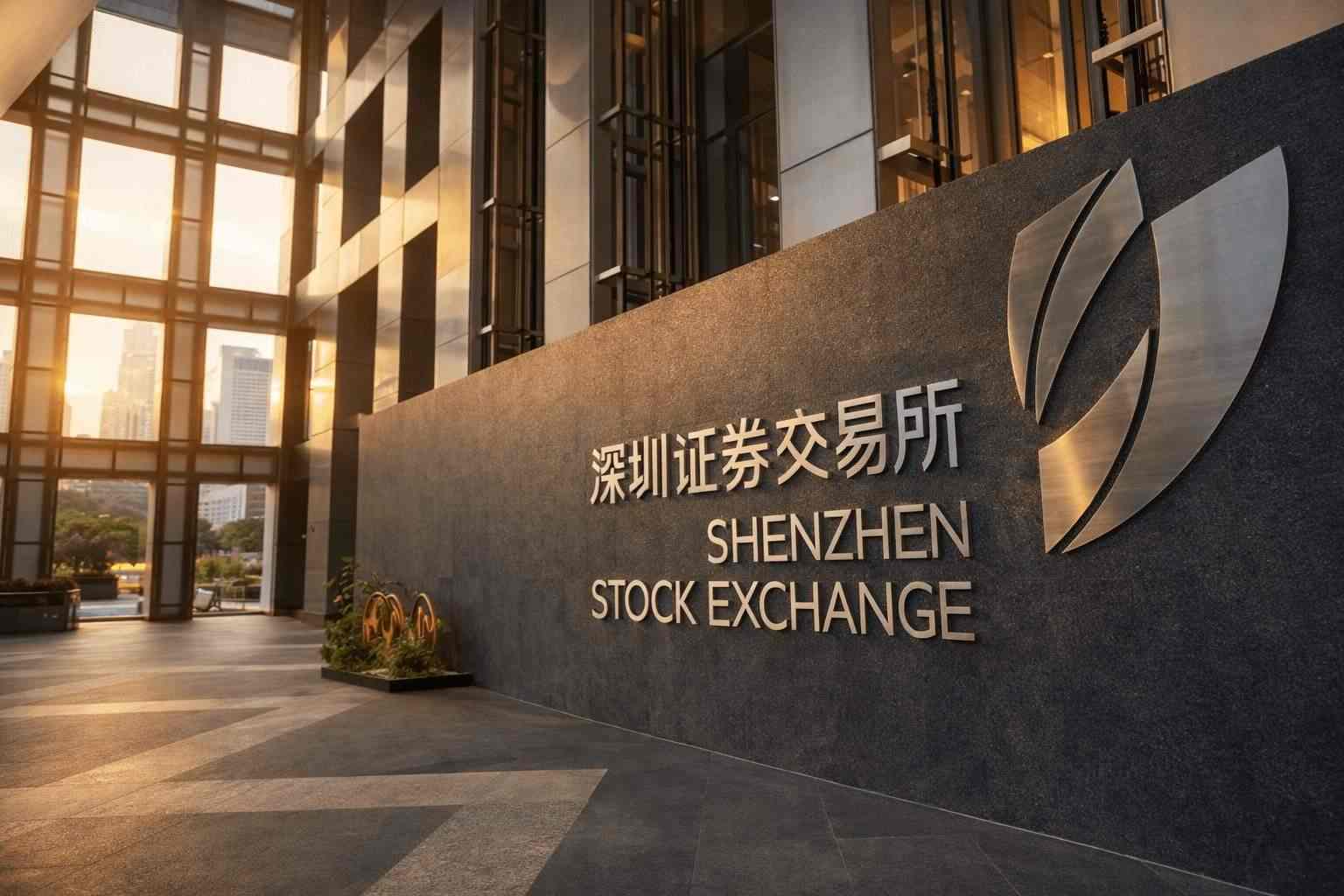
Shenzhen stocks come back online Tuesday, following the mainland’s Spring Festival shutdown that kept local markets dark through Monday. That means investors have to catch up, digesting a backlog of global developments all at once. Trading on the Shenzhen Stock Exchange and other mainland venues resumes Feb. 24, as listed on the Stock Connect calendar from Hong Kong Exchanges and Clearing. Hong Kong Exchanges and Clearing
The timing is crucial — the pause has effectively shut access to the primary market for A-shares, those mainland stocks priced in yuan. Offshore markets, meanwhile, have kept trading, reacting to tariff news and changing expectations around rates.
Shenzhen’s got more “growth” risk in play compared to Shanghai. The ChiNext board, lined with smaller tech and healthcare names, tends to whip around when capital shifts in or out of riskier bets.
Prior to the shutdown, the Shenzhen Component Index wrapped up trading at 14,100.19, dropping 1.28% on Feb. 13. The ChiNext price index slid 1.57% to 3,275.96. Over in Shanghai, the main gauge finished down 1.26% for the session. Investing.com
Mainland markets were closed, leaving investors to gauge China risk through Hong Kong. The Hang Seng Index lost 1.1% Friday, closing at 26,413.35. Tech names fared worse—the Hang Seng Tech Index dropped 2.91%, according to Xinhua. Xinhua News
The China A50 futures contract—traded offshore and reflecting major mainland stocks—closed Feb. 20 at 14,725, down 0.94%, according to Investing.com data. Investing.com
Tuesday brings the next onshore event: the monthly loan prime rate (LPR) fix. Chinese banks base their lending rates on this benchmark. According to Trading Economics, the 1-year LPR sits at 3%, while the 5-year stands at 3.5%. Manufacturing PMI data is also on deck for early March, as flagged by Trading Economics.
Property and banking stocks—always quick to move on unexpected LPR changes—are in focus. Over in Shenzhen, traders are eyeing tech plays: does the reopening spark a rally, or do sellers take the upper hand, echoing Hong Kong’s recent drop?
Shenzhen’s industrial and materials stocks are also taking cues from recent commodity swings during the holiday. “It’s really difficult to read too much into the price action,” said Ole Hansen, Saxo Bank’s head of commodity strategy, who pointed out that a clearer demand picture hinges on China’s return. Arab News
The reopening, though, isn’t without its hazards. U.S. trade policy is flaring up again after the Supreme Court scrapped President Donald Trump’s tariffs, and Trump has pledged a new 10% tariff. “There’s got to be a lot of disruption,” said Tim Ghriskey, senior portfolio strategist at Ingalls & Snyder, citing the unpredictable White House moves. Reuters
After Tuesday, the focus shifts to Beijing’s annual “two sessions,” as the CPPCC kicks off March 4, followed by the National People’s Congress on March 5—important dates that usually shape policy direction each year. But first, the Feb. 24 reopening session is on deck; how prices behave early on could set the pace. english.www.gov.cn