
STOCKHOLM, May 4, 2026, 20:02 CEST
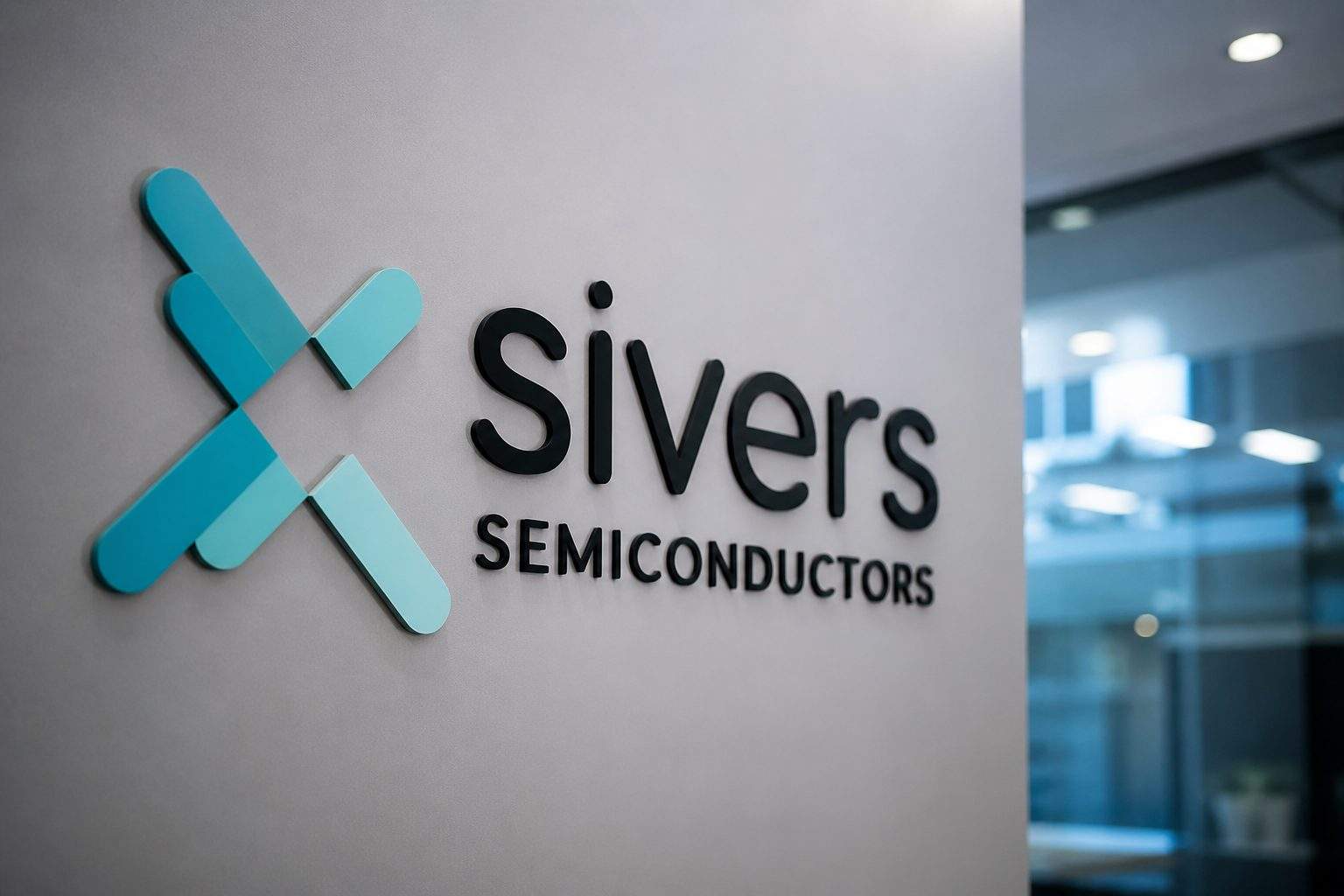
- Sivers Semiconductors surged 47.24% to finish at SEK 55.95 in Stockholm, lifting its year-to-date rally past 1,200%.
- There’s a May 5 cutoff for investors who want in ahead of the May 11 vote on the SEK 125 million targeted share issue.
- The company has delayed its 2025 annual report until May 15, citing ongoing work on U.S. audit requirements related to a potential dual listing on Nasdaq New York.
Sivers Semiconductors AB shares jumped Monday, with the Swedish chip supplier once again drawing attention amid brisk trading in AI-related photonics. Investors shrugged off the company’s delayed accounts, focusing instead on the prospect of a potential U.S. listing.
The stock surged 47.24% to close at SEK 55.95 on Nasdaq Stockholm, putting its gain since Jan. 1 at a staggering 1,246.89%, according to MarketScreener. Google Finance also listed the shares at SEK 55.95 as of 5:29 p.m. local time, pegging the company’s market cap at SEK 16.59 billion.
This shift is crucial, especially with a week packed with process risk ahead. Shareholders face a Tuesday, May 5 deadline to register for attendance or submit postal votes for the May 11 extraordinary general meeting. That meeting will put a directed share issue—essentially a private placement targeting specific institutional and qualified investors—on the table.
Sivers is planning to sell 8.62 million ordinary shares, seeking roughly SEK 125 million in gross proceeds. Investors signed up for the deal include DNB Disruptive Opportunities, DNB Nordic Small Cap, and Storebrand Sverigefond.
Chief Executive Vickram Vathulya said a “strong focused group” of institutional investors is now on board. The funds, he said, are expected to speed up product development, drive new customer growth, and give a lift to both sales and the balance sheet. Sivers Semiconductors
Sivers is pressing ahead with its capital raise as it weighs a potential dual listing on Nasdaq New York, without shifting its Swedish home base. According to the company, the U.S. review targets greater access to tech-driven capital and a more diverse investor pool.
But there’s a wrinkle. Sivers pushed back its 2025 annual report release to May 15, having previously aimed for April 27, citing the need for an “audit uplift” as it brings 2024 and 2025 consolidated results in line with PCAOB requirements—the U.S. audit watchdog’s standards for public listings. The annual meeting now lands on June 15. First-quarter numbers are due out May 20. Sivers Semiconductors
Photonics is the AI hook here—light handling the data, not just electrons. Last month, Sivers said Jabil is moving ahead with development of a 1.6T linear receive optical transceiver built on Sivers’ distributed feedback (DFB) lasers. These semiconductor lasers generate steady light, a must for optical comms.
“Energy efficiency is now a hard requirement in AI infrastructure scaling,” said Alex McCann, managing director for Sivers’ photonics business, in the Jabil announcement. Jason Wildt, Jabil’s vice president and general manager of photonics, put it plainly: customers are demanding “more bandwidth without increasing power consumption.” Sivers Semiconductors
Money is pouring in. Back in March, Nvidia revealed it would put $2 billion apiece into Lumentum and Coherent—both major photonics suppliers—securing purchase deals and rights to future laser and optical networking tech, according to Reuters.
Still, not everyone’s buying the surge. Peter Andrekson, photonics professor at Chalmers University, told EFN Sivers is “a very small player”—the field’s packed with much bigger names working on comparable tech. Richard Schatz at RISE, who also used to consult for Sivers, pointed out the company is “far from alone” in producing these lasers. EFN.se
Sivers is still in the red. For 2025, the company logged net sales of SEK 304.1 million, marking a 25% increase year-on-year, but the loss after tax widened to SEK 186.5 million. Cash at the end of the fourth quarter stood at SEK 43.5 million.
This time around, it’s not about rolling out something new—it’s execution that matters. Investors are betting on a narrative: strong AI data-centre demand, the prospect of a U.S. listing, and recent institutional interest. But hurdles remain. The shareholder vote hasn’t happened yet, accounts are still overdue, and the company needs to turn customer curiosity into actual revenue.
Related articles: Nasdaq