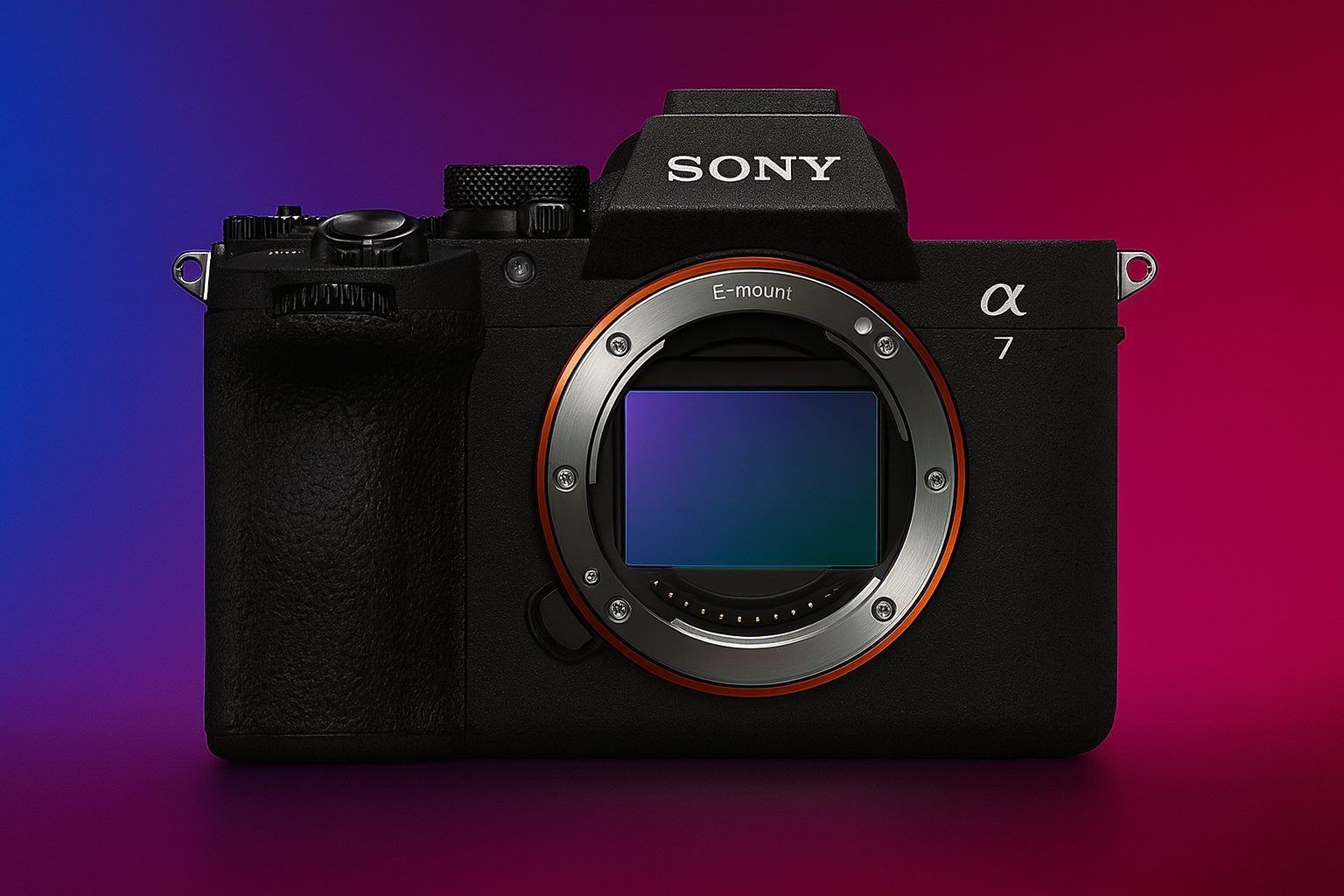
Sony has officially unveiled the Alpha 7 V (Sony A7 V / ILCE‑7M5) today, December 2, 2025, and it’s already dominating photography headlines and social feeds. With a new 33MP partially stacked full‑frame sensor, an updated BIONZ XR2 processor with integrated AI, and 30fps blackout‑free bursts, this fifth‑generation A7 is being pitched as an “entry‑level pro” hybrid body for enthusiasts and working creators alike. Sony Electronics+2Digital Camera World+2
At the same time, Sony is retiring its decade‑old A7 kit zoom and introducing the FE 28–70mm f/3.5–5.6 OSS II, designed to keep up with the A7 V’s much higher shooting speeds. Digital Camera World
Below is a complete roundup of what’s new in the Sony A7 V, how early reviews are reacting, and what else has been announced around the camera today, December 2, 2025.
Sony A7 V at a Glance – Key Specs
Based on Sony’s official specifications and today’s retailer and press coverage, the A7 V offers: photographyblog+3Sony Electronics+3BH Pho…
- Sensor: 33MP full‑frame Exmor RS partially stacked CMOS
- Processor: New BIONZ XR2 with integrated AI processing unit
- ISO range: 100–51,200 (expandable)
- Dynamic range: Up to ~16 stops claimed
- Autofocus: 759‑point phase‑detect AF, ~94% coverage, Real‑time Recognition AF & Real‑time Tracking with AI subject detection (human, animal/bird, insect, car/train, airplane)
- Burst rate: Up to 30fps blackout‑free with electronic shutter and full AF/AE; up to 10fps mechanical shutter
- Pre‑capture: Up to 1 second of action buffered before you fully press the shutter
- Video:
- 7K oversampled 4K 60p (full‑frame, with a very small crop in some modes)
- 4K 120p in Super35 / APS‑C area
- 10‑bit 4:2:2 recording, S‑Cinetone and S‑Log3, support for uploaded LUTs
- Stabilization: 5‑axis IBIS rated up to 7.5 stops (center), ~6.5 stops at frame edges
- Viewfinder & screen:
- 3.68M‑dot OLED EVF, 0.78×, up to 120fps refresh
- 3.2″ 2.1M‑dot 4‑axis multi‑angle touchscreen LCD
- Storage: 1× CFexpress Type A / SD UHS‑II combo slot + 1× SD UHS‑II slot
- Ports & connectivity: Dual USB‑C (USB 3.2 + USB 2.0 PD/charging), full‑size HDMI, mic & headphone jacks, Wi‑Fi 6E (2.4/5/6GHz with 2×2 MIMO), Bluetooth
- Battery: NP‑FZ100 with 630 shots (EVF) / 750 shots (LCD) CIPA‑rated – a notable bump over the A7 IV’s battery life BH Photo Video+1
- Body price:$2,899 / £2,799 / €2,999 body‑only
- Launch date: Body available from December 18, 2025, with kit version shipping in February 2026 Digital Camera World+3BH Photo Video+3Tom…
A New Partially Stacked Sensor – Flagship Speed in a Mainline A7
The headline change is the 33MP partially stacked Exmor RS sensor. Sony keeps the A7 IV’s resolution but re‑engineers the silicon: circuitry is stacked above and below the light‑sensitive layer, shortening data paths and enabling readout that Sony says is roughly 4.5× faster than the previous generation. Sony Electronics+2Digital Camera World+2
That speed unlocks several flagship‑style tricks:
- 1/16,000s electronic shutter for freezing extremely fast action or shooting wide‑open in bright daylight
- 30fps blackout‑free bursts with AF/AE tracking, matching the pace of Sony’s A1 II in electronic mode, though with a smaller buffer and non‑stacked DRAM compared to the flagship Digital Camera World+2BH Photo Video+2
- Substantially reduced rolling shutter, making electronic shutter usable for more situations without the “jello” look in panning shots or fast motion Digital Camera World+1
Unlike Nikon’s partially stacked Z6 III, which drew some criticism for dynamic‑range trade‑offs, Sony is explicitly promising up to 16 stops of DR from the A7 V’s sensor. Early testing from PetaPixel and others suggests dynamic range is at least as good as, and often better than, the A7 IV, especially in the shadows. Digital Camera World+2PetaPixel+2
BIONZ XR2 with Integrated AI: More Than Just Autofocus
With the A7 V, Sony debuts its BIONZ XR2 architecture, which merges what used to be separate image processors and AI chip into a single unit. Tom’s Guide notes that this architecture is designed to cut power consumption while boosting speed, and resembles how Sony handles processing in the A1 II and A9 III – just at a more approachable price. Tom’s Guide+2PetaPixel+2
The integrated AI unit enables:
- Real‑time Recognition AF that doesn’t just look for eyes, but understands head, body and limb positions to maintain focus even when faces aren’t visible Digital Camera World+2PetaPixel+2
- Expanded subject types: humans, animals, birds, insects, cars/trains and airplanes
- Auto subject selection, so you can let the camera choose what type of subject it’s tracking instead of picking each category manually
Sony also uses AI for color and exposure intelligence: today’s press materials and preview pieces highlight improved auto white balance and more faithful color rendering, especially under mixed lighting – longtime pain points for Sony shooters juggling greenish fluorescents and warm tungsten. Digital Camera World+2photographyblog+2
On the file side, the camera gains:
- New compressed RAW options, including a lightweight RAW for smaller file sizes
- Composite RAW: the camera captures multiple frames in rapid succession and, via Imaging Edge Desktop, combines them into a single low‑noise high‑detail RAW file – handy for static scenes at high ISO Digital Camera World+2photographyblog+2
- Extended RAW processing, also via Imaging Edge, that uses neural networks to up‑res a single frame to around 109MP according to PhotographyBlog – particularly targeted at fast‑moving subjects where multi‑frame compositing isn’t practical photographyblog+1
Autofocus: Flagship‑Style Tracking in a Mid‑Range Body
AF is where early reviewers say the A7 V feels like a bigger leap than its spec sheet might imply.
Sony sticks with a 759‑point phase‑detect array covering about 94% of the frame, but the combination of the faster sensor readout and integrated AI unit significantly boosts real‑world behavior. Digital Camera World+2BH Photo Video+2
Highlights:
- Real‑time Recognition AF can track human torsos and limbs, not just eyes, so it holds focus when faces are obscured in sports, events or street work PetaPixel+1
- Animal and bird detection now recognizes not only eyes but heads and bodies, improving hit rate on erratic wildlife and birds‑in‑flight
- AF is rated to –4 EV, matching the A7 IV but with noticeably quicker acquisition according to PetaPixel, which saw reliable tracking even as subjects moved behind trees and other foreground clutter. PetaPixel+2Digital Camera World+2
PetaPixel also emphasizes that the new processor doesn’t just drive focus; it helps with more consistent exposure and white balance, making the camera feel “smarter” overall in changing conditions. PetaPixel
Speed Tools: 30fps Bursts, Pre‑Capture and Speed Boost
Borrowing from Sony’s sports‑focused bodies, the A7 V brings several high‑speed features down to the “everyday hybrid” level: photographyblog+3Digital Camera World+3BH…
- 30fps electronic bursts, blackout‑free, with continuous AF/AE
- 10fps mechanical shutter for those who prefer traditional capture and slightly cleaner files at very high ISOs
- Pre‑Capture mode, buffering up to 1 second of action while you half‑press the shutter—so when you fully press, the camera saves a burst that starts before your reaction
- Speed Boost button, assignable to a function key, instantly ramps your usual burst rate up to a faster setting (all the way to 30fps) while held
TechRadar’s hands‑on review describes the A7 V as markedly more responsive than the A7 IV, calling it a “huge step forward” for enthusiast shooters who rely on fast AF and bursts for wildlife, sports and event work. TechRadar+1
Video: 7K‑Oversampled 4K and 4K 120p (With Some Crops)
On the video side, Sony has clearly aimed the A7 V at hybrid creators who don’t want to give up much compared with dedicated video bodies.
Key video upgrades: photographyblog+3Digital Camera World+3BH…
- 7K oversampled 4K 60p using (effectively) the full sensor width – fixing one of the A7 IV’s biggest complaints, where 4K 60p required a 1.5× crop
- 4K 120p in Super35 / APS‑C mode for high‑quality slow motion (with a “slightly narrower than Super35” crop, according to Digital Camera World)
- 10‑bit 4:2:2 internal recording, S‑Cinetone and S‑Log3, plus user‑imported LUTs for monitoring and baked‑in Log LUT workflows
- Full HD up to 240p in S&Q mode BH Photo Video+1
- Dynamic Active stabilization, layering digital correction on top of IBIS for smoother hand‑held footage
Thermal management has also been improved: Sony claims much longer recording times, with Digital Camera World noting that the A7 V can shoot 4K for significantly longer at 40°C than the A7 IV before overheating, thanks partly to a redesigned heat‑dissipating structure. Digital Camera World+2photographyblog+2
There are still a few caveats:
- No open‑gate recording (unlike some Canon and Panasonic rivals)
- No external RAW over HDMI, a limitation highlighted by Tom’s Guide as a potential issue for workflows built around Atomos or ProRes RAW recorders Tom’s Guide+1
For most hybrid shooters, though, reviewers seem to feel the A7 V hits a strong balance between quality, file flexibility and reliability.
Design, Handling, IBIS and Connectivity
Physically, the A7 V looks almost identical to the A7 IV at first glance—but there are meaningful refinements under the skin. PetaPixel+2The Verge+2
4‑Axis Screen and Familiar Controls
- The rear LCD is now a 3.2″ 2.1M‑dot 4‑axis multi‑angle screen borrowed from the A7R V, which can tilt like a traditional DSLR screen or flip out to the side for vlogging and vertical shooting. Digital Camera World+2Amateur Photographer…
- The EVF remains 3.68M‑dot with 0.78× magnification but now supports 120fps refresh and faster switching from LCD to EVF, making the camera feel more responsive to bring to the eye. The Verge+2Amateur Photographer+2
- Control layout, including AF‑ON button, joystick, and mode dial with stills / video / S&Q switch, is very similar to the A7 IV, which Amateur Photographer and TechRadar both frame as a good thing for existing Sony shooters relying on muscle memory. Amateur Photographer+1
Stabilization and Battery Life
- The redesigned 5‑axis IBIS system is now rated to 7.5 stops at the center of the frame (and ~6.5 at the periphery), making it one of Sony’s most capable stabilizers yet. Digital Camera World+1
- Still using the NP‑FZ100 battery, the A7 V is rated for 630 shots with the EVF and 750 with the LCD, which PhotographyBlog notes is a significant improvement over the A7 IV’s 520/580‑shot ratings. BH Photo Video+1
Dual USB‑C, Wi‑Fi 6E and Streaming
- Sony removes the legacy micro‑USB port and adds a second USB‑C, giving you:
- One USB 3.2 Gen2 port (up to 10Gbps) for data/tethering
- One USB‑C 2.0 port primarily for power delivery and charging BH Photo Video+1
- Wireless connectivity now includes Wi‑Fi 6E (2.4/5/6GHz) with 2×2 MIMO, doubling transfer speed versus the A7 IV and enabling more robust wireless tethering and cloud workflows. photographyblog+1
- The camera supports UVC/UAC streaming up to 4K30, making it usable as a high‑end webcam while still allowing internal recording. BH Photo Video+1
Weather‑sealing and build quality appear similar to the A7 IV: magnesium alloy chassis, improved grip stiffness and reinforced lens mount, which PetaPixel and TechRadar both describe as comfortably robust without feeling excessively heavy. PetaPixel+1
New FE 28–70mm f/3.5–5.6 OSS II Kit Lens
Alongside the A7 V, Sony finally retires the original 28–70mm kit zoom that has shipped with A7 bodies since 2013, replacing it with the FE 28–70mm f/3.5–5.6 OSS II. Digital Camera World+1
Key details from today’s announcement: Digital Camera World+1
- Designed specifically to keep up with 30fps bursts and high‑speed AF
- Uses a linear AF motor capable of tracking at up to 120fps and maintaining AF while zooming
- Minimum focus distance of 0.3m (wide) / 0.45m (tele) with ~0.19× magnification
- Optical design: 9 elements in 8 groups with optical stabilization (OSS)
- Weather‑sealed, weighing about 293g, making it a compact everyday walkaround zoom
Pricing & availability:
- A7 V body + 28–70mm OSS II kit: around $3,099 in the US, shipping February 2026 Tom’s Guide+2Digital Camera World+2
- Lens alone:$449 / £429 / CA$599 (Australia pricing TBC) Digital Camera World
Price, Release Date and Pre‑Orders
Across today’s coverage, pricing and release info is consistent: Tom’s Guide+3Digital Camera World+3Tom’s G…
- Body‑only:
- $2,899 (US)
- £2,799 (UK)
- €2,999 (Eurozone)
- Availability:
- Body ships from December 18, 2025 in many regions
- Kit with FE 28–70mm OSS II ships February 2026
- Pre‑orders went live today at major retailers including B&H, Adorama and others, with SonyAlphaRumors reporting that early batches are expected to land before Christmas in at least some markets. BH Photo Video+2Adorama+2
A7 V vs A7 IV and Rivals: How Big an Upgrade Is It?
Compared to A7 IV
PhotographyBlog’s in‑depth comparison – also published today – makes it clear that the A7 V is primarily a speed and intelligence upgrade over the A7 IV rather than a resolution bump. photographyblog+2Digital Camera World+2
Major advantages over A7 IV:
- 33MP partially stacked sensor vs conventional BSI: faster readout, less rolling shutter, 14‑bit RAW at full 30fps electronic bursts
- 30fps vs 10fps top burst rate, with pre‑capture and Speed Boost
- 7.5‑stop IBIS vs 5.5 stops
- 7K‑oversampled 4K60 full‑frame vs 4K60 only in APS‑C crop
- More advanced AI AF, additional subject types, auto subject selection
- 4‑axis 3.2″ LCD, dual USB‑C, Wi‑Fi 6E
For many photographers, the A7 IV remains attractive due to its lower price, now often discounted below $2,000, but if you shoot anything fast‑moving or rely heavily on video, the performance jump in the A7 V is significant.
Versus Canon EOS R6 Mark III and Nikon Z6 III
Tom’s Guide frames the A7 V as a direct rival to the Canon EOS R6 Mark III and Nikon Z6 III, calling it potentially a “Canon R6 killer” while acknowledging that Canon still holds advantages in things like open‑gate video and internal RAW. Tom’s Guide+2TechRadar+2
Roughly:
- The A7 V matches or beats these rivals on AF sophistication and subject recognition, according to early hands‑on impressions from TechRadar and PetaPixel. TechRadar+2PetaPixel+2
- Nikon’s Z6 III and Canon’s R6 III have their own strengths – including potentially stronger video specs in some modes (open gate, internal RAW, higher‑resolution oversampled 4K) – so which is “best” will depend heavily on your system investment and specific use case.
Early Reviews: What Today’s Testers Are Saying
Several major outlets dropped reviews or detailed first looks today alongside the announcement:
- TechRadar awarded the A7 V an Editor’s Choice‑level verdict, calling it a “huge step forward for enthusiast photographers” and “the best Sony body I’ve used,” praising image quality, battery life, low‑light performance and AF speed, while noting heavy JPEG noise reduction and the lack of open‑gate video as downsides. TechRadar+1
- PetaPixel describes the A7 V as a serious contender for “best all‑round camera on the market”, highlighting the integrated AI processor, improved dynamic range and very capable AF and Pre‑Capture mode, though remarking that the buffer can slow down in 30fps RAW bursts. PetaPixel+1
- The Verge’s hands‑on labels the A7 V a “jack‑of‑all‑trades” camera that brings partially stacked‑sensor benefits—silent shooting, 30fps blackout‑free bursts and improved video—down to a much lower price point than the A1 II, while still keeping ergonomics and build very familiar to A7 IV owners. The Verge+1
- Amateur Photographer is impressed by the new 4‑axis rear screen and finds the revamped subject recognition AF particularly strong for wildlife and action, with the camera successfully tracking birds in flight and complex scenes. Amateur Photographer
The consensus from today’s news cycle: the A7 V is not a revolutionary redesign, but it is a major refinement—folding high‑end Sony tech into a body many enthusiasts and pros can realistically justify.
Who Is the Sony A7 V For?
From Sony’s positioning and today’s coverage, the A7 V is clearly aimed at:
- Enthusiast and semi‑pro hybrids who need one body to handle stills and video equally well
- Event, wedding and documentary shooters who benefit from silent 30fps bursts, advanced subject tracking and long recording times
- Wildlife and action photographers who can exploit pre‑capture, high burst rates, better DR and more advanced subject recognition
- Content creators and small production teams who want strong 4K 60/120p, S‑Cinetone/S‑Log3 and LUT workflows without stepping up to a Cine line camera
If you mostly shoot static subjects at base ISO and already own an A7 IV, the upgrade is less urgent. But if you regularly bump into the A7 IV’s buffer limits, cropped 4K 60p or AF quirks with complex motion, the A7 V is shaping up—based on all of today’s reporting—to be one of the most compelling all‑round full‑frame cameras in its class.