
New York, June 22, 2026, 17:49 (EDT)
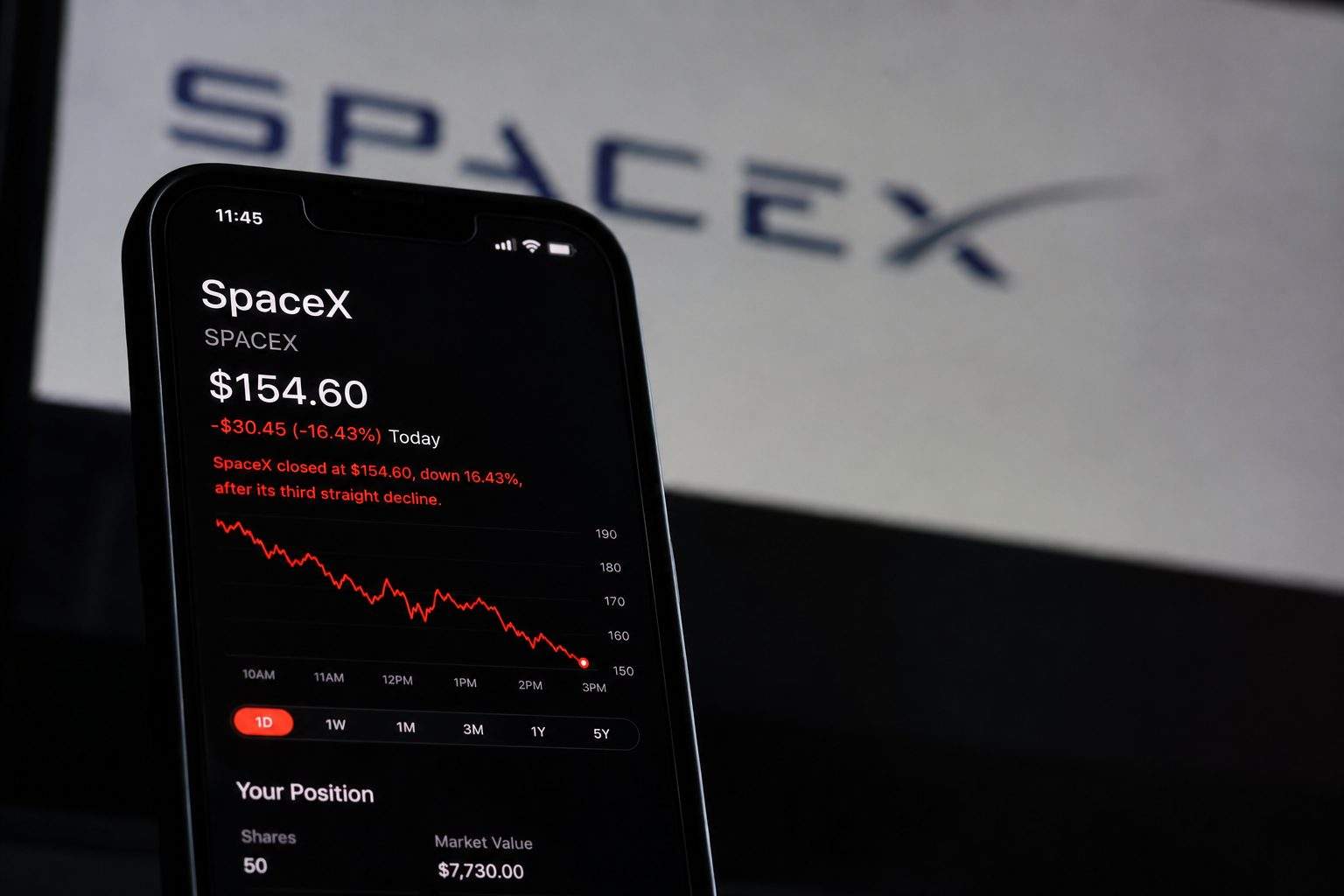
- SpaceX shares dropped 16.43% to $154.60, falling for a third day.
- SpaceX kicked off its first bond sale, looking to raise a minimum of $20 billion.
- Stock is still trading above the $135 IPO mark. The deal brought in $85.7 billion.
SpaceX shares dropped 16.4% on Monday after the company launched its first bond sale, cutting about $400 billion from its market value and bringing up questions again about what it will cost to push deeper into artificial intelligence. Shares finished at $154.60.
SpaceX changed course just 10 days after pulling off the largest IPO ever. Investors are already facing a test on spending, as the company pushes forward with AI data centers, the massive Starship rocket, and more, while growing the Starlink internet business.
Shares are down about 23% in three days and closed at their lowest since debut. Still, market cap is sitting just over $2 trillion and the stock is holding 14.5% above its IPO price.
SpaceX hasn’t said how much it plans to raise or what the interest rate will be on the proposed notes. Bankers were working on a bond offering of at least $20 billion, meant to take out a bridge loan. SpaceX used that bridge loan for its purchase of Elon Musk’s xAI in February.
Choosing to issue debt instead of new shares helps keep existing investors’ stakes from shrinking. “This debt choice over additional equity clearly prioritizes avoiding further shareholder dilution,” said Adam Sarhan, chief executive of 50 Park Investments. Reuters
The company is sitting on $100.8 billion in cash and equivalents as of June 19, boosted by IPO proceeds. But the bond plan shows just how much capital expansion is going to take.
SpaceX landed a new AI client on Monday as Reflection AI signed on to pay $150 million a month for compute capacity at the Colossus 2 data centre starting in July. The contract could be worth as much as $6.3 billion by 2029. Either party can walk away after the first three months with 90 days’ notice.
SpaceX posted $18.67 billion in revenue for the year, up 33%, with Starlink making up around 60% of the total. But after pulling in loss-making xAI, the group swung to a net loss of $4.94 billion. That’s after a profit of $791 million in 2024.
Other space stocks slipped. Rocket Lab dropped 6.5%. AST SpaceMobile, which makes satellite phones, gave up 9.3%.
Nasdaq Composite slid more than 1.3% as the selloff moved outside space stocks, with SpaceX making up about 5% of the index. Big tech names dropped as investors worried about AI investment costs. David Wagner, portfolio manager at Aptus Capital Advisors, said it was a “broader sector pullback” sparked by nervousness over hefty AI infrastructure spending. Reuters
Bonds found some backing in credit markets as Moody’s, Fitch, and S&P Global Ratings last week rated SpaceX investment grade with a stable outlook. The agencies said SpaceX can meet its obligations, though there is moderate credit risk. S&P flagged uncertainty around the AI unit, citing its ongoing funding needs and tough competition.
SpaceX’s debut has shifted how the space sector thinks about valuations. “Everyone is aiming for higher valuations after the SpaceX IPO,” OHB CEO Marco Fuchs said, as the German satellite firm started its own share sale. Reuters
The risks are still big. More debt means more interest to pay, AI deals could disappear, Starship needs a lot more spending, and Musk still calls the shots with most of the votes. New York University finance professor Aswath Damodaran put SpaceX at roughly $100 a share before the listing and said the prospectus made the pitch “bigger, but also more volatile.” aswathdamodaran.substack.com
The next step is to see the bond’s final size, coupon and how much demand it draws from investors. These terms will test if credit buyers are as wary as equity markets have started to look, or if Monday’s drop was just stocks cooling off after a quick IPO run-up.
Related articles: NASDAQ:ASTS