
New Delhi | December 9, 2025
For a few hours this week, it looked like India finally had official Starlink India prices and an imminent launch. The Starlink India website briefly showed detailed tariffs, hardware costs and even a 30‑day free trial offer — sending social media and tech news into overdrive.
By Tuesday afternoon, though, SpaceX had stepped in to say: not so fast.
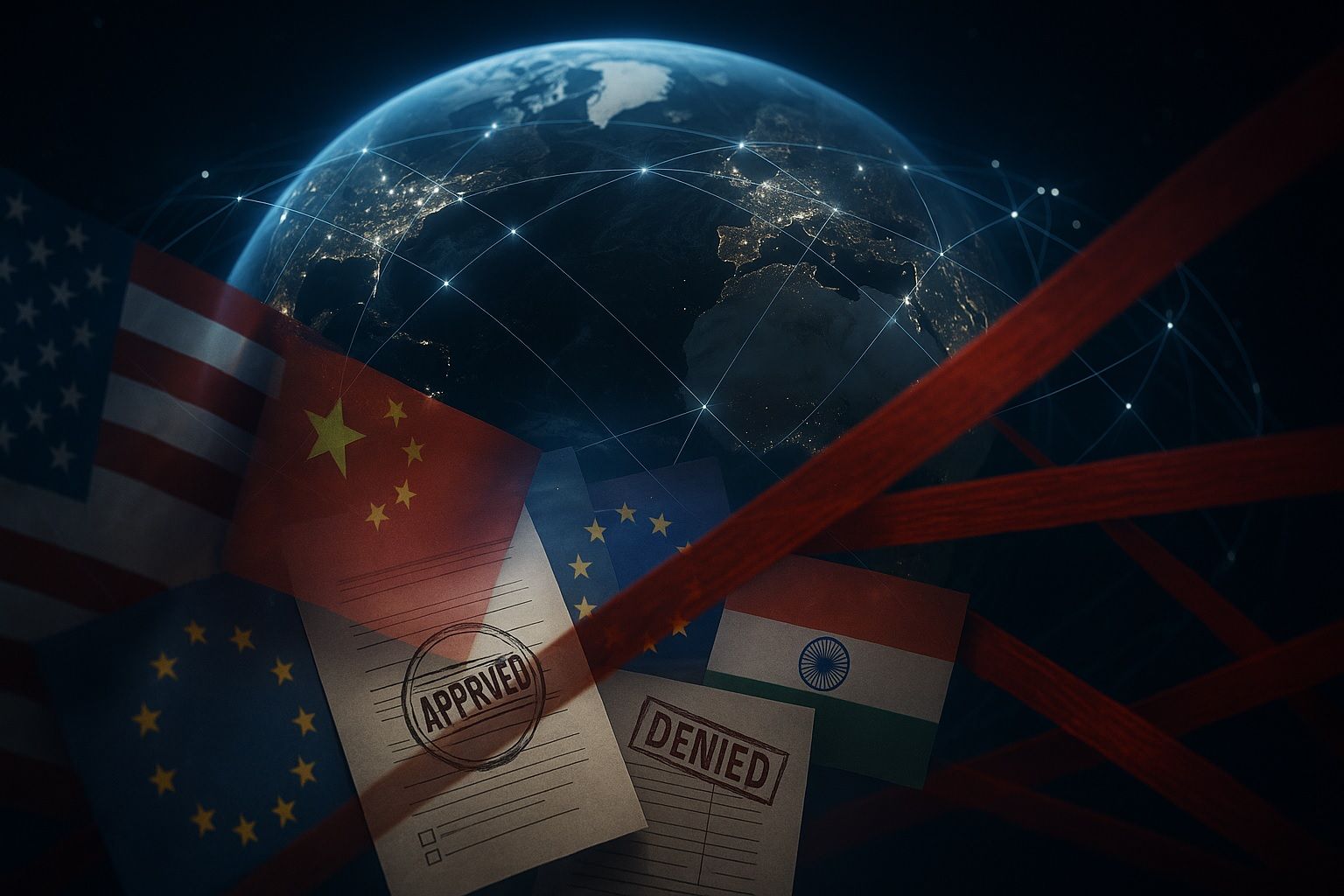
A senior Starlink executive has now clarified that the India website is not live, the prices that circulated online were dummy test data, and the company is still waiting for final government approvals before it can switch on service in the country.
Here’s a clear, up‑to‑date look at what actually happened, where Starlink India stands on regulation, what those leaked prices mean, and what Indian users should realistically expect next.
1. What happened with the Starlink India website?
On December 8–9, visitors to Starlink’s India page suddenly began seeing what looked like fully‑fledged commercial plans:
- A residential plan priced at around ₹8,600 per month
- A hardware kit costing about ₹34,000
- Promised unlimited data, 99.9% uptime, “works in all weather” and a 30‑day free trial
- Simple “plug-and-play” installation messaging The Indian Express+2Gadgets 360+2
Several Indian tech outlets captured screenshots and published explainers on the supposed Starlink India price, treating the website update as a near‑official launch signal.
Very quickly, however, Starlink’s leadership said the numbers were never meant to go live.
Starlink’s official clarification
Lauren Dreyer, Vice President of Starlink Business Operations, posted on X (formerly Twitter) to say:
- The Starlink India website “is not live”
- Service pricing “has not yet been announced”
- Starlink is not taking orders from customers in India
- A “configuration glitch” briefly exposed dummy test data that “does not reflect” what Starlink will actually cost in India convergence-now.com+2The Week+2
Multiple Indian news outlets have since carried the same clarification, stressing that the viral prices should be treated as placeholders, not official tariffs.
In short:
Starlink has not launched in India, and there is still no official Starlink India price list.
2. So what were the ₹8,600 and ₹34,000 numbers?
Even if they were “dummy data”, the leaked figures fit neatly with Starlink’s global pricing structure and with how Indian analysts expected the service to be positioned.
According to multiple reports that documented the brief website update: The Indian Express+2TelecomTalk+2
- Monthly fee (Residential): ~₹8,600
- Hardware kit: ~₹34,000
- Key features shown:
- Unlimited data
- 30‑day free trial
- Claimed >99.9% uptime
- Weather‑resistant satellite dish and Wi‑Fi router
- Self‑install “plug it in and start using” messaging
Some pages also hinted at:
- Location‑based pricing (city‑specific listings tested behind the scenes)
- An incomplete business/enterprise plan section with no final tariffs yet India Today+2The Indian Express+2
Given how closely those numbers mirror Starlink’s pricing in many other markets, Indian commentators have treated them as a probable ballpark. But Starlink is adamant that:
- The figures are not final
- They may change significantly once India’s satellite spectrum rules and charges are fully settled The Times of India+1
3. Regulatory status: Is Starlink actually approved in India?
The short answer: Starlink has most of the core licences it needs — but not all the green lights to turn on consumer service yet.
Key milestones in 2025
Over the past year, Starlink has moved through a series of important regulatory steps:
- Letter of Intent (LoI) – May 2025
India’s Department of Telecommunications (DoT) issued a Letter of Intent for a satellite communications permit, moving Starlink closer to operating legally in the country. - GMPCS licence – June 2025
Starlink received a Global Mobile Personal Communication by Satellite (GMPCS) licence from DoT, making it the third major satcom operator cleared to offer services, after Eutelsat OneWeb and Jio‑SES. - IN‑SPACe authorization – July 2025
India’s space regulator, IN‑SPACe, granted Starlink a five‑year authorization to operate its satellite constellation over India, a key “final regulatory approval” at the space‑segment level. Internet Governance Project+1 - Unified licence with strict security conditions – August 2025
The government granted Starlink a unified licence after the company agreed to tough data‑localisation and security terms, including:- All user traffic from India must pass through gateway earth stations located in India
- No mirroring or decryption of Indian user data abroad
- Storage of Indian network and traffic data within India The Times of India
What is still pending?
Despite those approvals, several crucial pieces are still in motion:
- Trial spectrum & commercial spectrum allocation for satellite communications
- Final clarity on fees and revenue‑share for satcom spectrum (TRAI has suggested a 4% AGR‑based charge and additional per‑user urban fees, subject to government approval).
- Completion of national security and lawful interception checks tied to Starlink’s planned infrastructure.
This is why, even today, Starlink’s availability map still shows India as “pending regulatory approval”, and availability checks for Indian addresses return messages like “Starlink Residential isn’t available in your region.”convergence-now.com+1
When Starlink talks about “final government approvals” in Dreyer’s statement, it is referring to this last layer of spectrum and compliance clearance — not the basic licence, which it already holds. The Times of India+1
4. Starlink’s India strategy: rural focus, gateways and state partnerships
Even without a commercial launch date, Starlink is quietly building out its India footprint.
Gateway earth stations across major cities
Multiple reports and job postings indicate that Starlink plans to build a network of gateway earth stations in:
Chandigarh, Hyderabad, Kolkata, Lucknow, Mumbai and Noida Gadgets 360+2FoneArena+2
These ground stations are critical: they connect user terminals on the ground to satellites overhead, enabling low‑latency broadband and ensuring Indian user traffic stays within domestic infrastructure to meet security rules.
Bengaluru office and hiring spree
Starlink has also:
- Advertised multiple roles in Bengaluru — including payments, accounting, treasury and tax roles — framed as part of its global expansion and India build‑out.
- Expanded its local team to handle operations, compliance and partnerships ahead of launch.
First state partnership: Maharashtra
While consumers still can’t order Starlink in India, governments can start planning with it.
The Maharashtra government has signed a Letter of Intent (LoI) with Starlink Satellite Communications Private Limited to pilot satellite internet in some of the state’s most difficult terrain:
- Gadchiroli
- Nandurbar
- Dharashiv
- Washim The Statesman
These districts are known for patchy or non‑existent connectivity. Using satellite internet instead of building fibre through forests, hills and insurgency‑prone areas could dramatically accelerate access to e‑governance, education and health services.
Officials in other states are also reported to be exploring similar partnerships for remote districts, even before commercial launch.
5. How Starlink India pricing compares to existing broadband
Even if Starlink ends up near the leaked placeholder tariff, it will sit at the very high end of India’s consumer internet market.
Current Indian broadband prices
Widely available entry‑level fixed broadband plans from major ISPs such as JioFiber, Airtel and BSNL:
- Start around ₹399–₹500 per month
- Include unlimited data at speeds roughly 30–40 Mbps
- Sometimes bundle OTT streaming subscriptions at slightly higher price points (₹599–₹999).
Analysts estimate that, on average, India is among the cheapest broadband markets in the world, with typical bills around $8–$9 per month (roughly ₹650–₹750), thanks to intense competition and high user density.
Where a Starlink‑style plan would sit
The leaked ₹8,600 monthly fee plus ₹34,000 hardware would make Starlink:
- More than 10x the monthly price of many urban fibre plans
- With a one‑time hardware cost that’s over an order of magnitude higher than typical home broadband installation charges (₹1,500–₹2,500, often partly refundable).
That said, satellite internet isn’t trying to beat fibre in central Mumbai or Bengaluru on price. Its value proposition is:
- Coverage where fibre and 5G do not reach or are unreliable
- Reliable connectivity for remote villages, highways, rail projects, defence installations, mines, ships and disaster‑hit areas.
Economically, Starlink and other satcom providers are also juggling:
- High upfront satellite and launch costs
- Ongoing spectrum fees (TRAI proposes a 4% AGR‑based charge plus additional urban‑user levies) The Economic Times+1
- Capacity constraints — even tens of thousands of satellites can serve only a limited number of users per region without congestion.
This is why some analysts believe that, over time, introductory promotional plans under ₹840 per month may appear for certain segments, with higher tiers for heavy users and enterprise customers.
For now, though, no official Starlink India tariff exists, and today’s discussion is mostly about what those tariffs mightlook like once spectrum pricing and strategy are locked.
6. When will Starlink actually launch in India?
There is still no confirmed Starlink India launch date.
From public statements and regulatory timelines, the likely sequence looks like this:
- Final spectrum and security sign‑offs
- The government must finalise satcom spectrum allocation rules and charges.
- Starlink has to complete security compliance, including lawful interception and data‑handling audits.
- Commercial activation of gateway stations
- Once gateway earth stations in cities like Chandigarh, Hyderabad, Kolkata, Lucknow, Mumbai and Noida are ready and cleared, Starlink can beam low‑latency service into Indian territory.
- Website and ordering go live for India
- Dreyer has made it clear that the website will only be turned on for India once final approvals land, at which point genuine plans and pricing will be published.
- Phased rollout
- Expect early focus on rural and remote areas, strategic use‑cases (railways, defence, maritime, disaster zones) and state‑government or enterprise projects, before mass urban adoption.
Industry chatter — and the pace of infrastructure and hiring — suggests Starlink is treating India as a near‑term priority market, but there is still real regulatory work to finish before any official launch window can be taken seriously.
7. What should Indian users do right now?
Until Starlink officially launches in India, here’s what makes sense for individuals, businesses and policymakers.
For individuals and homes
- Do not rely on leaked prices
Treat the ₹8,600 / ₹34,000 combo as unconfirmed. Starlink itself says those numbers do not reflect final costs. - Use existing fibre/4G/5G if you have it
For most urban and semi‑urban users, current broadband and mobile plans remain far cheaper and more than adequate for everyday use. - Register interest, don’t pre‑pay
The global Starlink site lets you check availability and sign up for updates, but Starlink has explicitly said it is not taking orders in India yet. Avoid third‑party “pre‑booking” schemes that are not authorised by the company. convergence-now.com+1
For rural communities and local bodies
- Watch state‑level pilots closely
Projects like the Maharashtra–Starlink LoI for difficult districts are likely to become testbeds that other states can learn from, especially on cost‑sharing and service quality. - Evaluate alternatives
Eutelsat OneWeb, Jio‑SES and other players will also be active in the satcom space. Local administrations should compare performance, pricing and contractual terms instead of defaulting to any one brand.
For enterprises and critical infrastructure
- Plan for multi‑layered connectivity
Starlink’s strength will be in providing redundancy and coverage where fibre and mobile falter — but capacity limits mean satellite links are unlikely to completely replace terrestrial networks for large‑scale users. - Track regulatory obligations
Any Starlink‑powered deployments will need to comply with India’s strict data‑localisation and lawful interception framework, including keeping traffic within Indian gateways.
Bottom line
As of December 9, 2025:
- Starlink India has not launched yet.
- The viral ₹8,600 monthly / ₹34,000 hardware figures came from placeholder test data that went live by mistake.
- Starlink does, however, already hold key licences, including a GMPCS permit, IN‑SPACe authorization and a unified licence with tough security conditions.
- The company is actively preparing for launch via gateway stations, a Bengaluru office build‑out, and state‑level pilots like Maharashtra’s LoI.
- Final go‑live depends on spectrum pricing, security sign‑offs and government approvals, which are still being worked through.
For now, Starlink India remains almost here — close enough for website glitches to cause a national stir, but not quite ready to sell you a dish.
Related articles: Internet