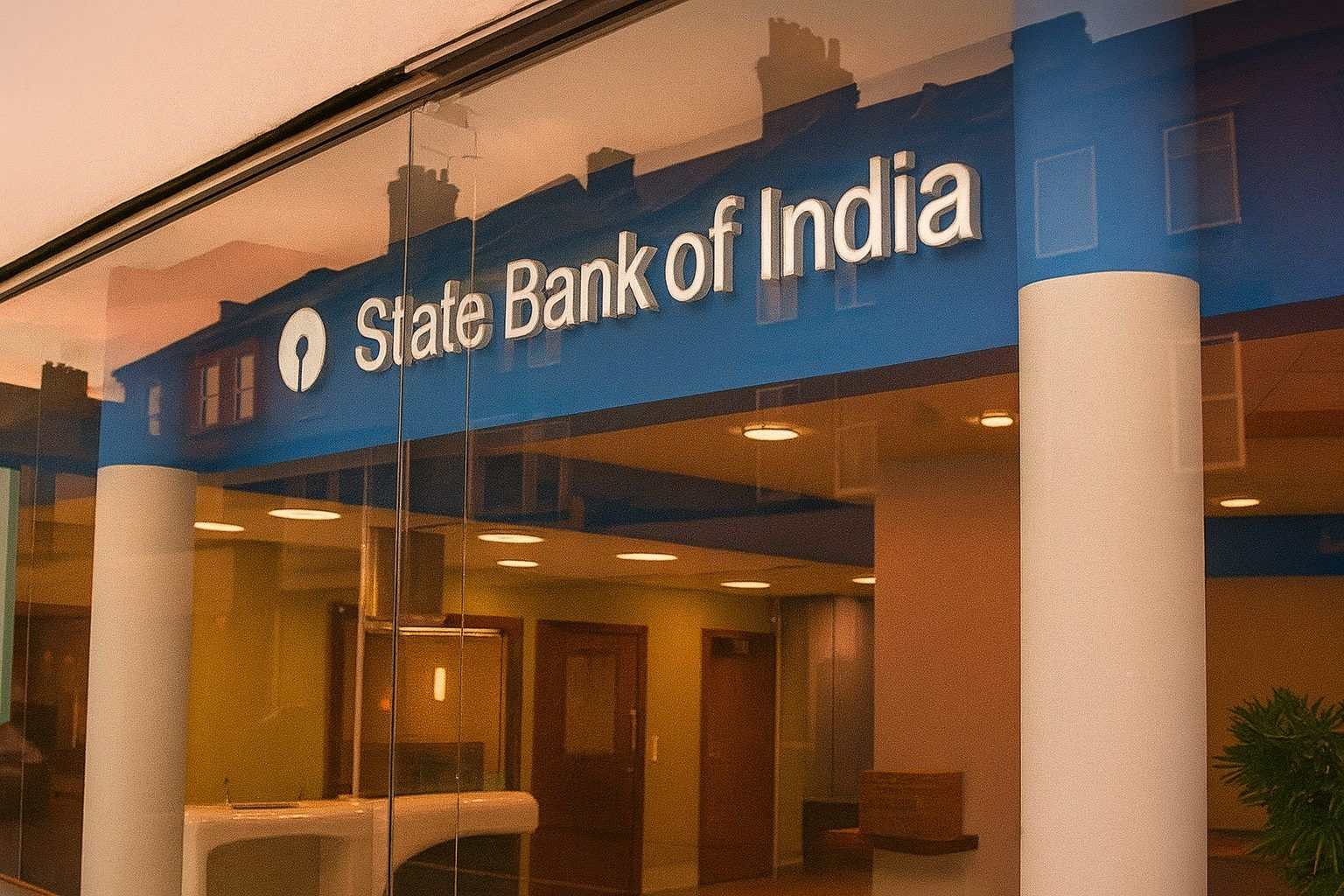

State Bank of India (SBI) stock is heading into the new week with a clear near-term catalyst: the bank has announced fresh reductions in key lending benchmarks and select deposit rates, effective Monday, December 15, 2025—a move that follows the Reserve Bank of India’s latest policy easing cycle. For investors tracking SBI share price (NSE: SBIN, BSE: 500112), the big question is simple: will cheaper loans translate into faster growth without squeezing margins too much?
Below is a complete, up-to-date wrap of the news, forecasts, and market analysis available as of December 13, 2025, with the key numbers and what they may mean for SBI stock next.
What’s the big SBI news today?
SBI has confirmed a set of rate changes that will kick in from December 15, 2025:
- Its External Benchmark Linked Rate (EBLR) is being reduced to 7.90% (from 8.15%, plus applicable spreads).
- Its Repo Linked Lending Rate (RLLR) is being revised to 7.50% (from 7.75%, plus applicable spreads).
On the MCLR side (often relevant for a wide set of retail and corporate loans), SBI has cut rates across tenors. The one-year MCLR—a widely watched benchmark—has been revised to 8.70% (from 8.75%), with comparable 5 bps cuts across the curve.
SBI also updated its retail deposit offerings: for example, the widely tracked “Amrit Vrishti” (444 days) rate has been revised from 6.60% to 6.45%, and the 2 years to less than 3 years bucket for deposits below ₹3 crore has been revised from 6.45% to 6.40% (with similar reductions for senior citizens). SBI Bank
Mainstream coverage on December 13 has focused on how this will likely reduce EMIs for borrowers while trimming yields for some depositors.
Why this matters for SBI stock: growth tailwind vs margin math
From a stock-market lens, rate moves matter because they affect the two levers that drive bank earnings:
1) Credit growth and demand (potential positive)
Lower lending benchmarks typically help retail demand—home, auto, and MSME credit in particular—by improving affordability. SBI is also lowering multiple rate benchmarks in one coordinated step (EBLR/RLLR/MCLR), which increases the likelihood that the benefit reaches borrowers quickly.
2) Net interest margins (potential risk, at least near-term)
Here’s the less glamorous bit: when rates fall, banks often reprice loans faster than deposits, which can temporarily compress margins until deposit costs adjust. Reuters has previously described this dynamic in the context of SBI and rate cuts—lending rates can drop quickly while deposit repricing takes longer, squeezing profitability in the interim.
SBI’s decision to also cut select deposit rates alongside lending benchmarks looks like an attempt to manage that trade-off—supporting growth while limiting margin compression.
SBI share price today: last traded levels, 52-week range, and valuation snapshot
Because December 13, 2025 is a Saturday, Indian markets are not in a regular trading session. The most current reference is Friday’s close.
- SBI last traded around ₹962–₹963 on December 12, 2025 (depending on venue/data snapshot).
- The 52-week range shown by market trackers is roughly ₹680 to ₹999.
- Moneycontrol’s snapshot shows SBI at a market cap around ₹8.89 lakh crore, with TTM P/E around ~11 and P/B around ~1.9 (as displayed on its valuation panel).
Those valuation levels matter because bank stocks tend to re-rate (up or down) when the market believes the next 12–18 months will bring either (a) better credit growth and stable asset quality, or (b) margin compression and rising credit costs.
RBI backdrop: the policy easing that set this up
SBI’s move comes in the context of the RBI’s broader easing in 2025. Reuters reported that the RBI cut the repo rate by 25 bps to 5.25% in its December policy review, bringing total cuts in 2025 to 125 bps, while also rolling out liquidity-support measures (including bond purchases and an FX swap) aimed at keeping financial conditions supportive.
A separate ICRA policy note also describes the December 2025 decision as a 25 bps cut to 5.25%, alongside corresponding corridor adjustments.
For SBI shareholders, the “macro-to-micro” chain is: RBI cuts → bank benchmark rates reset → borrower demand + bank margin dynamics → earnings expectations → stock price reaction.
Analyst forecasts and price targets for SBI stock
On forecasts, SBI remains one of the most-covered names in Indian banking—and December’s strong run has sharpened the debate between “still room to run” and “already priced in.”
Consensus target prices (what the average analyst crowd implies)
- Trendlyne shows SBI with an average target near ₹1,012 (around mid-single-digit upside from ~₹963 levels, depending on the reference price).
- Investing.com consensus (based on a larger analyst set on that platform) shows an average 12-month target around ₹1,077, with a high estimate around ₹1,170 and a low estimate around ₹720, and a “Buy”-leaning distribution. Investing.com
Different platforms aggregate different broker universes, so the exact “consensus” can vary—but directionally, both point to modest-to-meaningful upside depending on which target set you use.
Fresh brokerage call highlighted in market coverage
Economic Times’ SBI live coverage on December 12 highlighted that Motilal Oswal Financial Services set a target of ₹1,075, implying roughly ~11–12% upside from the ~₹963 area referenced in that update.
Bull-case targets that still circulate
Earlier December coverage cited targets up to ₹1,170 from at least one major brokerage (as reported in mainstream business media summaries), reinforcing that the bull case is still “alive,” particularly if growth stays healthy and credit costs remain contained. The Times of India
The fundamental story investors are still buying into
Rate headlines move stocks in the short term, but SBI’s longer-term valuation hinges on operating performance.
Recent reported results have painted a picture of scale plus improving metrics:
- Business Standard reported SBI’s Q2 FY26 standalone net profit at ~₹20,160 crore, up nearly 10% YoY, along with total income growth and continued attention on asset quality.
- Broader coverage around those results has emphasized SBI’s scale and momentum coming out of the September quarter.
Meanwhile, Fortune India’s December 13 long-read (headline accessible) points to SBI’s ambition to expand its asset size from roughly 20% of India’s GDP to 25% in the coming years—an indicator of how aggressively the bank wants to grow with the economy rather than merely track it.
And on the business mix, SBI’s planned hiring push in wealth management—nearly 1,000 specialists per Times of India—signals a continued drive toward fee income and higher-value customer segments, which can matter when rate cycles compress lending spreads.
The market risk nobody can ignore: rates are falling, but bond yields aren’t cooperating
Here’s a nuance that equity investors sometimes underweight: the RBI can cut, but markets don’t always follow politely.
Reuters noted that India’s fixed-income market has seen yields rise even after the central bank’s recent easing and liquidity steps, with traders increasingly skeptical that the RBI will keep cutting. Rising yields can tighten financial conditions at the margin and influence bank funding expectations and valuations.
Add in inflation uncertainty: Reuters reported India’s November retail inflation at 0.71%, still below the RBI’s 2% target for a third straight month, which keeps the door ajar for further easing—but core inflation remains higher, and the next policy window is watched closely.
In short: SBI is repricing loans downward, but the broader rates complex is not delivering a perfectly “easy money” backdrop. That tension is one reason banking stocks can get choppy even when rate cuts look good on paper.
What to watch next for SBI stock (week of Dec 15)
With SBI’s changes effective Monday, December 15, investors will likely focus on four practical signals:
1) Monday’s market reaction
Because the announcement hit over the weekend, the first real price discovery will come when markets reopen.
2) Deposit behavior
If deposit competition remains intense, banks may struggle to cut deposit rates broadly, which can keep margin pressure elevated even after headline reductions.
3) Loan growth commentary and mix
Any read-through on whether demand is accelerating in home loans/auto/MSME (and at what yields) will matter more than the headline 25 bps itself.
4) RBI liquidity operations and rates expectations
RBI liquidity actions (already outlined in policy coverage) can shape short-term funding conditions for the banking system, and therefore the market’s comfort with bank earnings trajectories.
Bottom line
As of December 13, 2025, the SBI stock narrative is being driven by a classic rate-cycle storyline: cheaper loans should help growth, while earnings quality depends on how smoothly deposit costs adjust. The Street remains broadly constructive—many consensus trackers still show a “Buy”-leaning profile and target prices clustering around ₹1,010–₹1,080, with bullish outliers higher. Trendlyne.com+2Investing.com+2
But the bond market’s recent skepticism—and the ever-present margin mechanics—are why investors will likely treat Monday’s trade as the beginning of the next chapter, not the conclusion.