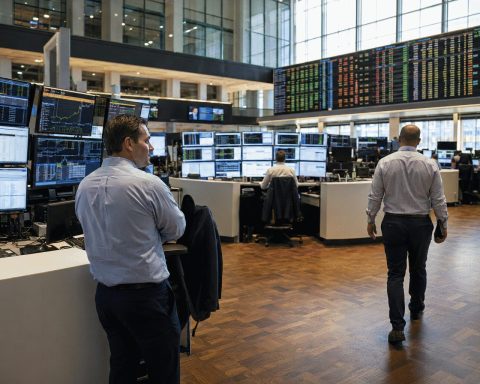

NEW YORK — After the closing bell on Friday, December 12, 2025, U.S. stocks pulled back from fresh record highs, led by another sharp drawdown in mega-cap and semiconductor names tied to the artificial-intelligence boom. The move snapped the market out of a strong stretch that culminated with record closes for the S&P 500 and Dow a day earlier.
Investors had a familiar list of pressures to digest: renewed questions about how quickly massive AI spending will translate into profits, a rise in Treasury yields that tends to weigh on high-valuation growth stocks, and fresh debate inside the Federal Reserve after multiple policymakers dissented from this week’s rate cut, warning inflation remains too hot.
U.S. stock market closing levels today
Here’s where the major indexes finished Friday, Dec. 12, 2025:
- S&P 500: 6,827.41, down 73.59 points (-1.1%) AP News
- Dow Jones Industrial Average: 48,458.05, down 245.96 points (-0.5%) AP News
- Nasdaq Composite: 23,195.17, down 398.69 points (-1.7%) AP News
- Russell 2000: 2,551.46, down 39.15 points (-1.5%) AP News
Market tone: The day’s weakness was concentrated in tech/semis—an area that has powered much of the multi-year rally—while a meaningful minority of stocks still managed to rise even as the headline indexes fell.
Why stocks fell: “AI payoff” doubts hit tech again
Friday’s retreat centered on the AI complex, with investors reacting less to revenue growth headlines and more to the uncomfortable question behind the boom: what do margins and returns look like when the industry is spending hundreds of billions to build capacity? Reuters+1
Broadcom’s drop set the tone
Broadcom sank sharply after earnings, even though results topped expectations. The market focus shifted to commentary that raised margin pressure concerns as the company’s AI business mix grows—an outcome that can be great for revenue, but not always for near-term profitability.
Oracle stayed in the spotlight—and pushed back on delay talk
Oracle extended its decline after issuing a weak outlook earlier and then denying a report suggesting some OpenAI-related data center timelines were being pushed back. The episode amplified investor sensitivity around AI infrastructure buildouts, where labor, materials, power availability, and execution risk can matter as much as demand.
Semiconductors got hit hard
The chip/AI hardware pressure showed up clearly at the industry level: the PHLX Semiconductor Index ended the day down 5.10%.
In short, Friday wasn’t just a “risk-off” session—it looked like a selective repricing of the AI winners, where “good” results weren’t good enough without reassurance on margins, capex, and timelines to payback. Investopedia+2Reuters+2
Treasury yields rose—and that mattered for growth stocks
The bond market added pressure. The 10-year Treasury yield climbed to about 4.19%, up from the prior day, a move that can mechanically compress valuations—especially for long-duration growth stocks whose expected cash flows lie further in the future.
In broader markets coverage, Reuters also noted the 10-year yield rising and ending around 4.186%, up on the day and on the week.
The Fed backdrop: rate cut delivered, but inflation dissent got louder
This market pullback came only two trading days after the Federal Reserve cut its benchmark rate by 25 basis points to a 3.5%–3.75% range. In its statement, the Fed described inflation as “somewhat elevated” and emphasized it will assess incoming data when considering additional adjustments. Federal Reserve
But on Friday, debate inside the Fed took center stage:
- Chicago Fed President Austan Goolsbee said he dissented because he preferred waiting for more inflation and labor-market data—especially after the 43-day federal government shutdown delayed key reports.
- Kansas City Fed President Jeffrey Schmid said inflation is “too hot” and argued policy should remain modestly restrictive. Reuters+1
This matters for markets because the “next cut” narrative is not just about growth—it’s about whether inflation will allow the Fed to keep easing.
Markets vs. the Fed: a gap still exists
Reuters reported that traders were pricing about 50 basis points of cuts by the end of 2026—a more accommodative path than the Fed has signaled. Reuters
At the same time, Reuters noted the Fed’s post-meeting projections showed the median policymaker anticipating just onequarter-point cut in 2026, while some officials penciled in no cuts at all.
That push-pull—cuts hoped for by markets vs. caution inside the Fed—is likely to remain a major driver of volatility into year-end.
Notable movers and headlines investors watched today
Lululemon surged on a CEO transition and outlook changes
Lululemon was among the standout gainers after posting results above expectations and announcing that CEO Calvin McDonald plans to step down, with interim leadership named as the company searches for a successor.
Cannabis stocks jumped on federal policy speculation
A separate pocket of the market rallied hard: cannabis stocks surged after the Washington Post reported President Donald Trump is expected to push to ease federal marijuana restrictions, including potential rescheduling to Schedule III, according to Reuters. Reuters also cited reporting that an executive order could come as soon as Monday—though a White House official cautioned no final decisions had been made.
Financials had their own storyline: Citi upgraded
In banks, Citigroup drew attention after J.P. Morgan upgraded the stock, citing progress in Citi’s multi-year turnaround. The call added to the broader theme of investors looking beyond mega-cap tech—especially as rate expectations and the economic outlook evolve.
Week and year scorecard: rotation shows up in the numbers
Even with Friday’s drop, the market picture remains bifurcated—strong year-to-date performance, but increasing turbulence under the surface.
For the week (ending Dec. 12):
- S&P 500: -0.6%
- Dow: +1.0%
- Nasdaq: -1.6%
- Russell 2000: +1.2% AP News
For the year (so far in 2025):
- S&P 500: +16.1%
- Dow: +13.9%
- Nasdaq: +20.1%
- Russell 2000: +14.4% AP News
The takeaway: the “Dow vs. Nasdaq” divergence is becoming a cleaner shorthand for the rotation theme—value/industrials/defensives holding up better, while the AI-heavy complex is more sensitive to yields and earnings scrutiny. AP News+1
Market outlook: what strategists are watching next week
Friday’s selloff didn’t happen in a vacuum. It also looked like positioning and caution ahead of a rare cluster of high-impact economic releases that could reset rate expectations.
1) Delayed U.S. data finally arrives after the shutdown
Reuters noted investors have lacked the usual stream of economic “proof points” because the 43-day government shutdown postponed or canceled key reports—and that some of those releases hit next week. Reuters
On Reuters’ calendar:
- U.S. November jobs report: due Tuesday
- CPI inflation report: due Thursday
- Retail sales: also due next week Reuters
Reuters also cited a poll expecting November payrolls up about 35,000, while Fed Chair Jerome Powell warned recent payroll averages may be overstated and could even imply job losses when adjusted for missing information.
2) The “recession discussion” risk is still on the table
Reuters quoted strategists warning that if job prints turn negative, it could force markets to confront recession scenarios more directly—something that would affect not only stocks, but also the path of Fed policy.
3) Analysts aren’t calling “the end” of AI—but they are more selective
Reuters’ AI-focused analysis framed the Oracle/Broadcom volatility as a stress test for the AI trade rather than a definitive break. One strategist told Reuters the AI theme remains intact, while others highlighted a shift toward scrutinizing capital spending and demanding clearer returns.
4) Fund flows suggest investors are still allocating—just differently
Even as tech volatility rises, flow data points to continued investor engagement:
- U.S. equity funds saw a net $3.3 billion weekly inflow (week ending Dec. 10), after outflows the prior week, according to LSEG Lipper data cited by Reuters.
- Global equity funds took in $12.9 billion over the same period, Reuters reported.
Flows also showed interest in sector funds like metals/mining, industrials, and healthcare—consistent with the rotation narrative.
Forecasts published today: what 2026 could look like if the economy bends—or breaks
While today’s market action was about AI and yields, several forecasts published Friday underscored the stakes for 2026.
- The Conference Board projected U.S. growth of 1.9% year-over-year in 2025 and 1.5% in 2026 (as presented in its December 12, 2025 “Economy Watch: US View”). The Conference Board
- Stifel warned that if recession hits in 2026, the S&P 500 could drop about 20%, while its base case calls for a ~9%gain next year, according to a Business Insider summary of the note.
For readers, the key point is less the exact targets and more what they imply: markets are pricing a soft landing plus gradual easing, but they remain vulnerable if inflation stays sticky or if the labor market deteriorates faster than expected.
Bottom line after the bell
The U.S. stock market’s pullback on December 12 was a reminder that record highs don’t eliminate valuation risk, especially in the AI complex when yields rise and investors start demanding proof of profitability—not just growth.
Next week’s slate of delayed labor and inflation data could quickly become the market’s new focal point, because it will influence the two questions that matter most into year-end: Is the economy slowing into recession—or stabilizing? And can the Fed keep cutting without reigniting inflation? Reuters+1
This article is for informational purposes only and is not investment advice.
Related articles: NASDAQ:AVGO