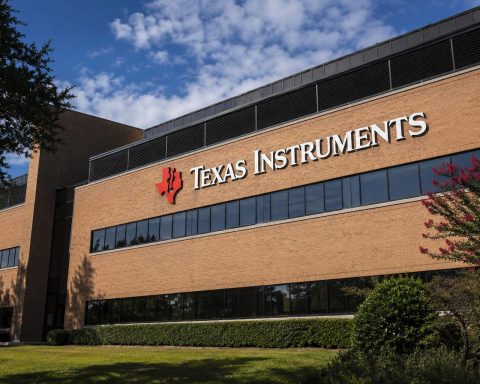

Texas Instruments Incorporated NASDAQ:TXN ended Thursday, December 18, 2025, modestly higher in regular trading—then drifted slightly lower after the closing bell as investors digested a major U.S. manufacturing milestone alongside a market backdrop shaped by fresh inflation data.
TXN closed the regular session at $176.19 (+0.97%) and was last indicated around $175.83 (-0.20%) in after-hours trading as of 5:20 p.m. ET (delayed).
Below is what moved Texas Instruments today, what the latest forecasts and analyst actions are signaling, and the key items to have on your radar before the market opens Friday.
TXN stock after hours: the key numbers (as of Thursday night)
Regular session (Dec. 18):
- Close: $176.19 (+0.97%) MarketWatch+1
- Day range: about $175.90 to $178.90 StockAnalysis
- Volume: about 7.4 million shares StockAnalysis
After-hours (as of 5:20 p.m. ET):
- After-hours quote: $175.83 (-0.20%) MarketWatch
- After-hours volume: ~741,510 shares MarketWatch
What that tells traders tonight: the after-hours move is small. In other words, the market didn’t immediately reprice TXN on a surprise earnings report or a sudden breaking headline—this looks more like a “wait for the next catalyst” setup heading into Friday.
Why Texas Instruments rose today: macro tailwinds and a chip-sector mood reset
Texas Instruments’ green close came during a broadly positive session for U.S. equities. The S&P 500 rose about 0.8% and the Dow was slightly higher, according to market recap coverage.
One big driver across risk assets on Thursday: cooler-than-expected inflation data, which helped support the “rates could come down” narrative that typically benefits longer-duration equities—including many technology and semiconductor names. Investors.com
The semiconductor tape also got a lift from upbeat sentiment elsewhere in the chip space (including strong reaction to Micron results and related read-throughs), even though Texas Instruments is more exposed to industrial and automotive demand than to AI-memory cycles.
The biggest company headline in play: TI’s new Sherman, Texas fab starts production
The most consequential Texas Instruments story circulating into Thursday night isn’t about quarterly numbers—it’s about manufacturing.
TI announced that it has begun production at its newest 300mm semiconductor manufacturing facility in Sherman, Texas. The company describes the new wafer fab as state-of-the-art and says it is designed to produce tens of millions of chips daily that go into a wide range of electronics.
Tech and regional coverage on December 18 emphasized the scale and strategic intent:
- The Sherman facility (often referenced as SM1) is the first of a larger “mega-site” plan and marks a milestone in TI’s push to expand domestic capacity. Tom’s Hardware+1
- Texas Governor Greg Abbott’s office highlighted the project as a major in-state manufacturing expansion, pointing to thousands of jobs and long-term capital investment expectations tied to the Sherman site.
- Broader reporting on the Sherman buildout framed it as part of a massive multi-fab investment program and a sign of the U.S. manufacturing push gaining traction.
Why the Sherman ramp matters for TXN shareholders
For long-term investors, the Sherman milestone is important because it directly ties to the core debate around TI’s stock:
The bull case:
More 300mm capacity can mean better cost structure over time, improved supply assurance for industrial/auto customers, and strategic advantage when demand cycles turn up—especially if TI can run the assets efficiently at scale.
The bear case (and why it keeps showing up in analyst notes):
Capacity expansions are expensive. If demand recovery is slower than expected, new fabs can pressure free cash flow and margins via higher depreciation and manufacturing overhead. That “execution risk” is exactly what some cautious analysts have been pointing to.
This tension—strategic capacity vs. near-term financial drag—remains at the center of how Wall Street is pricing TXN.
Wall Street’s latest TXN forecasts: targets cluster near $190, but conviction is split
The headline call that still hangs over the stock: Goldman’s “double downgrade”
Earlier this week, Barron’s reported that Goldman Sachs issued a rare double downgrade on Texas Instruments, moving the rating from Buy to Sell and cutting its price target to $156 from $200. The note flagged concerns that TI’s capacity and utilization choices could lead to elevated inventories and costs, potentially causing TI’s earnings growth to lag peers in an upturn.
That downgrade matters tonight because it directly intersects with the Sherman milestone: bulls see Sherman as strategic; bears see it as a reminder of capex and utilization risk.
More recent tone: price targets rising, ratings still cautious
At the same time, not all updates have been negative:
- Cantor Fitzgerald raised its price target on TXN to $190 from $170 while keeping a Neutral stance (published Dec. 16).
- Bank of America raised its price target to $185 from $175 while maintaining an Underperform rating (published Dec. 16).
Consensus snapshot: “Hold,” with a mid-to-high $180s / low $190s center of gravity
Consensus aggregators broadly reflect a market that is not strongly bullish but also not pricing in a collapse:
- MarketWatch’s analyst page shows an average recommendation of Hold and an average target price around $189.71.
- MarketBeat shows an average target price around $190.58 (with a wide high/low range that underscores disagreement).
Takeaway for Friday: The “base case” implied by consensus targets is moderate upside from current levels—but the spread in views is wide, and ratings skew cautious. That’s often a recipe for choppy trading when fresh data hits.
A notable “model-based” valuation take from today: Trefis pegs TXN above the market
One of the more direct valuation calls published Thursday came from Trefis, which argued that—relative to Micron—TXN looks less attractive, but still cited a Trefis estimate around $201 versus a market level near the mid-$170s (implying upside).
You don’t have to agree with that conclusion, but it’s useful context: some models still see TXN as undervalued even amid the capex-and-cycle debate.
What to watch before the market opens Friday, Dec. 19, 2025
Here are the actionable items traders and investors typically monitor overnight and pre-market for TXN:
1) Options expiration can amplify moves—especially in mega-cap tech and semis
Friday, Dec. 19 is a major options expiration date on the calendar (standard monthly equity/options expiration).
In practice, that can mean:
- higher-than-usual volume,
- more “pinning” behavior near heavily traded strikes,
- sharper late-day swings.
Even if you don’t trade options, it can affect the stock’s intraday noise level and the reliability of technical “breaks” on Friday.
2) Economic releases scheduled after the open: sentiment + housing
The U.S. data calendar on Friday is lighter than Thursday’s CPI shock, but there are still market-moving items after the open:
- University of Michigan Consumer Survey (Final) at 10:00 a.m. ET
- NAR Existing Home Sales at 10:00 a.m. ET Federal Reserve Bank of New York
For TXN specifically, these are not direct revenue drivers. But they can move index futures and rate expectations, which often flow into semis via multiples.
3) Rate-policy politics are back in the headlines
Reuters reported Thursday that President Donald Trump said he interviewed Fed Governor Christopher Waller as a potential candidate for Fed Chair, with Jerome Powell’s term set to expire in May.
The market relevance: anything that shifts expectations for the future path of rates (or the Fed’s reaction function) can hit the valuation framework for equities broadly—especially tech-adjacent names.
4) Year-end liquidity and schedule headlines can matter more than usual
Another Reuters item Thursday noted that major U.S. exchanges plan to remain open on Dec. 24 and Dec. 26 despite a federal directive to close government offices on those dates, with the market still expected to follow its normal schedule (including early close on Dec. 24).
That may sound like “calendar trivia,” but heading into the holidays it can impact liquidity and volatility—two things that matter for short-term price action.
5) Simple, practical technical context: the levels TXN just defined
Without turning this into a charting exercise, Thursday’s tape still matters:
- Near-term resistance: the upper $178–$179 area (today’s high zone) StockAnalysis
- Near-term support: the mid-$175s (today’s low zone / after-hours neighborhood) StockAnalysis+1
If TXN breaks outside that band early Friday, options-expiration flows could exaggerate the move.
Bottom line: TXN is steady after hours, but the “capacity vs. cycle” argument is still the story
Texas Instruments is heading into Friday with:
- a modest after-hours dip that doesn’t signal panic, MarketWatch
- a major strategic milestone (Sherman production) that supports the long-term manufacturing narrative, Texas Instruments+1
- and a Wall Street landscape where price targets are drifting higher but ratings remain cautious after a high-profile downgrade.
Related articles: NASDAQ:TXN