
New York, June 11, 2026, 10:05 EDT
- TOVX jumped roughly 75% in the last quote after Theriva pointed to newly published Phase 1 results for VCN-01.
- Survival and biomarker data from a small head-and-neck cancer study pushed the move, not approval news or revenue numbers.
- The company still has financing risk, dilution risk and clinical-trial execution risk.
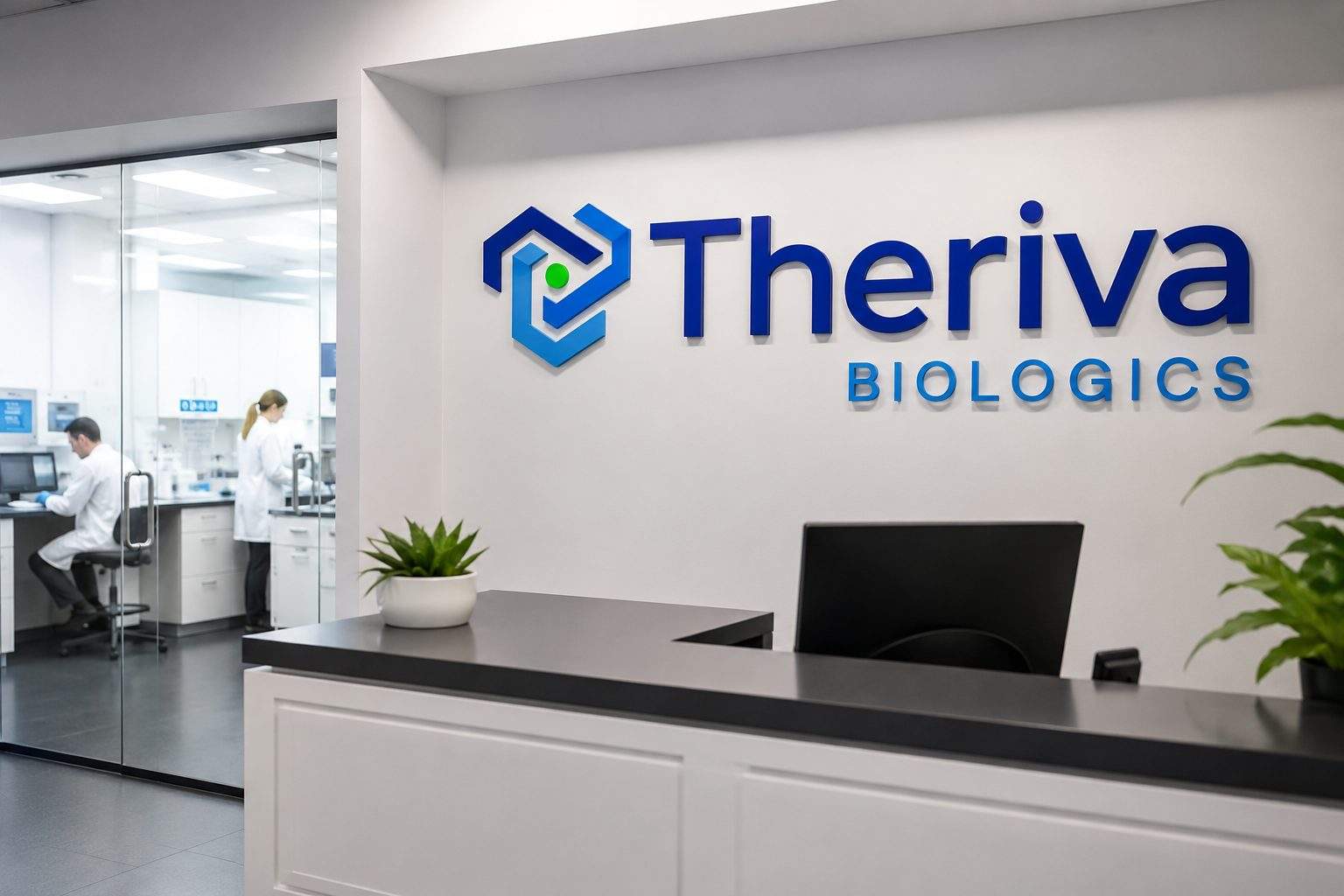
Theriva Biologics, Inc. shares surged Thursday after news that data from a Phase 1 trial of its main cancer drug VCN-01 appeared in Clinical Cancer Research. Traders jumped on TOVX, which last traded at $0.4252, up 74.6%. Volume was 144.7 million shares. Theriva’s market cap is still under $20 million, at about $17.0 million.
Headline risk moved for Theriva this morning, but it wasn’t a drug approval. The company said at 8:00 a.m. ET it got online-first publication in Clinical Cancer Research of results for its VCN-01 trial in head and neck squamous cell carcinoma, or HNSCC. HNSCC covers cancers starting in the lining of the mouth, throat or head-and-neck tissue.
Theriva shares moved on survival data from its Phase 1 trial. The study enrolled 20 adults with refractory or metastatic HNSCC, all of whom had seen their disease progress despite prior therapies like anti-PD-(L)1 checkpoint inhibitors. Median overall survival hit 10.3 months for one low-dose group, 15.5 months for a sequential low-dose group, and 17.3 months in the sequential high-dose group.
Retail investors saw a clear case for VCN-01. The data are there for the therapy’s biological approach. VCN-01 is an oncolytic adenovirus, an engineered virus meant to grow inside tumor cells, break them down, and possibly boost the effect of other cancer drugs. Theriva says VCN-01 is supposed to clear out the tumor stroma, which it describes as a barrier—physical and immune—that can stop treatments from reaching cancer cells.
The trial looked at VCN-01 in combination with durvalumab, which is an immune checkpoint inhibitor. These drugs help immune cells spot and go after tumors by blocking the signals cancer uses to hide. Durvalumab is sold as Imfinzi by AstraZeneca, and it’s already approved for several types of cancer.
Ricard Mesia at the Catalan Institute of Oncology, who coordinated the study, said, “The trial demonstrates the ability of VCN-01 to resensitize tumors” to durvalumab. That’s the point investors are watching: if VCN-01 makes checkpoint drugs work again in tumors that have stopped responding, the treatment could be moved into bigger immuno-oncology combos. GlobeNewswire
The trial turned up biomarker data traders look for to judge if a drug is doing its job. Theriva said PH20 enzyme levels went up after VCN-01 dosing, which it tied to intratumoral replication. Biopsies of tumors also revealed shifts in CD8, PD-1 and PD-L1 markers, and the company said those changes matched signs of immune activation.
There’s a key point to note. Phase 1 studies mainly look at safety, dose, and how the drug acts in the body—they aren’t set up to show the drug works well enough for approval. The abstract from the published article also said sequential VCN-01 with durvalumab was tolerated better than giving the two together, and set out a Phase 2 dose for future study. That signals a step toward more development, not a near-term launch.
Pancreatic cancer is still the main value driver here. In May, Theriva said it reached agreement with the FDA on key parts of a planned pivotal Phase 3 trial for VCN-01 with gemcitabine/nab-paclitaxel as standard chemo in metastatic pancreatic ductal adenocarcinoma, or PDAC. A pivotal Phase 3 trial is usually the large study regulators review to decide on drug approval.
Today’s head-and-neck update matters for investors because it supports the same mechanism Theriva wants to test in later studies. Theriva has told investors the pancreatic trial will use repeat VCN-01 dosing and an adaptive design. Earlier VIRAGE Phase 2b results showed gains in overall survival, progression-free survival and response duration compared to chemo alone.
The balance sheet can be a check on any rally. Theriva reported $14.4 million in cash and cash equivalents as of March 31, 2026. The company said its cash should last into the first quarter of 2027. But in its latest 10-Q, management flagged substantial doubt about continuing as a going concern past the next 12 months unless it raises more capital or takes strategic steps.
Dilution remains in play. Theriva, in a June 5 SEC filing, said it couldn’t hold a special stockholder meeting since it didn’t have a quorum. The company said it still needs the green light for possible issuance of up to 16,184,560 shares if warrants are exercised. With about 45.9 million shares out as of March 31, that’s a big overhang.
The question now for investors is if the company can use today’s spotlight to get real results, like new financing, partnerships, or clearer steps for its planned VCN-01 pancreatic cancer and retinoblastoma studies. If not, the stock’s gains are tied just to an early-stage study and a market that’s back to betting the platform’s mechanism works outside that one trial.
Related articles: Pharmaceuticals



![UK Stock Market Today 29/08/2026 [UPDATE: 08:49 BST] [Weekly Recap + Week Ahead: Midcaps Lead Before Bailey and Gilt Auction]](https://ts2.tech/wp-content/uploads/2026/08/UK-market-dashboard-2026-08-29-0843-480x384.jpg "UK Stock Market Today 29/08/2026 [UPDATE: 08:49 BST] [Weekly Recap + Week Ahead: Midcaps Lead Before Bailey and Gilt Auction]")