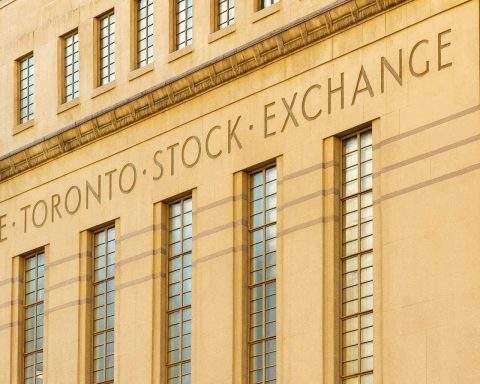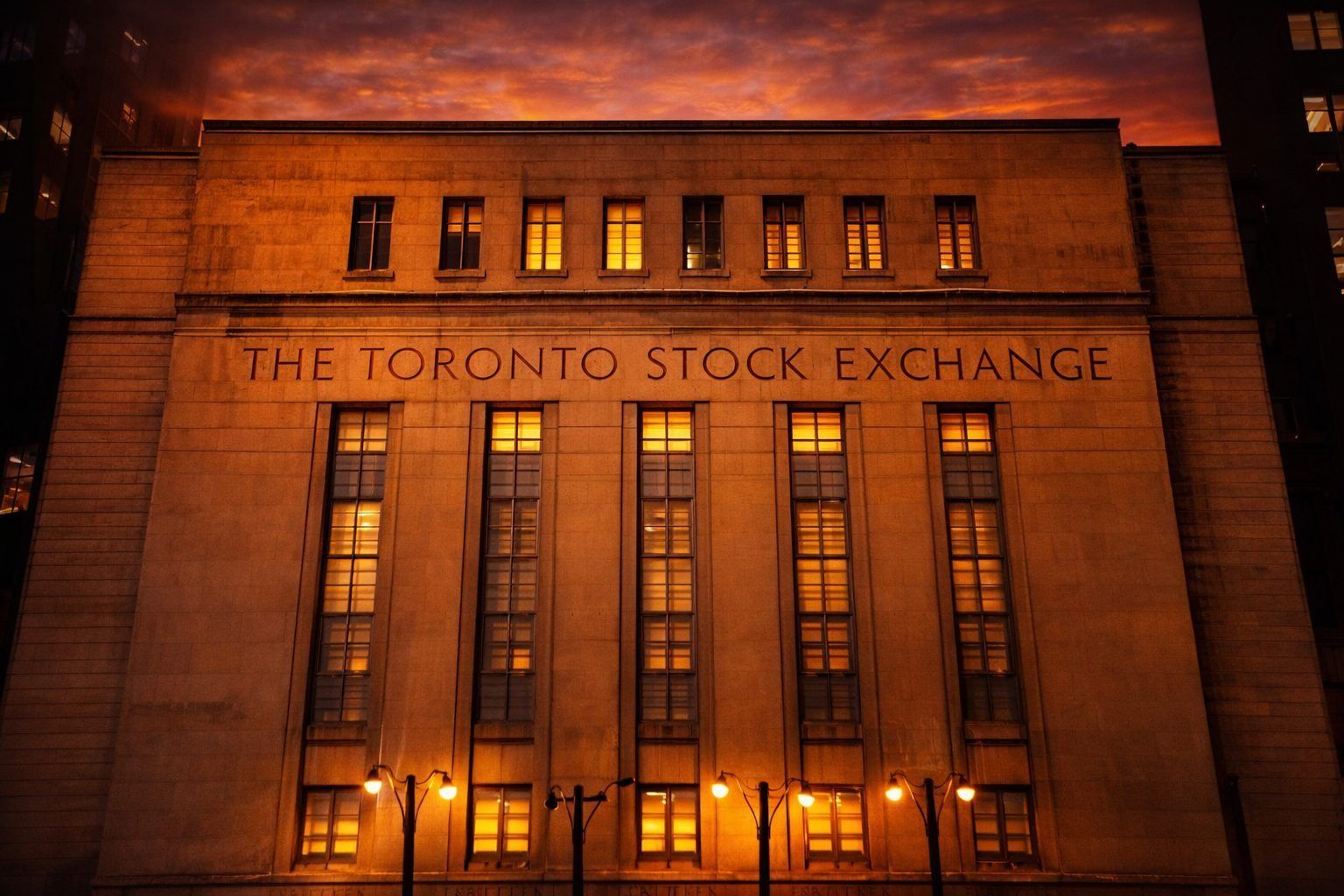
NEW YORK, Dec. 27, 2025, 8:35 a.m. ET — Market closed
The Toronto Stock Exchange is shut for the weekend, and Canadian equities are effectively in “pause mode” after a holiday-shortened stretch that left the benchmark S&P/TSX Composite hovering just below a psychological milestone: 32,000.
That “quiet” headline hides a louder reality. The last full trading pulse from Toronto came in a thin, early-closing Christmas Eve session—and since then, the global market narrative has been dominated by two forces TSX investors obsess over for good reason: commodities and rates.
With trading set to resume Monday, Dec. 29, Canadian investors are heading into the year’s final three sessions with a straightforward question: does the fuel that powered the TSX through 2025—financials, metals, and a commodity bid—still have enough octane to carry into the opening days of 2026?
Where the TSX left off before the break
In the final session before the Christmas and Boxing Day closures, Canada’s main index slipped modestly in light volume. The S&P/TSX Composite ended down 0.2% at 31,999.76 on Wednesday, Dec. 24, with the materials group down 0.9% and energy down 0.3%. Reuters
Even with that small dip, the scoreboard for 2025 remains striking: Reuters reported the TSX was up 29.4% for the year as of Dec. 24—its biggest annual gain since 2009—led by financial and metal mining shares. Reuters
The exchange’s calendar underscores why the latest Toronto close feels “stale” compared with markets that traded Friday: the TSX closed early at 1:00 p.m. ET on Christmas Eve and was closed entirely on Christmas Day and Boxing Day. TSX.com
What changed while Toronto was dark: metals went vertical, oil blinked
The biggest market shockwave in the last 24–48 hours has been the precious-metals complex.
Reuters reported Friday that silver jumped to a fresh record (up roughly 9% on the day), while gold and platinum also hit all-time highs—an explosive move that matters disproportionately for Canada because the TSX is structurally more sensitive to miners and materials than many global peers. Reuters
That metals surge is not just a “commodity story.” It’s a TSX sector story:
- Higher gold and silver prices can reprice Canadian metal miners quickly when Toronto reopens, especially after a year in which the materials sleeve has already delivered outsize influence on the index’s trajectory. BMO Economics+1
- It also feeds into the broader “rates and dollar” narrative, since expectations of easier monetary policy tend to support non-yielding assets like precious metals. Reuters+1
Energy, meanwhile, sent a more mixed signal. In the U.S. session on Friday, crude oil prices fell 2.8%, according to the Associated Press—an important datapoint for Canada’s energy-heavy market heading into Monday. AP News
Wall Street’s year-end tone: calm, thin, and still near the highs
While Toronto was closed Friday, U.S. equities traded—and mostly marked time.
Reuters described a light-volume, post-Christmas session that ended marginally lower, snapping a short winning streak but keeping major indexes close to record levels. Strategist Ryan Detrick of Carson Group framed it as a pause after a strong run, with investors still watching the traditional “Santa Claus rally” window into early January. Reuters
For TSX investors, the implication is less about seasonal folklore and more about risk appetite: when U.S. markets remain steady near peaks, it can support global equity sentiment—especially in a late-December tape where liquidity is thin and price moves can be exaggerated.
The loonie is stronger—and that’s a double-edged sword for Canadian stocks
The Canadian dollar’s late-December strength is another piece of the TSX setup.
Reuters reported that on Dec. 24 the loonie climbed to its strongest level in nearly five months (around 1.3672 per U.S. dollar), supported by firmer commodities and broad U.S. dollar softness. Scotiabank’s Shaun Osborne and Eric Theoret pointed to factors including narrower Canada–U.S. yield spreads, better relative economic surprises, and commodity gains. Reuters
A stronger Canadian dollar can cut both ways for the TSX:
- It can pressure earnings translations for exporters and multinationals that report in Canadian dollars but earn heavily in U.S. dollars.
- It can also ease imported inflation pressures at the margin—relevant to rate expectations, discount rates, and consumer-sensitive businesses.
“Not bubble territory,” but valuations matter: what strategists are saying
The TSX didn’t climb close to 30% in 2025 on vibes alone. But as valuations rise, markets need either better earnings or lower discount rates to justify further gains.
In a note cited by Reuters, CIBC Capital Markets strategists—including Christopher Harvey—argued that Canadian equity valuation is “above its longer term average but nowhere near bubble territory,” and pointed to tight investment-grade credit spreads and capital-expenditure tailwinds (including data-center buildout) alongside infrastructure priorities as support for double-digit earnings-per-share growth. Reuters
That thesis dovetails with a larger Canada narrative: an index built around banks, miners, and energy can look “old economy” on paper, yet still benefit from modern capex themes like electrification, AI infrastructure buildout, and resource-intensive supply chains.
2026 outlook: upside forecast, but volatility warnings are loud
Looking beyond Monday’s reopening and into 2026, the most widely cited baseline forecast still calls for new highs—but not a repeat of 2025’s pace.
A Reuters poll of strategists and portfolio managers published in late November put the median end‑2026 target for the S&P/TSX Composite at 32,125—about a 5% gain from late‑November levels. Philip Petursson, chief investment strategist at IG Wealth Management, said he was more optimistic heading into 2026 as tariff uncertainty becomes less ambiguous and central banks shift toward accommodation. Reuters
The same Reuters poll also highlighted why investors shouldn’t confuse “new highs” with “smooth sailing”:
- Energy and materials together account for about 32% of TSX market capitalization, reinforcing how commodity-sensitive Canada’s benchmark remains. Reuters
- 11 of 15 respondents said a correction over the coming three months was likely or very likely. Reuters
- Angelo Kourkafas, senior global investment strategist at Edward Jones, warned that 2025’s strong gains will be hard to replicate after a valuation re-rating—and suggested the tailwind from surging gold prices may be “largely exhausted,” implying slower returns and higher volatility. Reuters
That last point lands differently this weekend, given that gold just notched another record on Friday. Reuters
If precious metals stay elevated, Kourkafas’ caution becomes less about “gold can’t rise” and more about the market’s sensitivity to crowded positioning and sharp reversals after parabolic moves.
Big-picture framing: Canada’s index is not Canada’s economy—and that matters
One reason the TSX can rally even when headlines sound gloomy is composition.
BMO Chief Economist Douglas Porter noted that the Canadian equity market had one of its best years of the century in 2025, with a total return nearing 30%, and argued that the TSX’s heavy weight in mining, materials, energy, and financials means it isn’t a clean mirror of GDP—but can still act as a useful leading indicator. BMO Economics
RBC Wealth Management’s Matt Altro and Brett Feland made a similar case in their 2026 Canada outlook: they attributed TSX outperformance in part to all-time high gold prices and an improving outlook for domestic lenders, while noting the S&P/TSX was trading around 15.9x earnings—above its long-term average—yet at a less-stretched premium than the S&P 500. RBC Wealth Management
What investors should know before the next TSX session
Because the TSX is closed right now, Monday’s open is where weekend information gets “priced in.” Here’s what tends to matter most in this specific setup:
Commodity direction can gap the index at the open.
With silver and gold setting records Friday, TSX materials and precious-metal miners may see the first meaningful repricing on Monday—especially after a Dec. 24 session where mining shares were already giving back some gains. Reuters+1
Energy stocks are walking into mixed signals.
Oil’s late-week drop in U.S. trading is a potential headwind for Canadian energy shares, after energy was already a drag in the last Toronto session. AP News+1
Thin liquidity can magnify moves.
Late-December sessions often come with lighter participation, which can widen spreads and amplify price jumps—up or down. Reuters noted thin trading conditions around the holiday period in both Canada and the U.S. Reuters+1
Know the TSX clock if you’re staging orders.
The TSX’s regular trading day runs 9:30 a.m. to 4:00 p.m. ET, with a pre-open session starting at 7:00 a.m. ET and an extended trading session from 4:15 p.m. to 5:00 p.m. ET. That matters for how orders queue and how liquidity behaves around the open and close. TSX.com
Rate expectations remain the “gravity setting” for valuations.
The Bank of Canada’s policy rate stood at 2.25% as of its Dec. 10 decision. Bank of Canada
And in minutes released Dec. 23, Reuters reported BoC officials emphasized uncertainty about whether the next move would be a hike or a cut—an unusual posture that can keep bond yields and bank-stock expectations sensitive to incoming data and trade-policy developments. Reuters
The setup for Monday: TSX reopens into a commodity-led headline storm
Put it all together and the Toronto Stock Exchange is reopening into an environment that’s oddly “quiet” on the surface—U.S. equities near highs, year-end volumes thin—but potentially volatile underneath, because the price of the TSX’s key inputs (gold, silver, oil, and the Canadian dollar) moved meaningfully while Toronto wasn’t trading.
That’s the defining edge of a market like the TSX: it can look calm until the commodities and rates start talking. Over the last 48 hours, they’ve been shouting. Reuters+2AP News+2