
NEW YORK, Dec. 27, 2025, 8:47 a.m. ET — Market closed.
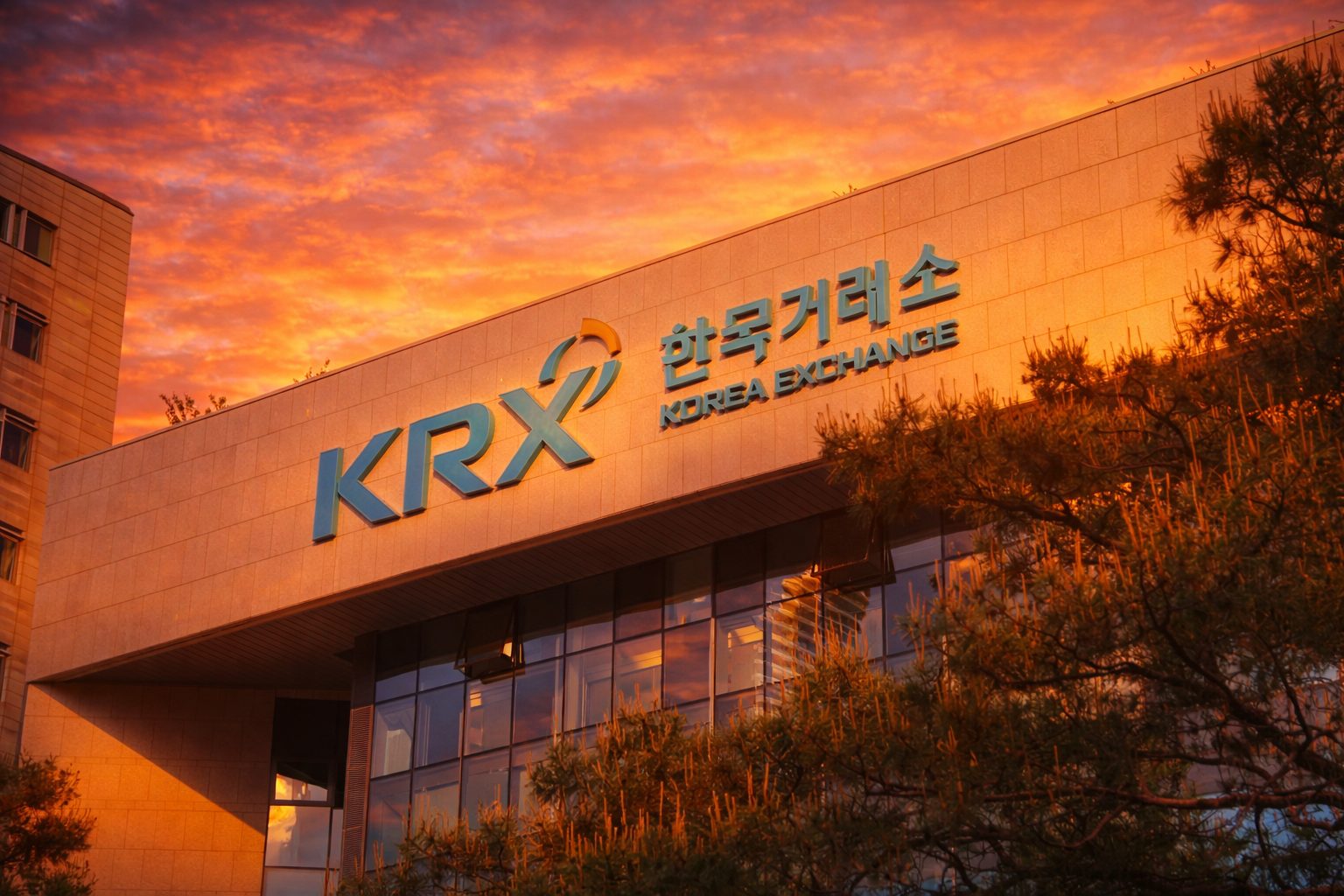
The Korea Exchange (KRX) heads into the final full week of 2025 with two big narratives colliding: a powerful, semiconductor-led equity run that has pulled foreign capital back into Seoul—and a fast-moving regulatory and market-structure response from the bourse itself, aimed at keeping the rally liquid without letting surveillance slip.
With U.S. markets shut for the weekend and KRX trading paused until Monday in Seoul, investors are left to digest Friday’s close, a sharp turn in currency momentum, and a set of rule changes that could reshape how Korea’s hottest large-caps trade as early as Dec. 29.
KOSPI ends Friday higher as foreign buying targets chips
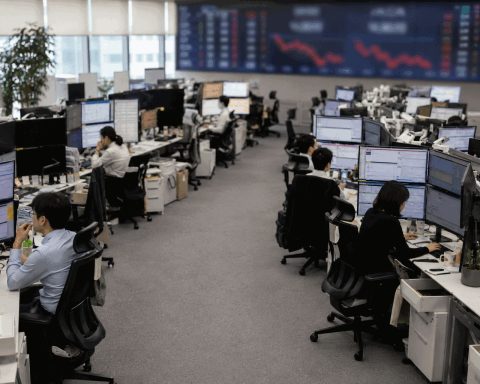
South Korean stocks finished Friday, Dec. 26, on a firm note, with the KOSPI rising 0.51% to 4,129.68—powered by heavyweight tech moves and a notable wave of foreign buying.
The session had the kind of tape action global investors tend to notice: foreigners and institutions net purchased 1.78 trillion won and 388 billion won, respectively, while retail investors were net sellers. Turnover was “slightly heavy,” with 502.7 million shares worth about 16 trillion won changing hands. Korea Joongang Daily
Leadership came from the names that effectively are the KOSPI in risk-on moments:
- Samsung Electronics jumped 5.31% to an all-time high of 117,000 won, following reports it independently developed a smartphone GPU (graphics processing unit).
- SK hynix gained 1.87% to 599,000 won, staying in focus as a favored foreign bid amid the global AI hardware cycle.
Lee Jae-won, an analyst at Shinhan Securities, attributed the move to rising foreign inflows as “concerns over an AI bubble” eased—while noting that much of the buying was concentrated in semiconductor shares. Korea Joongang Daily
Several non-chip movers underscored how stretched (and energetic) year-end positioning has become. SK Square rose 4.21% after an investment warning was lifted, and Mirae Asset Securities surged nearly 21% on expectations it could benefit from a potential SpaceX IPO next year, given its reported investment exposure.
KRX’s market-warning overhaul: “Top 100” large-caps get carved out
As Korea’s benchmark index has climbed to historic territory in 2025, KRX has faced criticism that its investor-protection tools—designed to cool overheated trading—were increasingly colliding with legitimate price discovery in mega-cap names.
That tension broke into the open around the exchange’s “investment warning” designations, after several large-cap stocks that posted outsized one-year gains were flagged under criteria tied to “ultra-long-term rises” and potentially unhealthy trading patterns. 경향신문
On Dec. 26, KRX’s Market Surveillance Committee announced sweeping revisions:
- Large-cap stocks ranked in the top 100 by combined KOSPI/KOSDAQ market capitalization will be excluded from being designated as “investment warning” issues under the ultra-long-term rise criterion. 아시아경제+1
- The key price criterion was shifted away from a blunt “up 200% in a year” concept toward an index-relative standard: under the revision, a stock must exceed its relevant market index’s rise and still be up 200%+ to qualify under that bucket. The Khan report gives a simple example: if the KOSPI rose 70% over a year, a stock would need to rise at least 270% to trigger. 경향신문+1
- The “cooling-off” window was extended: stocks removed from the investment-warning list cannot be redesignated for 60 business days, up from 30. 경향신문+1
- The rule changes take effect on Dec. 29, and both SK hynix and Hanwha Aerospace are expected to be removed the same day under the updated framework, according to the Khan report.
Why investors care: these designations are not just labels. The Khan report notes that once a stock is designated as an investment warning issue, credit-financed buying can be banned and a 100% initial margin can be required, which can mechanically compress demand.
KRX’s message, however, is not “hands off.” The Market Surveillance Committee emphasized it would continue close monitoring across the entire market to prevent unfair trading—even for stocks exempted from investment-warning designation under the revised category. 아시아경제+1
KRX explores 12-hour trading: pre-market + after-market could reshape Korea’s trading day
In parallel, KRX is pressing ahead with a market-structure shift that—if implemented—would meaningfully change how Korea connects to global liquidity.
According to The Asia Business Daily (Asiae), KRX is moving forward with full-scale system development to extend stock trading hours to 12 hours, including potential pre-market and after-market sessions. The exchange is reportedly considering operating windows of 7 a.m. to 7 p.m. or 8 a.m. to 8 p.m. (Korea time), with a decision on the format expected within the first quarter of next year.
Multiple outlets also report KRX plans a board meeting on Dec. 29 tied to an organizational restructuring that includes establishing a task force to build the pre/after-market systems.
For global investors, the strategic “why” is straightforward: longer hours can reduce the overnight information gap between Korea’s cash equity market and U.S./Europe trading, especially in sectors like semiconductors where price discovery is globally synchronized.
But longer hours also raise tricky microstructure questions—particularly around liquidity and volatility in thinner sessions.
The plumbing matters: KRX builds an “order carryover” system (and worries about thin liquidity)
One of the most concrete signals that KRX is serious about extended-hours trading is what it’s doing behind the scenes.
Seoul Economic Daily reports that KRX has begun developing a next-generation “order carryover” system so unfilled orders can be managed continuously across sessions as markets transition between regular and off-hours trading. A KRX official told the outlet the exchange decided “starting this fall” to organize a dedicated team to lay the technical foundation for more flexible order processing, coordinating compatibility with securities firms’ systems. Seoul Economic Daily
The same report says KRX is internally targeting completion by 2027—and highlights the central risk: pre- and after-market sessions can have fewer participants and wider bid-ask spreads, which can amplify volatility. Rather than forcing all orders to roll automatically, KRX is focusing on giving investors order-stage choices (for example, how long an order remains valid and whether it cancels when the session changes).
Currency backdrop: won firms as NPS hedging returns and authorities lean in
KRX trading is ultimately a two-asset story for global allocators: equities and the Korean won.
On Friday, Dec. 26, the won strengthened sharply, with Yonhap reporting via The Korea Times that it was quoted at 1,440.3 won per dollar at 3:30 p.m., up 9.5 won, its strongest since Nov. 4. The move was tied to the National Pension Service (NPS) resuming strategic currency hedging and to authorities’ efforts to stabilize the FX market.
Choi Ji-wook, an analyst at Korea Investment & Securities, said the won is unlikely to see another sharp short-term decline and that the recent measures should help stabilize sentiment that had been skewed toward won weakness—adding that a key near-term tell is whether the exchange rate can close below 1,450 into year-end.
Reuters has also reported that the NPS initiated a new round of strategic FX hedging this week, describing it as a confidential operation expected to run for a meaningful period, and citing economists and traders who see the scale of hedging as potentially capping one-sided bearish momentum in the won.
Separately, Reuters reported the Bank of Korea’s 2026 monetary policy plans emphasize data dependence on further rate cuts and intensified market monitoring given caution around FX volatility—an important macro overlay for Korea’s risk assets heading into 2026.
China’s yuan breaks below 7 per dollar—analysts see spillover support for the won
Another macro thread gaining attention: China’s currency move.
Korea JoongAng Daily reported the offshore yuan moved below 7 per dollar for the first time in 15 months, a shift that can matter for Korea because the won often trades in sympathy with broader Asia FX—particularly the yuan.
The same report cited multiple forecasts and analyst views:
- Wang Qing, chief macro analyst at Golden Credit Rating, told Bloomberg (as relayed by JoongAng Daily) that sustained yuan gains could help draw foreign interest back toward China’s capital markets.
- Lin Lily, Asian head of global markets research at Mitsubishi UFJ Financial Group (MUFG), projected the yuan could strengthen to 6.95 per dollar by year-end 2025 in a scenario where U.S. rate cuts weaken the dollar.
- The article also notes Goldman Sachs has projected the yuan could reach 6.85 per dollar within a year.
- Min Gyeong-won, a researcher at Woori Bank, said gains in the yen, yuan and other Asian currencies have created favorable conditions for a stronger won.
Global risk tone: quiet U.S. “Santa rally” week, chips in focus
Even though Korea sets its own tape, global positioning still matters—especially when Korea’s leaders are semiconductors.
Reuters described Friday’s post-Christmas U.S. session as light-volume and largely catalyst-free, with Wall Street ending marginally lower but still within the seasonal “Santa Claus rally” window that traders watch into year-end. Reuters
Meanwhile, MarketWatch noted that semiconductor momentum has shown signs of cooling from late-2025 highs, but technical strategist Ari Wald argued the broader uptrend remains intact and may represent consolidation rather than a full reversal—context that matters for Korea’s chip-heavy index leadership.
What investors should know before KRX reopens Monday
With the exchange closed now, the practical question becomes: what’s most likely to move Korean equities at the next open?
1) Dec. 29 is a rule-change day.
KRX’s revised investment-warning framework is set to take effect on Dec. 29, including the top-100 market-cap exclusion and the tighter rules around redesignation windows. Traders should expect heightened attention on names that were recently flagged or could have been flagged under the old criteria—because mechanical constraints can change quickly when the rulebook changes.
2) Monday is also Korea’s year-end ex-dividend pivot for many names.
KRX has designated the ex-dividend date as Dec. 29 for listed companies with a December year-end settlement, and reported that investors who purchased shares by Dec. 26 would be eligible to receive dividends. That timing can influence flows and price action as shares begin trading without the upcoming dividend entitlement.
3) Watch FX as closely as the index.
The won’s recent stabilization—helped by NPS hedging and official signaling—can support foreign appetite for Korean equities at the margin. But year-end liquidity is often thinner, and policy headlines can move the currency quickly.
4) Keep an eye on upcoming holiday scheduling and session mechanics.
KRX previously designated Dec. 31 as a year-end market holiday and said the market operates until Dec. 30. It also announced that on Jan. 2, 2026, the securities regular session will open at 10:00 a.m. (with derivatives at 9:45 a.m.) due to the market opening ceremony, with closing times unchanged. Investors placing orders around the turn of the year often need to adjust time-sensitive strategies accordingly.
As 2025 closes, the Korea Exchange is effectively trying to do two hard things at once: keep Korea’s price discovery globally competitive (longer hours, more flexible order handling) while keeping surveillance credible in a market where mega-cap “AI winners” can rip higher fast enough to trip protection systems built for a calmer world. The next few sessions—starting Monday—will show whether the new balance holds.
Related articles: KRX:005930