
NEW YORK, September 5, 2026, 11:58 EDT — U.S. forces struck three Iranian oil tankers Saturday. The attack inserted a fresh shock into crude markets after West Texas Intermediate gained 9.7% last week. Oil futures get the first vote Sunday evening. U.S. stocks remain closed until Tuesday.
The direct loss of three vessels is not the biggest number. The harder question is whether Iran retaliates against escorts, export infrastructure or the shipping corridor. Each path could reduce already-thin physical flows.
Hormuz oil traffic averaged 4.9 million barrels daily in the second quarter, the U.S. Energy Information Administration estimates. That was 77% below the 21.6 million recorded before the war. Another disruption would hit a route with little spare room.
Crude carried a large premium into the weekend
October WTI futures, U.S. dollars per barrel
WTI gained $8.08 from August 28 through the . Sources: Yahoo Finance futures history and Bloomberg settlement reporting.
The fleet hit is not the main number
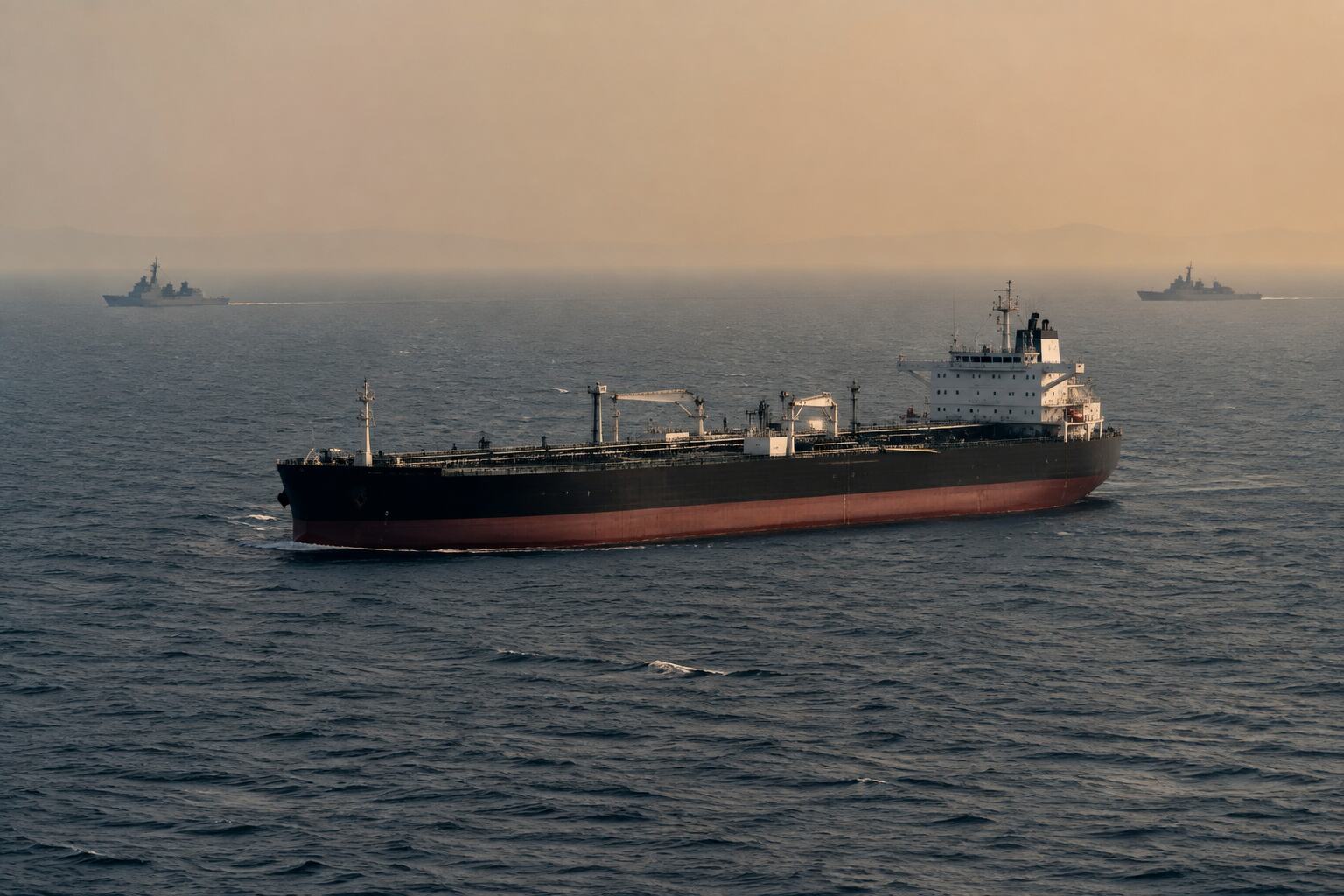
A U.S. aircraft carrier and destroyer evaded several Iranian attacks, according to the Associated Press account of CENTCOM’s statement. No U.S. personnel were hurt. American forces then disabled two Iranian oil carriers and destroyed a third, unladen ship.
One tanker was near Kharg Island, Iran’s central crude-export hub. Another was struck near Jask, east of the strait. The empty vessel was in the Gulf of Oman.
Admiral Brad Cooper said the U.S. would defend its forces and, if required, destroy Iran’s “limited and exposed oil fleet.” That language widens the possible target set. It also raises the chance of another Iranian response.
Hormuz was already moving less than one-quarter of prewar oil
Average oil and petroleum-liquid flows, million barrels per day
Flow estimates: EIA August energy-security analysis. Bypass capacity combines 5 million bpd available for Saudi exports and the UAE’s 1.8 million-bpd pipeline; capacity is not the same as unused space.
The physical picture had begun improving before Saturday. TankerTrackers identified oil and gas cargoes totaling about 7 million barrels preparing to move under U.S. protection. It also counted 17 ship-to-ship transfers involving 24 million barrels Friday.
Those figures need care. Transfers in the Gulf of Oman are not completed Hormuz crossings. A staged cargo is not a sustainable daily rate.
Kpler’s latest framework puts strait flows near 5 million to 10 million barrels daily, depending on definitions and reporting lags. The firm warns that ships running without transponders make the newest days revise higher. Four commodity vessels crossed on September 1, versus a recent average near 13.
That distinction is the weekend trade. Completed passages would contain the premium. More waiting cargoes, darker transponders or retaliatory attacks would argue for another rise.
Friday’s stock tape did not price Saturday
U.S. energy shares weakened before the strike. The Energy Select Sector SPDR Fund (NYSEARCA:XLE) fell 0.9% Friday. Exxon Mobil Corporation (NYSE:XOM) lost 1.7%, while Chevron Corporation (NYSE:CVX) dropped 1.3%.
Transport stocks moved the other way. American Airlines Group Inc. (NASDAQ:AAL) gained 1.2%. United Airlines Holdings Inc. (NASDAQ:UAL) rose 2.5%.
The Saturday shock arrived after an opposite Friday tape
Regular-session change on September 4
Closing-price changes from Yahoo Finance market data. These securities will not reflect Saturday’s strike until U.S. trading resumes.
That setup creates gap risk for Tuesday. Higher crude can aid upstream earnings, but the relationship is not automatic. Refining margins, hedge books and production locations still matter.
Airlines face the inverse pressure through jet fuel. A one-session move says little about annual costs. Sustained crude and product gains would matter far more.
Norbert Rucker of Julius Baer said Friday that oil’s rally looked “mostly mood and fear driven.” Saturday’s strike provides a clean test. Physical passage data must now confirm or reject the fear.
The first price marker is $92.17, Friday’s WTI high. A Sunday move above it would show a larger security premium. Trading below the $91.48 settlement would signal restraint.
The calendar adds a wrinkle. CME’s Labor Day schedule opens energy futures Sunday for Tuesday’s trade date. There will be no official Monday settlement. Cash equities reopen Tuesday.
OPEC+ also meets Sunday. Its production decision matters less if tankers cannot exit safely. Traders should watch completed crossings, not promised barrels.
Risks run both ways. Further strikes near Kharg, escorts or merchant shipping could lift crude and hurt transport shares. A quiet corridor and successful convoys could quickly remove part of the war premium.