
NEW YORK, May 8, 2026, 19:05 EDT
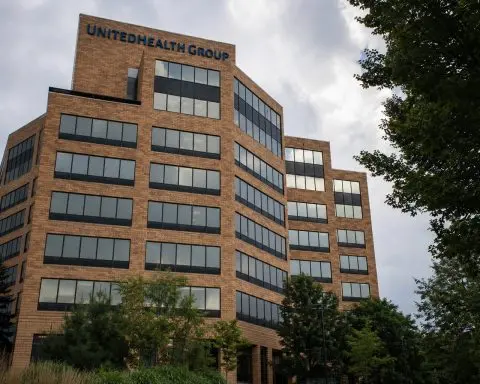
UnitedHealth Group Incorporated added 2.8% on Friday, finishing at $379.98—marking its third session in the green as traders circled back to U.S. health insurers on hints that medical-cost pressures could be letting up. UNH easily outperformed the S&P 500’s 0.84% climb, wrapping up a week that saw the stock bounce back after Tuesday’s slip.
This shift is drawing attention as Wall Street tries to figure out if the biggest U.S. health insurer is moving beyond patching things up and starting to rebound. CVS Health bumped up its 2026 profit outlook in the past two days on tighter Aetna cost management. Molina Healthcare, for its part, outlined a profit goal further out, hinging on steady claims expenses.
UnitedHealth’s April numbers gave the market some footing: first-quarter revenue landed at $111.7 billion, with earnings at $6.90 per share and adjusted earnings reaching $7.23. The company also bumped its full-year adjusted earnings forecast above $18.25 a share. CEO Stephen Hemsley said UnitedHealth aims to deliver “greater value, affordability, transparency and connectivity.” UnitedHealth Group
The next hurdle isn’t sales—it’s the friction baked into the process. UnitedHealthcare on Tuesday announced plans to drop prior authorization requirements for 30% of services that currently demand insurer sign-off, targeting areas like select outpatient surgeries, some diagnostic tests such as echocardiograms, specific therapies, and chiropractic care. The company aims to implement these changes by the end of 2026.
Prior authorization remains a flashpoint across the industry. UnitedHealthcare chief Tim Noel says it should only come into play when it “truly protects patients and improves care.” The company maintains that prior authorization kicks in for just 2% of its medical services, and roughly 92% of those requests receive a green light within 24 hours on average. UnitedHealth Group
CVS underscored the sector’s narrative with its latest results. The company’s Aetna insurance division posted a medical loss ratio of 84.6%—missing analyst forecasts pegged at 87.58%. “The cost trend did not surprise me,” Chief Financial Officer Brian Newman said. Leerink’s Michael Cherny described the quarter as “very strong.” Reuters
Molina on Friday projected its 2029 adjusted profit at $20 to $30 a share—up sharply from 2026’s baseline of at least $5 a share, assuming medical costs stay in check. CEO Joe Zubretsky expects those costs to settle down, but told investors they’ll “wait and see” if the second and third quarter numbers bear that out. Ann Hynes of Mizuho called Molina’s reduced margin goal “achievable for the company.” Reuters
This rally had company. Humana surged 11.3% on Friday, with CVS up 3.7% and UnitedHealth adding 2.8%. Elevance Health moved 1.3% higher, according to market data. Humana and CVS both operate with significant Medicare Advantage exposure, serving older adults and some people with disabilities through those private plans.
The picture isn’t straightforward. Medical expenses could jump if seniors require more care, and CVS’s CFO flagged that the 2027 Medicare Advantage payment bump from the U.S. government still falls short of projected costs. UnitedHealth’s most recent quarterly report pointed out the unpredictability of legal and regulatory expenses and disclosed ongoing responses to subpoenas, information requests, and government investigations.
UnitedHealth said it’s facing compliance reviews tied to Medicare risk-adjustment coding—a payment framework that increases payouts for sicker patients. An unfavorable outcome there, or an uptick in care demand, puts the pace of margin recovery in question. That’s a key risk with UNH shares, which already reflect hopes for a rebound.
At this stage, investors want evidence that management has things in hand. UnitedHealth lifted its outlook, trimmed a few bureaucratic snags, and got a boost from peer numbers. The challenge ahead: claims in the next two quarters will need to match that story.
Related articles: NYSE:UNH


![Asia Stock Market Today 29/08/2026 [UPDATE: 00:55 SGT] [PayPal and Nvidia Sink as KASE Global Nears Weekend Close]](https://ts2.tech/wp-content/uploads/2026/08/Asia-market-dashboard-2026-08-29-0053-480x384.jpg "Asia Stock Market Today 29/08/2026 [UPDATE: 00:55 SGT] [PayPal and Nvidia Sink as KASE Global Nears Weekend Close]")