
Updated: December 17, 2025, 4:40 PM EST
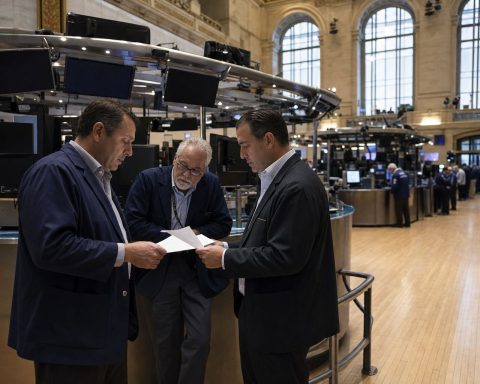
Wall Street ended sharply lower Wednesday as the market’s leadership trade—artificial intelligence—took another hit, dragging big tech, chips, and cloud-linked names down to their weakest levels in weeks. The selling pressure pushed the S&P 500 down 1.2% to 6,721.43, while the Nasdaq Composite slid 1.8% to 22,693.32. The Dow Jones Industrial Average fell 228 points (0.5%) to 47,885.97.
The headline theme was familiar, but the triggers kept piling up: a fresh funding setback tied to Oracle’s data-center buildout, new reporting on Alphabet’s effort to loosen Nvidia’s grip on AI software, and an ongoing debate over whether the returns on massive AI spending will justify today’s valuations.
At the same time, energy stocks rallied as crude prices rose after President Donald Trump ordered a blockade targeting sanctioned oil tankers connected to Venezuela—injecting geopolitics back into the inflation and rates conversation just as investors brace for a key U.S. inflation report due Thursday morning.
The closing numbers: stocks post the worst day in nearly a month
Wednesday’s drop extended a losing streak for the major indexes and marked their weakest performance in several weeks, with tech doing the most damage. In addition to the S&P 500’s -1.2% decline, the Nasdaq’s -1.8% slide underscored a broad pullback from high-momentum AI winners, while the Dow held up relatively better thanks to strength in pockets like energy.
Market breadth was negative, too. On the NYSE, declining stocks outnumbered advancers by roughly 1.5-to-1, and on the Nasdaq, decliners beat advancers by about 2.1-to-1, according to Reuters.
Despite this week’s pullback, 2025 remains a strong year for equities overall. Year to date, the Nasdaq is still up about 17.5%, the S&P 500 about 14.3%, and the Dow about 12.6%, reflecting how powerful the AI-led run has been—even after the recent wobble.
Why tech and AI stocks fell again: the market is questioning “ROI on AI”
Oracle’s data-center funding headline reignited the capex debate
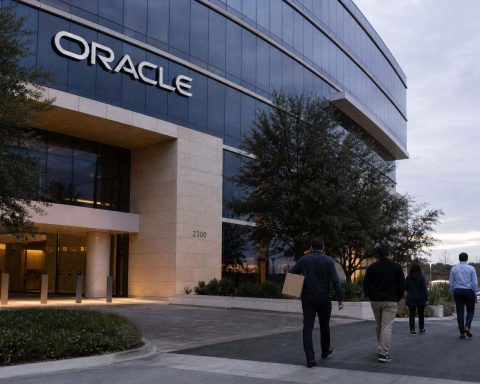
A major catalyst Wednesday was Oracle, which fell 5.4% after a report said its largest data-center partner, Blue Owl Capital, would not back a $10 billion deal for Oracle’s next facility—reviving concerns that the AI infrastructure boom may be getting harder (and more expensive) to finance.
Investors have become increasingly sensitive to the “who pays” question behind the AI buildout: hyperscalers, chipmakers, cloud providers, private credit, and infrastructure financiers are all tied into the same spending loop. Reuters quoted Baird Private Wealth’s Ross Mayfield pointing to “percolating anxiety” about the AI trade and the sustainability of the current spending cycle. Reuters
Chips and AI bellwethers led the retreat
AI bellwether Nvidia fell about 3.8%, while Broadcom dropped around 4.5%, and a broader chip index slid close to 4%—a sign the selloff was not limited to one company headline.
The Associated Press noted that the AI slide has also been accompanied by more skepticism about real-world adoption: a UBS survey cited in AP reporting found only 17% of major businesses were using AI projects at scale, adding fuel to the narrative that monetization could lag the hype.
Alphabet and Meta: a new front in the Nvidia “moat” debate
Another storyline rattling the AI complex: Reuters reported that Google is working on an initiative internally known as “TorchTPU” to make its AI chips run PyTorch more seamlessly—aimed at reducing reliance on Nvidia’s CUDA software ecosystem—with Meta involved because of its deep ties to PyTorch. Alphabet shares fell on the day as markets digested the implications. Reuters+1
In plain terms: investors aren’t just reevaluating AI demand—they’re also starting to price in the possibility of intensifying AI competition, including threats to Nvidia’s software advantage.
Amazon–OpenAI talks underscored the “spending spiral” concern
Adding to the capex anxiety, Reuters reported that Amazon is in talks to invest about $10 billion in OpenAI, in discussions that could value OpenAI at more than $500 billion. The story highlighted relentless demand for computing power across the AI ecosystem—exactly the kind of spending that bulls view as a multi-year supercycle, and bears view as a debt-and-returns risk.
Energy was the standout winner as oil jumped on Venezuela blockade headlines
While tech sank, energy stocks rose, supported by higher crude prices. Reuters reported that Brent crude settled at $59.68 a barrel (+1.3%) and WTI settled at $55.94 (+1.2%) after Trump ordered a blockade of sanctioned tankers entering and leaving Venezuela.
The market reaction mattered for two reasons:
- Equities: Energy names outperformed, with Reuters noting gains of more than 4% for ConocoPhillips and Occidental Petroleum.
- Macro/inflation: Oil’s rebound came right before a crucial U.S. inflation release, keeping “inflation anxiety” in focus and complicating the narrative that rate cuts can proceed smoothly. Reuters’ Morning Bid described inflation and geopolitics as key reasons the typical year-end “Santa rally” has been elusive. Reuters+1
Even within the oil story, there’s uncertainty. Reuters emphasized that it’s unclear how the blockade would be implemented or how many tankers would be affected, and cited analysts cautioning that the move may add only a modest risk premium rather than tighten global balances on its own.
The Fed and inflation: Waller turns dovish, but CPI is the next test
Waller signals room to cut rates further
Federal Reserve Governor Christopher Waller provided some counterweight to the risk-off tone, suggesting the Fed still has room to cut rates as the job market softens.
MarketWatch reported Waller said he expects inflation to begin falling over the next three to four months and argued rates could come down at a “moderate pace,” potentially 50 to 100 basis points to below 3%, though he acknowledged not everyone at the Fed agrees on where “neutral” sits. MarketWatch
CPI arrives Thursday morning—after shutdown-related delays
The next major catalyst is the Consumer Price Index for November 2025, scheduled for release Thursday, Dec. 18, 2025 at 8:30 a.m. Eastern, according to the Bureau of Labor Statistics.
Investors have been especially sensitive to each data point because the 43-day federal government shutdown disrupted the normal reporting calendar, leaving markets to trade with less clarity on the economy than usual, as Reuters outlined in its week-ahead analysis.
What economists and “nowcasts” are pointing to
Forecasts circulating into Thursday generally look for inflation to remain sticky rather than collapse:
- RSM’s preview expects headline CPI up 0.3% month over month and core CPI up 0.2% for November.
- The Cleveland Fed’s inflation nowcasting page (updated 12/17) puts the November CPI around 3.0% year over year, with core inflation also near 3.0%.
The near-term market setup is straightforward: a softer-than-expected CPI could reinforce the idea that rate cuts can continue in 2026, while a hotter print risks reigniting the “higher-for-longer” narrative—especially with oil bouncing and year-end liquidity thinning.
Key stock movers and notable corporate headlines
Beyond the mega-cap AI complex, a few stock-specific moves stood out:
- Lennar fell after disappointing results and guidance, adding pressure to housing-linked equities.
- Progressive slid after its latest monthly update showed net income down year over year even as premiums grew—investors focused on profitability and the combined ratio.
- In media, Reuters reported Warner Bros. Discovery’s board rejected Paramount Skydance’s $108.4 billionhostile bid and favored Netflix’s binding offer, contributing to sharp single-stock moves even as the broader tape weakened.
After-hours (as of 4:40 PM EST): Micron surges, offering a different AI signal
In extended trading after the closing bell, Micron Technology delivered a stark counterpoint to the day’s AI anxiety.
Reuters reported Micron forecast second-quarter adjusted profit of $8.42 per share (±$0.20)—nearly double consensus expectations—driven by tight memory supply and booming AI data-center demand. The company also guided revenue to $18.70 billion (±$0.40 billion), well above analyst estimates, sending shares up about 14% after hours.
This matters for Thursday’s narrative: even as investors punish AI infrastructure names on concerns about funding and ROI, Micron’s outlook suggests the underlying demand from AI data centers remains intense—at least in the parts of the supply chain tied to high-bandwidth memory and server buildouts.
Market outlook: what strategists are saying heading into 2026
With the S&P 500 still up strongly in 2025, the debate has shifted from “is the bull market alive?” to “how durable are returns after three years of gains?”
Investopedia reported Interactive Brokers chief strategist Steve Sosnick expects the S&P 500 to finish 2026 around 6,500, roughly 3% below Wednesday’s close—one of the more cautious targets on Wall Street, framed as cautious rather than outright bearish. He also pointed to historical midterm-year volatility and uncertainty around the coming Fed leadership transition.
Meanwhile, cross-asset signals suggest investors are building a wider set of risks into 2026 pricing. Reuters noted U.S. Treasuries have been “rebuilding risk premia,” with the yield curve steepening to its widest in four years and term premium measures creeping higher—reflecting unease about next year’s policy and macro backdrop. Reuters
And inflation expectations remain a live issue beyond Thursday’s CPI: a Reuters report on a CFO survey said finance chiefs expect prices to rise about 4.2% in 2026, with median expectations for GDP growth around 1.9%—hardly a picture of inflation vanishing overnight.
What to watch next
Thursday’s session has a clear checklist for traders and long-term investors alike:
- 8:30 a.m. ET: U.S. November CPI release (BLS schedule).
- Rates reaction: Any sharp move in Treasury yields could quickly ripple back into high-duration tech valuations, especially after this week’s AI drawdown.
- AI narrative tug-of-war: Can Micron’s blowout outlook stabilize sentiment after Oracle’s funding headline and the renewed debate over AI spending sustainability? Reuters+1
As of 4:40 PM EST, the market’s message is mixed but loud: investors still believe AI is transformative—but they are increasingly unwilling to underwrite every step of the buildout at any price, particularly when inflation risk, geopolitics, and policy uncertainty are all re-entering the frame at the same time.
Related articles: NASDAQ:NVDA