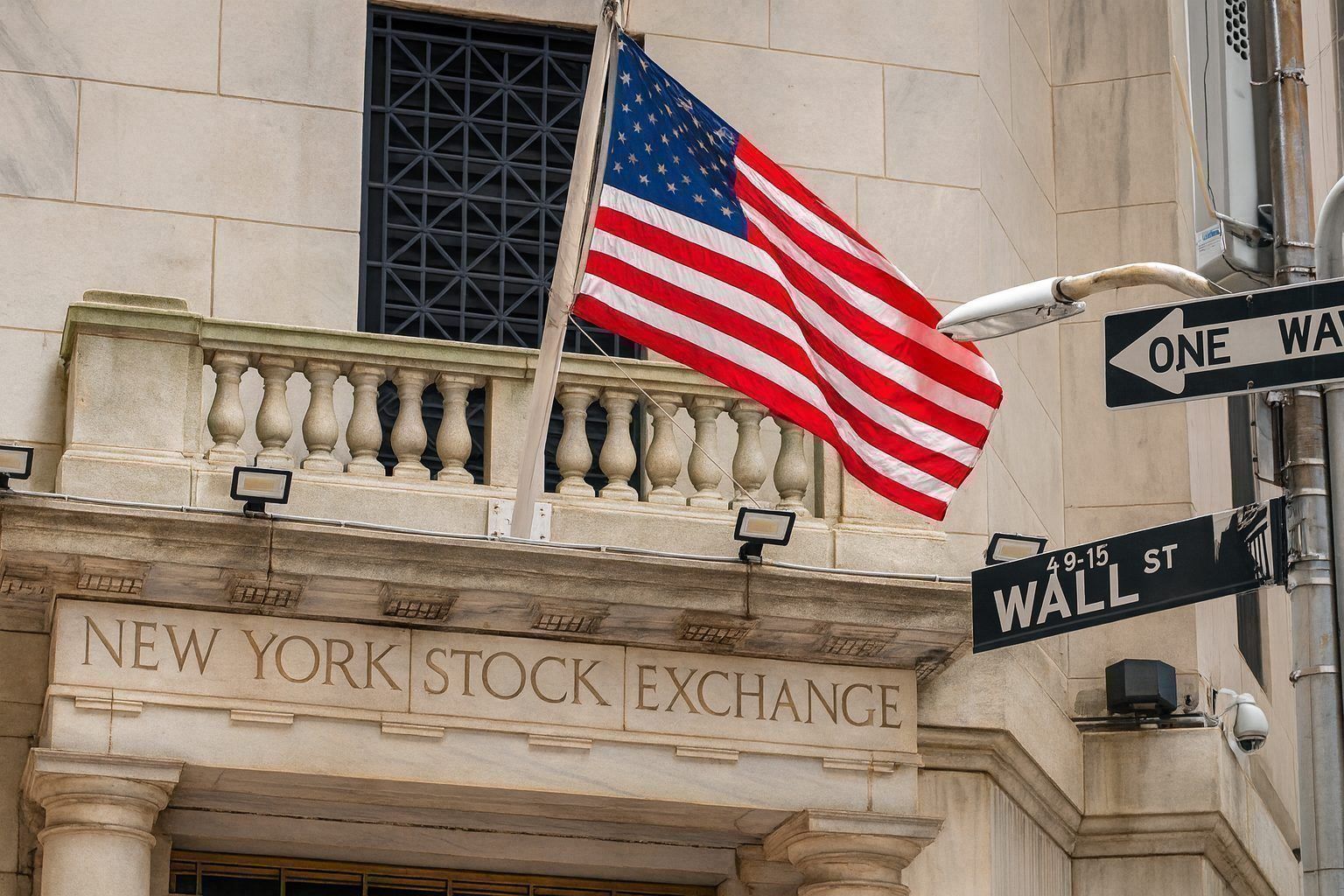
New York, December 11, 2025 — Wall Street is split the day after the Federal Reserve’s latest interest-rate cut. The Dow Jones Industrial Average is pushing higher, while the S&P 500 and tech‑heavy Nasdaq are under pressure as investors punish AI-linked stocks, led by a steep drop in Oracle.
By late morning in New York, Reuters and AP data showed the Dow up roughly 0.6–0.9%, but the S&P 500 down around 0.2–0.5% and the Nasdaq off close to 1%, as heavy selling in mega‑cap tech offset strength in banks, industrials and small caps.
This choppy session comes less than 24 hours after the S&P 500 closed at 6,886.68, just shy of its late‑October record near 6,930, and the Dow ended at 48,057.75 following a 497‑point surge on the Fed decision.
Key takeaways
- Fed delivers a third 2025 rate cut, lowering the federal funds target range to 3.50%–3.75% and signalling a pause, even as it nudges up growth forecasts for 2026.
- Oracle plunges around 14% after disappointing cloud guidance and a huge jump in AI‑related capital spending, dragging the Nasdaq toward a one‑week low and hitting other AI plays and crypto.
- Weekly jobless claims jump by 44,000 to 236,000, the biggest increase in nearly 4½ years, but economists call the move mostly seasonal “noise” rather than a clear sign of labor‑market weakening. Reuters
- Strategists at firms such as Charles Schwab say the macro backdrop is “unstable, not just uncertain”, with sticky inflation and high tariffs, but still see room for stocks to “churn higher” into 2026 thanks to earnings growth. Schwab Brokerage+1
- AI remains the dominant theme: markets are weighing Oracle’s big spending, a new $1 billion Disney–OpenAI partnership, and a growing debate over whether AI is a transformative boom or a budding bubble.
1. Wall Street the day after the Fed: a split tape
Wednesday: a Fed-fueled rally to near record highs
On Wednesday (December 10), the Fed delivered a widely expected 25‑basis‑point cut, its third of 2025, citing a softer labor market and inflation that remains “somewhat elevated.” The central bank’s new projections still show just one additional quarter‑point cut in 2026, but officials also raised their 2026 GDP growth forecast to 2.3% and left unemployment expectations roughly unchanged. Reuters
Equities cheered the combination of lower rates and no return to hikes:
- S&P 500: +0.67% to 6,886.68
- Dow Jones Industrial Average: +1.05% to 48,057.75
- Nasdaq Composite: +0.33% to 23,654.16
Market‑breadth was strong, with small caps and equal‑weight indices outperforming, and the equal‑weight S&P 500 closing at a fresh all‑time high, a sign that the rally was broadening beyond the mega‑cap tech names.
Thursday: Dow up, tech down
That positive tone has faded somewhat today.
- Around mid‑morning, the Dow was up about 0.6%, near 48,350, as financials and traditional cyclicals extended Wednesday’s rally.
- The S&P 500 slipped roughly 0.4–0.5% to the mid‑6,850s, backing off from Wednesday’s close.
- The Nasdaq Composite fell nearly 1% to around 23,422, on pace for a one‑week low as investors rotated out of AI‑linked names.
The CBOE VIX volatility index ticked higher, but remains in the mid‑teens, signaling unease rather than outright panic.
2. Oracle’s AI shock slams the Nasdaq and AI trade
If Wednesday was all about the Fed, Thursday is all about Oracle.
Earnings disappointment and a capex shock
Oracle’s quarterly report, released after Wednesday’s close, did two things that spooked investors:
- Cloud revenue guidance fell short of expectations, suggesting that demand for some AI‑related cloud services is not ramping as fast as hoped.
- Management boosted its 2026 capital‑spending plan by about $15 billion, to $50 billion, largely for AI data centers and related infrastructure.
In early trading, Oracle shares plunged roughly 14%, on track for their worst quarter since the early 2000s, as credit markets also repriced the cost of insuring its debt.
Analysts quoted by Bloomberg and Reuters said Oracle has effectively become a “poster child for AI volatility”, with some strategists highlighting its heavy use of debt to fund spending as a key point of concern. InvestmentNews+1
Contagion across AI and chips
The sell‑off didn’t stop at Oracle:
- Technology is the worst-performing S&P 500 sector, down around 1.6%.
- An index tracking semiconductor stocks is off about 2%, with Nvidia down more than 3%.
- AI data‑center and infrastructure names like CoreWeave, Applied Digital and Nebius are also in the red.
- Bitcoin has dipped around 2% toward the $90,000 level, reinforcing how closely speculative crypto trades have been tied to the AI equity narrative this year.
Commentary from both Reuters’ Morning Bid column and other market wraps describes Oracle as “crashing Powell’s party” — turning what looked like a smooth handoff from the Fed into a messy debate about whether AI capex is racing ahead of profits. Reuters+1
3. Fed cut: “hawkish but bullish” backdrop for equities
Despite today’s wobble, the Fed backdrop remains generally supportive for stocks — just not as euphoric as markets briefly hoped.
A third cut, plus a quiet form of QE
In addition to the 25‑bp policy rate cut, the Fed also announced it will purchase roughly $40 billion of Treasury bills per month to rebuild bank reserves, a move that many strategists liken to a limited, targeted form of quantitative easing.
As of this morning:
- The 10‑year Treasury yield is hovering near 4.14%.
- Fed‑funds futures imply around 50 bps of additional easing in 2026, even though the Fed’s dot plot only shows one more cut — traders are betting that a new Fed chair appointed by President Trump could lean more dovish.
Several analysts have described the decision as a “hawkish‑but‑bullish” cut: rates are lower, but not on a guaranteed glide path back to near‑zero. That combination typically supports equities while putting a cap on the most extreme speculative trades, especially in high‑duration tech. InvestmentNews+1
4. Economic data: jobless claims surge, but mostly seasonal noise
Today’s weekly jobless claims report landed right in the middle of the market’s AI drama — and initially added to jitters.
- Initial claims jumped by 44,000 to 236,000 in the week ended December 6, the largest weekly increase in nearly 4½ years and well above the 220,000 economists expected.
- However, the four‑week moving average rose only modestly, to about 216,750, and remains near levels consistent with a labor market that is cool, but not cracking.
Economists quoted by Reuters stressed that claims data are notoriously volatile around the holidays and urged investors to focus on trends rather than a single weekly print. One strategist described the situation as a “no‑fire, no‑hire” labor market: layoff headlines grab attention, but actual claims and ongoing benefits still point to gradual, not abrupt, deterioration. Reuters
For the Fed, the data complicate the narrative. Chair Jerome Powell has highlighted “downside risks” in the labor market, but today’s report suggests the weakness is more subtle than dramatic, reinforcing the case for careful, step‑by‑step easing rather than aggressive cuts. Reuters+1
5. Sector and stock stories: Broadcom, Costco, Disney & the AI deal flow
Earnings radar: Broadcom, Costco, Adobe, Planet Labs
Pre‑market futures trading and early moves have also been shaped by a cluster of high‑profile earnings and guidance updates:
- Broadcom (AVGO): Shares are down roughly 2% ahead of earnings due after the close. Analysts expect strong AI chip demand but are watching closely for any hint that hyperscaler spending is slowing.
- Costco (COST): Slightly higher in early trade, with markets looking for another solid quarter of membership and traffic growth amid cost‑of‑living pressures.
- Adobe (ADBE): Off modestly, even after beating forecasts and raising its 2026 EPS outlook — a reminder that rich valuations leave little room for merely “good” results.
- Planet Labs (PL): Among the day’s outliers, up sharply in early trading following upbeat guidance and AI‑powered analytics buzz.
Disney’s $1 billion bet on OpenAI
Away from pure earnings, AI deal‑making remains intense. In one of today’s headline transactions, Walt Disney announced a $1 billion equity investment in OpenAI, along with a three‑year content and technology partnership.
- OpenAI will be able to use characters from Star Wars, Pixar and Marvel in its Sora AI video generator, with some user‑generated clips slated to appear on Disney+.
- Disney will deploy OpenAI tools internally and receive warrants for additional equity, underscoring how legacy media is trying to harness generative AI rather than resist it.
The deal is being read on Wall Street as further validation that AI spending is becoming embedded in corporate strategy across sectors, not just in Big Tech.
Startups and funding: Serval joins the AI unicorn club
In the private markets, AI startup Serval was valued at $1 billion in a Sequoia‑led funding round aimed at expanding automation tools for IT operations.
This underscores a trend noted by global investors: capital is still pouring into AI infrastructure and software, even as public‑market valuations get more volatile.
6. How strategists see 2026: unstable, rotational, earnings‑driven
Today’s volatility is unfolding against a backdrop of increasingly nuanced 2026 stock‑market outlooks.
Schwab: “Unstable” cycle, sticky 3% inflation, more rotation
In a new 2026 outlook published this week, Charles Schwab’s Liz Ann Sonders and Kevin Gordon argue that the current environment is better described as “unstable” than simply “uncertain.” Schwab Brokerage
Key points from their analysis:
- The cycle is K‑shaped, with different parts of the economy and market moving in very different directions at the same time.
- They expect inflation to remain closer to 3% than 2%, partly because of persistent high tariffs and structural pressures on housing and labor.
- That stickier inflation likely caps the number of additional Fed cuts at two or three, even if growth holds up.
- They foresee continued sector rotation and “high churn” within the equity market, and urge investors to diversify beyond pure Tech and AI narratives toward more balanced sector exposure. Schwab Brokerage
In short, Schwab expects stocks to “churn higher” into 2026 but with frequent, sometimes violent rotations — a pattern that Thursday’s action around Oracle, Nvidia and the Dow‑heavy industrials more or less exemplifies.
MarketPulse and other technical views: little room for error
A FOMC preview from OANDA’s MarketPulse, published just before Wednesday’s meeting, noted that major US indices were already trading close to all‑time highs, with the S&P 500’s technical resistance band between roughly 6,900 and 6,930 flagged as the key zone to watch.
Their “bullish case” scenario (a dovish cut and supportive guidance) envisioned exactly what we saw on Wednesday: an index surge toward new highs, led by rate‑sensitive sectors and small caps. But they also cautioned that elevated valuations leave “little room for error” — making today’s sharp reaction to Oracle’s capex plans and jobless‑claims noise easier to understand. MarketPulse+2Reuters+2
Is there an AI bubble? Opinions split
Today’s anxiety about Oracle is also feeding into a broader “AI bubble or not?” debate that has been building for months.
A Reuters roundup of views from CEOs, central bankers and major investors highlights just how divided opinion is:
- Some, including executives at ABB and Nvidia, downplay the idea of a bubble, arguing that multi‑trillion‑dollar investments in AI infrastructure will take years to deploy and are underpinned by real demand.
- Others — from the Bank of England to high‑profile investors like Michael Burry — warn that valuations are stretched, startup funding is euphoric, and a sharp correction is a real risk, even if it doesn’t trigger a systemic financial crisis.
For now, the market’s behavior looks more like a series of mini‑panics within a larger uptrend: Oracle can drop double digits in a single session, but broader indices are still hovering within a couple of percent of record highs.
7. What investors are watching next
With only hours left in today’s session and a packed calendar ahead, traders and longer‑term investors will be watching several key storylines:
- Can the Dow’s leadership broaden out?
The blue‑chip index is being propped up by banks, industrials and small‑caps, while growth tech stumbles. A sustained shift toward more cyclical and value‑oriented leadership would validate many 2026 outlooks that call for a “broadening” market. Reuters+1 - Follow‑through on Oracle and AI infrastructure names
Markets will digest Broadcom’s earnings and any commentary on AI accelerator demand, plus guidance from other large cloud and chip players in coming weeks. Parallel moves in Bitcoin and crypto‑related equities will also be monitored as a barometer of high‑beta AI sentiment. - Macro data: delayed jobs report and inflation trends
Next week’s delayed November employment report — postponed by the recent government shutdown — will provide a more definitive reading on the labor market than today’s claims spike. Meanwhile, inflation data and tariff headlines will determine whether the Fed can deliver the modest number of 2026 cuts that markets are pricing in. - Policy and politics: the next Fed chair
Futures markets are already factoring in the possibility that a new, more dovish Fed chair (with White House economic adviser Kevin Hassett cited as a leading candidate) could shape the 2026 policy path. Any confirmation or pushback on that narrative could move both yields and equity valuations quickly. - AI deals and regulation
Deals like Disney’s $1 billion OpenAI partnership, new AI unicorn fundings, and ongoing regulatory scrutiny of AI models and outputs will keep the sector in the spotlight. The question for markets is whether earnings and real‑world adoption can catch up to capex and hype.
Bottom line
The US stock market on December 11, 2025 is caught between two powerful forces:
- A supportive but cautious Fed, plus resilient (if uneven) economic data, are allowing the Dow and broader equity indices to hover near record territory.
- At the same time, Oracle’s AI spending shock and elevated tech valuations are reminding investors that the path higher is likely to be bumpy, rotational and highly sensitive to earnings surprises.
For now, this looks less like the end of the bull run and more like a stress test of the AI trade inside a still‑intact, but increasingly unstable, late‑cycle expansion.
This article is for informational purposes only and does not constitute investment advice or a recommendation to buy or sell any security.