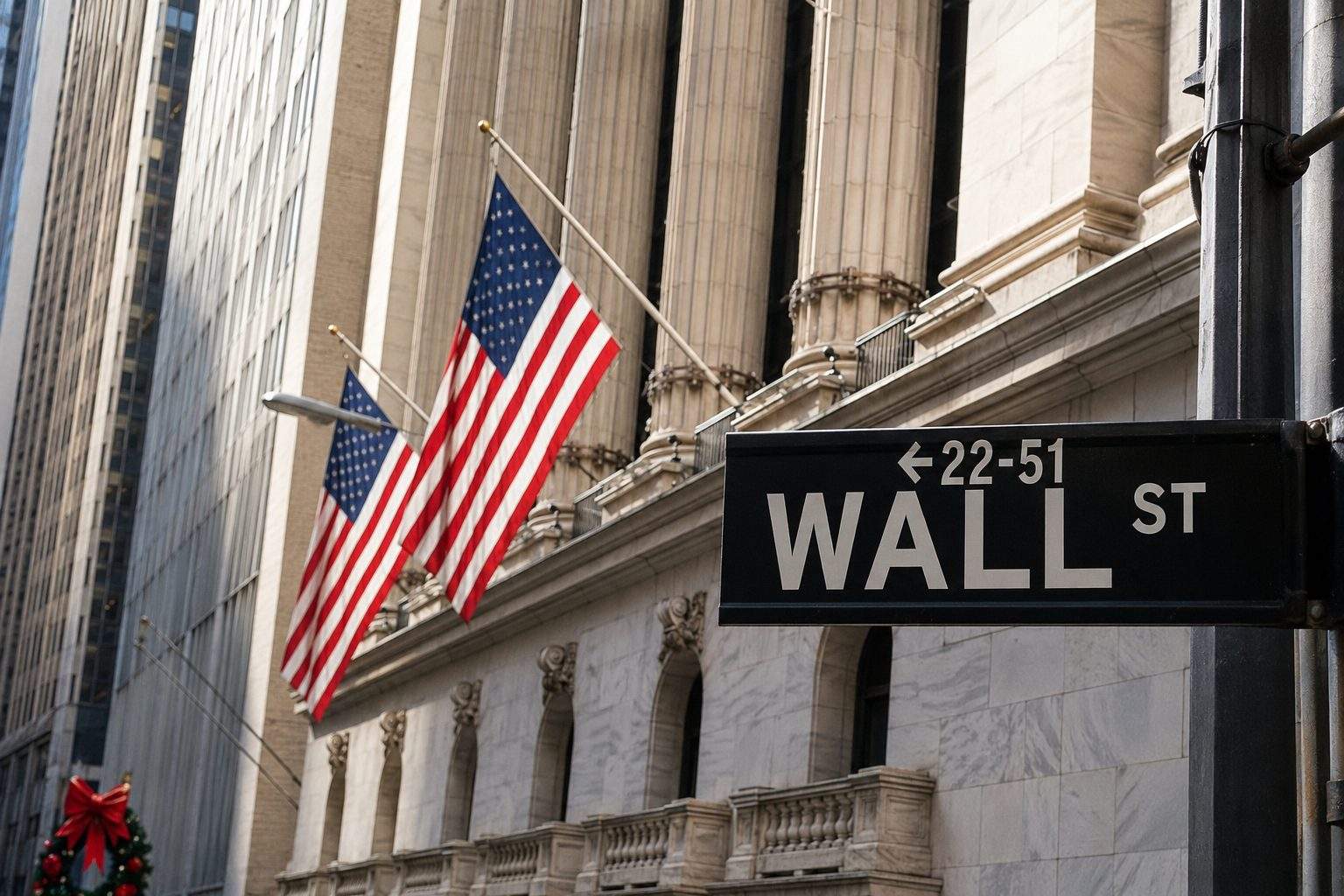

NEW YORK, July 18, 2026, 13:08 EDT
- The Nasdaq Composite declined 2.9% for the week. The S&P 500 dropped 1.55%.
- The Russell 2000 edged down 0.5%, maintaining a 19.4% increase for 2026.
- Over 80 S&P 500 companies are set to report earnings next week.
U.S. cash markets did not open on Saturday after Wall Street posted a weekly loss. The Nasdaq Composite declined 2.9%, compared with a 0.5% drop for the Russell 2000. That 2.4-point spread was the key divergence of the week.
Small caps remain ahead in 2026, with the Russell advancing 19.4%, nearly double the Nasdaq’s 9.8% rise. The S&P 500 is up 8.9%, and the Dow has gained 8.5%. Despite the decline, the S&P hovers around 2% under its early-June record.
Semiconductors reflect the opposite trend. The PHLX chip index ended 20.2% under its record high from June 22. Although it dropped over 18% in July, it is still up close to 65% so far this year. Ryan Detrick, chief market strategist at Carson Group, referred to this as “chip fatigue.” Reuters
Friday’s closing figures illustrate the division.
| Index | Friday close | Friday | Week | 2026 |
|---|---|---|---|---|
| S&P 500 | 7,457.69 | fell 1.01% | down 1.55% | up 8.9% |
| Nasdaq Composite | 25,520.24 | sank 1.40% | declined 2.90% | gained 9.8% |
| Dow Jones Industrial Average | 52,146.42 | dropped 0.77% | slipped 0.93% | advanced 8.5% |
| Russell 2000 | 2,962.22 | lost 0.4% | off 0.5% | jumped 19.4% |
Friday trading ends; changes for the week and for 2026 shown.
Selling on Friday extended to more sectors beyond chips. On the NYSE, decliners outpaced advancers by a ratio of 1.94-to-1, while on Nasdaq the ratio was 1.76-to-1. Energy was the only sector in the S&P 500 to post gains.
Oil delivered a second surprise. U.S. crude surged 4.48% to $82.49, with Brent up 4.59% at $88.10. Renewed conflict between the U.S. and Iran heightened concerns over a fresh wave of inflation. Despite this, the 10-year Treasury yield slipped to 4.554%.
Earlier inflation figures provided some respite. Consumer prices in June declined by 0.4% compared to May, bringing the yearly inflation rate to 3.5%. Producer prices were also down 0.3% in June.
Initial earnings estimates continue to hold steady. As of Friday, 49 S&P 500 companies had released results, with 90% surpassing expectations. LSEG LON:LSEG reported aggregate growth estimates climbing to 26.0%, up from 19.2% on April 1, marking a 6.8-point revision.
Weak guidance prompted steep declines. Netflix NASDAQ:NFLX slipped 7.3% after releasing a cautious earnings projection. Intuitive Surgical NASDAQ:ISRG tumbled 14.2% after maintaining its procedure-growth forecast and cautioning about insurance processing delays.
The market’s attention turns to the technology sector next week, with over 80 S&P 500 companies set to release results. Alphabet NASDAQ:GOOGL and Texas Instruments NASDAQ:TXN report on Wednesday. Intel NASDAQ:INTC will report Thursday after markets close. Tesla NASDAQ:TSLA is also scheduled to release earnings during the week.
Alphabet’s pace of capital spending could influence the broader market, according to Kevin Mahn, chief investment officer at Hennion & Walsh, who said that any reduction might result in “ripple effects across the entire AI ecosystem.” Reuters
Expectations remain high for both semiconductor firms. Shares of Intel have surged over 160% this year, while Texas Instruments has seen an increase of 60%. The companies’ forecasts will indicate the extent to which AI enthusiasm is reflected in current valuations.
Interest rate risk remains. Futures indicate around a 15% probability of a Federal Reserve rate increase in July, with chances climbing to nearly 65% by September. Some policymakers pointed to energy and AI infrastructure expenses as possible sources of inflation risk.
Risks stay focused on oil and capital expenditure. Additional escalation in the Middle East may push inflation expectations and bond yields higher. Reductions in AI budgets could prolong the chip sector’s downturn, while positive guidance could trigger a rebound.
The most definitive signal is visible in relative performance. Small caps are withstanding the impact, as chip leaders continue to adjust. Next week’s guidance will indicate if this rotation remains in place.
Related articles: Nasdaq



![Australia Stock Market Today 28/08/2026 [UPDATE: 10:37 AEST] [ASX Rebounds as Tech and Energy Offset Bank Weakness]](https://ts2.tech/wp-content/uploads/2026/08/AU-market-dashboard-2026-08-28-1034-480x384.jpg "Australia Stock Market Today 28/08/2026 [UPDATE: 10:37 AEST] [ASX Rebounds as Tech and Energy Offset Bank Weakness]")