
New York, June 9, 2026, 18:01 EDT
- Visa and Mastercard’s revised swipe-fee settlement with U.S. merchants got preliminary approval from a Brooklyn federal judge.
- The deal is set to lower some credit-card processing fees and ease some card-acceptance rules, though it still needs sign-off.
- Retail groups and Walmart pushed back, arguing the agreement keeps too much of the current system in place.
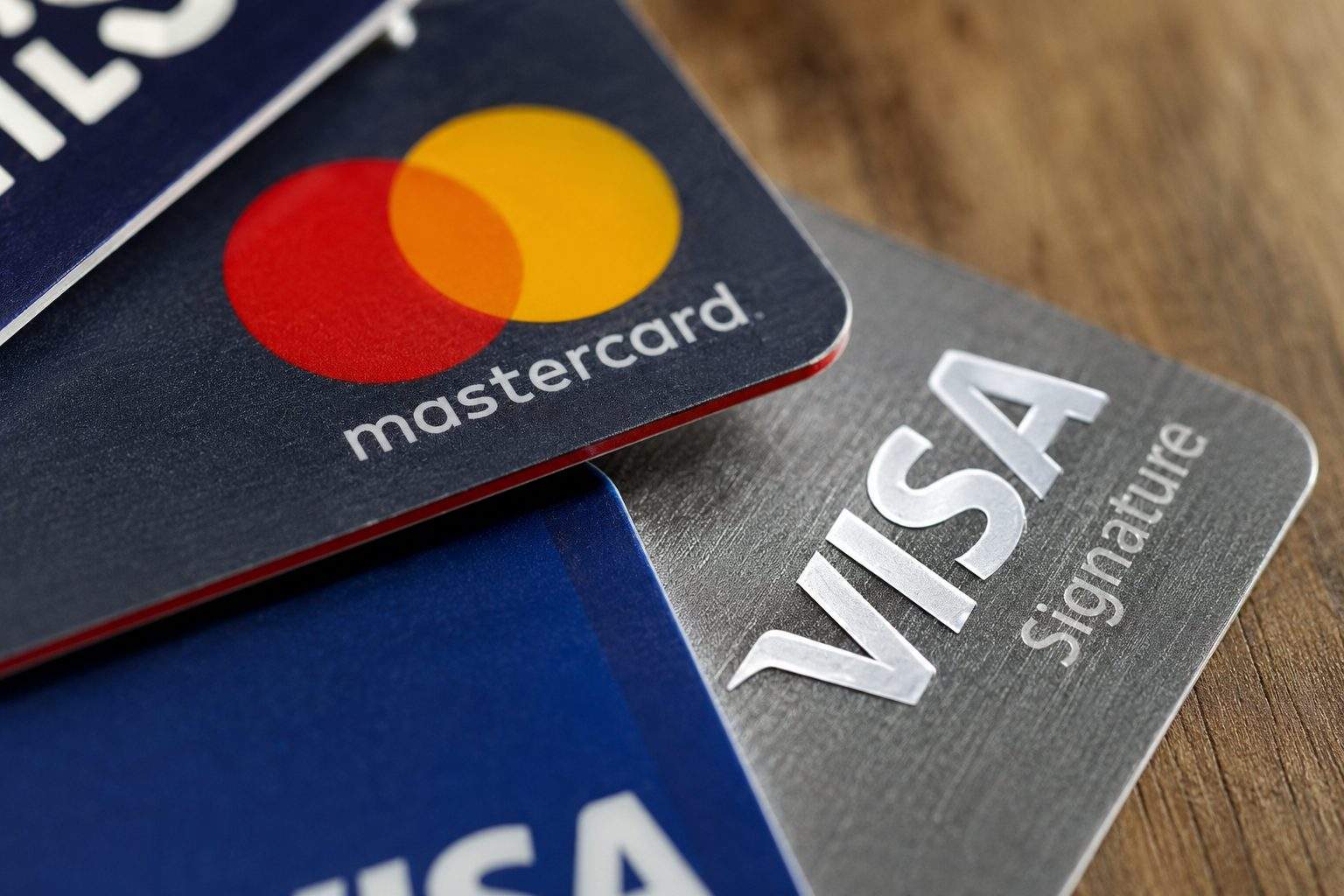
Visa and Mastercard’s new $38 billion deal with merchants won preliminary approval from a U.S. judge Tuesday, moving forward a settlement in the long-running dispute over credit card fees. U.S. District Judge Brian Cogan in Brooklyn signed off on the deal, calling it “fair, reasonable, and adequate.” Reuters
A court ruling could impact swipe fees—interchange fees that are part of nearly all card payments and are often baked into retail prices. Visa and Mastercard credit-card swipe fees hit $118.8 billion in the U.S. in 2025, up from $111.2 billion in 2024, according to the Merchants Payments Coalition, which represents retailers and merchants.
The move stabilizes the companies after a federal judge tossed out a $30 billion settlement in June 2024, calling it too lenient. That ruling sent the card networks and merchants back to the table and brought the risk of a trial in the lawsuit first filed in 2005.
Visa and Mastercard agreed to cut credit-card swipe fees by 0.1 percentage point for five years under the new deal, and standard consumer-card rates won’t go above 1.25% for eight years. The settlement also gives merchants bigger leeway to add surcharges and choose if they want to take commercial cards, premium cards or regular consumer cards.
The settlement trims back the “Honor All Cards” rule, the disputed network rule that has required many merchants taking Visa or Mastercard to accept a wide range of cards. According to the settlement text, merchants would have the chance to turn down commercial, standard consumer, or premium consumer credit-card categories. But they would still need to accept all cards from banks within any selected category. Securities and Exchange Commission
Visa and Mastercard cards could get more direct comparison with other networks at checkout. Merchants can add up to a 3% surcharge on Visa or Mastercard credit cards at the brand or product level, according to the settlement notice, even if they don’t add the same fee to cards like American Express or Discover.
The National Retail Federation, Merchants Payments Coalition, National Association of Convenience Stores and Walmart still pushed back on the revised deal, saying merchants could end up having to take a hit on high fees from rewards cards or lose business by rejecting them. Cogan said some of their arguments made sense, but said it comes down to what merchants could win or lose at trial.
Mastercard said it was pleased and is aiming for “final closure.” Visa described the approval as an important step in moving past the long-running case, according to Payments Dive. Richard Hunt, executive chairman of the Electronic Payments Coalition, called the deal a “guaranteed win for Main Street,” even though the coalition represents card networks and big issuers. Payments Dive
Plaintiffs’ experts Joseph Stiglitz, a Nobel Prize winner, and Keith Leffler of the University of Washington told Reuters the changes could save merchants $38 billion by 2031, with $224 billion in total benefits, some going to consumers. Visa shares climbed 1.7% on Tuesday, and Mastercard was up 2%.
Quarterly reports on claim status, disputes and distributions are coming as the cash-settlement piece is still in process. The administrator of the $5.5 billion merchant settlement has paid $414 million so far to roughly 598,000 merchants, Payments Dive said. Plaintiffs now want approval for a new payout of at least $182 million.