
Visa NYSE:V ended Friday’s session higher and dipped slightly in after-hours trading. Here’s the full Dec. 12 news roundup, analyst outlook, and the weekend checklist ahead of the next market open.
Updated: After the bell — Friday, December 12, 2025
Visa Inc. (NYSE: V) finished the regular session on Dec. 12, 2025 in positive territory and then eased modestly in after-hours trading—a notable show of relative strength on a day when U.S. stocks broadly pulled back from record highs amid another tech-led selloff.
One important calendar note: December 13, 2025 is a Saturday, so U.S. stock markets are closed. The next regular U.S. session is Monday, December 15, 2025—meaning the “before-the-open” focus is really a weekend setup: headlines, macro data expectations, and risk sentiment that can shape Monday’s tape.
Visa stock price after the bell: where V closed and where it traded after-hours
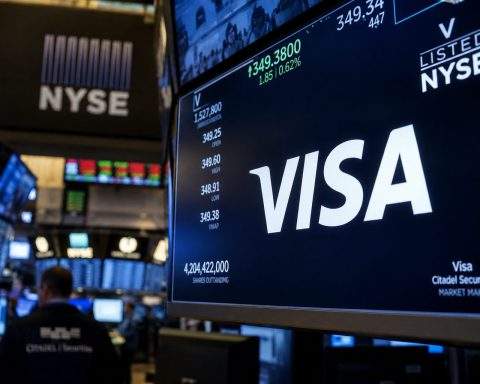
Visa shares closed at $347.83 on Friday, up $2.28 (+0.66%) in the regular session. In extended trading, the stock was last indicated around $347.26, down $0.57 (-0.16%) after the close.
For the session, Visa traded roughly between $345.95 and $349.74, opening near $348.00.
Takeaway: After-hours action looked more like normal digestion than a headline-driven repricing—especially compared with the volatility seen Friday in AI-linked tech names.
Why Visa looked steadier than the broader market on Dec. 12
Friday’s macro backdrop mattered:
- The S&P 500 fell about 1.1% and the Nasdaq dropped about 1.7%, marking the market’s weakest day in roughly three weeks, according to AP’s market recap.
- Reuters and the Financial Times tied much of the pressure to Broadcom’s sharp decline and renewed anxiety about AI trade valuations and margins, alongside rising yields.
In that environment, large, profitable, high-cashflow “quality” names often trade like relative safe havens—and card networks can be treated as consumer-spending infrastructure plays rather than high-beta tech.
The Dec. 12 Visa headline roundup: what moved the narrative today
Below are the most relevant Visa-specific developments published or filed on Dec. 12, 2025, plus why each matters for Monday’s setup.
1) A federal judge dismissed a private “electronic payments monopolization” case again
A Bloomberg Law report late Friday said a federal judge dismissed—again—a lawsuit accusing Visa and an affiliated organization of monopolizing electronic payments, citing a failure to show antitrust standing (a key threshold issue in these cases).
Why it matters: This can reduce one pocket of litigation overhang at the margin. But investors should keep the bigger picture in mind: Visa still faces broader regulatory scrutiny of the payments ecosystem in multiple venues (including DOJ actions filed previously).
2) CEO Ryan McInerney reported an options exercise and share sale (Form 4 context)
A Refinitiv/TradingView item highlighted that Visa CEO Ryan McInerney sold 10,485 shares (following an options exercise) per an SEC filing, with the reported transaction dated Dec. 11 and filed around Dec. 12.
Another filing summary indicated the transaction was made under a Rule 10b5-1 trading plan adopted earlier in 2025—important context because 10b5-1 plans are typically designed to reduce the perception of “timing the market.” Stock Titan
Why it matters: Insider sales don’t automatically signal trouble—especially when tied to option exercises and pre-set plans—but they can become a sentiment talking point if the stock turns lower.
3) Options activity: call volume ran hot into the weekend
MarketBeat reported unusually high call-option activity in Visa on Friday: 33,249 call options, about 44% above typical daily call volume (per its calculation).
Why it matters: Heavy call flow can reflect bullish positioning, hedging, or short-dated speculation. For Monday, it’s a “watch item” because it can sometimes amplify price moves around key levels—especially if broader markets stay volatile.
Forecasts and analyst outlook: what Wall Street is signaling right now
The “sticky” catalyst still in play: Bank of America’s upgrade + stablecoin framing
Even though it hit headlines Thursday, Bank of America’s upgrade remained part of the narrative into Friday: BofA moved Visa to Buy from Neutral and set a $382 price target, arguing stablecoins could be an opportunity rather than purely a threat.
This upgrade also leaned on Visa’s positioning in money movement, including Visa Direct initiatives involving USDC stablecoin payouts, which Visa announced as a pilot aimed at faster cross-border settlement for certain use cases.
Consensus targets and ratings
MarketBeat’s aggregated analyst view shows a consensus “Buy” posture and a consensus price target around $402.52 (per its tracker), implying meaningful upside if the multiple holds and payment volumes remain resilient. MarketBeat
Near-term earnings expectations (as tracked by Zacks/Nasdaq)
A Zacks note distributed via Nasdaq referenced expectations for Visa’s upcoming quarterly report of roughly $3.14 EPS on about $10.68 billion in revenue (as estimates at the time of publishing).
Why it matters for Monday: These “street numbers” often anchor valuation debates. If macro fear rises (yields up, recession chatter), high-quality names can still get de-rated even if earnings estimates remain intact—so investors will watch whether estimate revisions stay firm.
What to know before the next U.S. market session (the “Dec. 13” weekend checklist)
Because the market is closed Saturday, think of the next open as Monday risk re-pricing—driven by weekend headlines and what traders expect for the coming week.
1) Macro catalysts may dominate the tape more than Visa-specific news
Reuters’ “week ahead” coverage flagged a major wrinkle: a 43-day federal government shutdown delayed some key U.S. economic releases, and investors were expecting a cluster of delayed data (including jobs and CPI) to shed more light on growth vs. recession risks. Reuters
Why Visa holders should care: Visa often trades as a barometer of consumer spending and cross-border activity. If the next batch of labor/inflation data shifts recession odds or rate expectations, payment networks can move even without company-specific news.
2) Rate-cut crosscurrents and Fed messaging can swing “quality financials”
The Fed recently cut rates, but Friday also brought fresh commentary from Fed officials reflecting tension between still-high inflation and labor-market risks.
Why it matters: Visa’s valuation is sensitive to discount rates (like most large caps), and the market’s style rotation (growth vs. value) can change quickly when yields move.
3) Tech volatility can still spill over into “everything else”
Friday’s drawdown was tied to renewed AI-bubble/margin anxiety around chip and infrastructure names. If that theme continues Monday, correlation can rise, and even defensive winners can see profit-taking.
4) Watch the stablecoin/regulatory thread — it’s not just hype right now
An Axios report Friday said the OCC granted conditional approvals for multiple crypto-related firms (including Circle, issuer of USDC) to obtain national trust bank charters, describing it as a notable regulatory step in the wake of the Genius Act context.
Why Visa holders should care: If stablecoins get more regulatory clarity and institutional rails, that can influence how investors handicap Visa’s long-run role in settlement and payouts—either as a threat, a partner layer, or both.
5) The litigation backdrop is improving in one lane—but not “all clear”
Friday’s dismissal of the private monopolization case could be read as a modest relief. Bloomberg Law
But investors should keep perspective: payments and interchange economics remain a long-running regulatory and legal arena in the U.S., and major actions can take years to resolve.
Bottom line: how to frame Visa (V) into Monday’s open
Visa ended Dec. 12 with constructive price action and only a mild after-hours dip, suggesting no immediate shock headline hit after the bell.
Going into the next session, Visa’s setup is less about a single company catalyst and more about whether the market continues to:
- rotate away from high-beta tech,
- reprice interest-rate expectations,
- and react to a dense pipeline of delayed macro data.
The most actionable “before-the-open” playbook is simple: monitor macro headlines, yields, and risk sentiment first, then watch whether Visa holds above recent technical reference points it regained after Thursday’s sharp move. Nasdaq+1
Related articles: NYSE:V