
As U.S. markets head into the final stretch of the year, Visa Inc. NYSE:V is entering the next session with a familiar mix of tailwinds and headline risk: steady consumer spending and cross-border momentum on one side, and a busy legal/regulatory news cycle on the other.
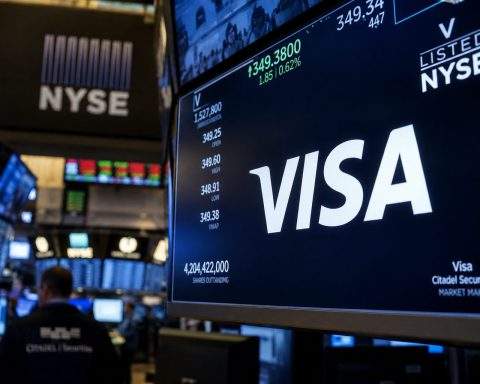
Visa shares last closed around $349 (up roughly 0.9% on the day), placing the stock in the upper half of its 2025 trading range heading into today’s open.
Below is what investors should focus on before the bell.
Visa stock snapshot: price levels, trend, and what the tape is saying
Where the stock sits: Visa ended the most recent session near $349.
Key range context: Data aggregators put Visa’s 52-week range near $299 to $375.51, which means the stock is still about 7% below its 52-week high and about 17% above its 52-week low—important framing for “buy the dip vs. chase the breakout” positioning. StockAnalysis+1
Trend check: Visa is trading above its commonly watched moving averages (roughly $338 for the 50-day and $344 for the 200-day), with an RSI in the mid-60s—generally consistent with a constructive uptrend but also a level that can become sensitive to negative headlines.
Why this matters into the open: In holiday-thinned trading, stocks sitting just above major technical levels can see outsized moves on incremental news—especially when the news is regulatory, legal, or policy-related.
The biggest near-term driver: stablecoins moved from “pilot” to “U.S. banking rails”
Visa’s most market-relevant storyline right now is its accelerating push to modernize the “plumbing” of settlement—using stablecoins without changing the consumer card experience.
1) Visa launched USDC settlement capability for U.S. institutions
On Dec. 16, 2025, Visa announced it is enabling USDC settlement in the United States, allowing U.S. issuer and acquirer partners to settle with Visa in Circle’s USDC for the first time. Visa highlighted benefits like seven-day availability, faster funds movement, and weekend/holiday resilience—positioning stablecoins as a back-end settlement upgrade rather than a consumer-facing crypto bet.
Visa said Cross River Bank and Lead Bank are initial participants and have begun settling with Visa in USDC over Solana, with broader U.S. availability planned through 2026.
Visa also disclosed it is a design partner for Arc, a Circle-developed Layer 1 blockchain (in public testnet), and plans to utilize it for USDC settlement and potentially operate a validator node once live.
2) Visa disclosed the scale: $3.5B annualized stablecoin settlement run rate
Visa said its monthly stablecoin settlement volume reached a $3.5 billion annualized run rate as of Nov. 30, emphasizing that institutional settlement usage is already measurable.
3) Visa also launched a “Stablecoins Advisory Practice”
Just one day earlier (Dec. 15), Visa announced a Stablecoins Advisory Practice via Visa Consulting & Analytics, noting the stablecoin market cap surpassed $250 billion and reiterating the same $3.5B annualized settlement run rate figure. Visa also stated it now has 130+ stablecoin-linked card issuing programs in 40+ countries—an attempt to show that stablecoins are becoming another payments form factor that can route through Visa’s network.
Why stablecoins matter for Visa stock (the investor lens):
Visa’s core bull case has long been that it benefits from the shift from cash to digital payments without taking consumer credit risk. The stablecoin effort aims to extend that logic: Visa wants to remain the trusted network and compliance layer even if the settlement asset or rail changes.
AI-powered commerce is the other narrative Visa wants investors to price in
Visa is also leaning hard into “agentic commerce”—AI agents that can complete purchases securely.
On Dec. 18, 2025, Visa said it and partners have completed hundreds of secure, agent-initiated transactions, and that it expects AI agent-driven payments to transition toward mainstream adoption by 2026.
Visa cited internal research indicating 47% of U.S. shoppers use AI tools for at least one shopping task and said it remains on track to deliver AI-enabled commerce by early 2026. It also described the Visa Intelligent Commerce ecosystem as involving 100+ partners, with dozens actively building in a sandbox and multiple integrations underway.
Stock relevance: This is more “multiple expansion” narrative than immediate earnings driver—investors should view it as a longer arc (product roadmap + fraud/security moat), not a Q-to-Q revenue inflection.
The risk factor investors can’t ignore: antitrust, fees, and settlements
Visa’s business model sits at the center of U.S. merchant fee politics, and that continues to generate headlines.
1) ATM user fee settlement: $167.5 million (Visa share ~$88.8 million)
On Dec. 19, 2025, Reuters reported Visa and Mastercard agreed to pay a combined $167.5 million to settle a class action alleging ATM fee-related conduct. Reuters said Visa would contribute about $88.8 million and Mastercard about $78.7 million, while both deny wrongdoing.
2) Merchants vs. Visa/Mastercard: renewed objections to a proposed swipe fee settlement
Reuters also reported that Walmart and other retailers/trade groups urged a federal judge to reject a proposed settlement, arguing it provides limited relief. Reuters said the agreement would reduce swipe fees by 0.1 percentage point for five years and that critics argue key network rules remain intact.
3) DOJ debit antitrust lawsuit remains a backdrop
The U.S. Department of Justice has an ongoing antitrust suit alleging Visa unlawfully maintained monopoly power in debit network markets. While there may not be a new procedural milestone at today’s open, it remains a persistent overhang investors re-price when fee-related headlines hit.
Why this matters for the next session: Legal headlines tend to move Visa not because of near-term cash impact alone, but because they can affect investor perceptions of long-term take rates, network rules, and pricing power.
Fundamentals check: Visa’s most recent results and what management highlighted
Visa’s last reported quarter (fiscal Q4 2025, reported Oct. 28) reinforced the company’s core story: resilient volume growth, strong cross-border trends, and aggressive capital returns.
Highlights from Visa’s fiscal Q4 and full-year 2025 report
Visa reported:
- Q4 net revenue: $10.7B (+12%)
- Full-year net revenue: $40.0B (+11%)
- Q4 payments volume: +9%, cross-border volume: +12%, processed transactions: +10%
- Board-approved 14% dividend increase to $0.67/share
- Share repurchases + dividends: $6.1B (Q4) and $22.8B (full year) Q4 Capital+1
Litigation provisions showed up in reported earnings
Visa also disclosed a $899 million litigation provision tied to interchange multidistrict litigation (MDL) and other legal matters that affected GAAP results—an important reminder that even best-in-class networks carry legal cost volatility.
Buybacks remained a major support
Visa said it repurchased about 14 million shares in the quarter for $4.9B, about 54 million shares for $18.2B over the full year, and had about $24.9B remaining under authorization as of Sept. 30, 2025.
Outlook and tone
Reuters reported Visa’s outlook implied low double-digit net revenue growth expectations for fiscal 2026, broadly aligned with Street expectations at the time.
Forecasts and analyst positioning: what Wall Street is expecting
Consensus rating: Many aggregator models still show Visa as a “Strong Buy” name among analysts. One compiled view lists an average price target around $399 (roughly 14% upside from ~$349), though targets vary widely. StockAnalysis+1
A notable recent call: Bank of America upgrade
Investor’s Business Daily reported that Bank of America upgraded Visa to “Buy” and pointed to stablecoins as a meaningful opportunity, with a price target of $382 at the time of that note. Investors.com
Valuation snapshot (for context): One widely used dataset puts Visa around 34x trailing earnings and roughly 27x forward earnings, reflecting a premium valuation that investors typically justify via durability, margins, and capital returns.
Calendar: the next big “known” catalyst is earnings (and then dividends)
If you’re positioning ahead of the open, the next major scheduled event is the next earnings report.
- Next earnings date (estimate): around Jan. 29, 2026 (estimates vary by source).
- Next dividend timing (watchlist item): Dividend trackers indicate the next quarterly cycle is expected in early February, with some sources listing an ex-div date around Feb. 6, 2026 and a pay date around Feb. 17, 2026.
What to watch in the first hour after the open
Here’s a practical checklist for today’s session—useful whether you’re trading the open or building a longer-term position.
1) Legal headline drift
Anything incremental on:
- swipe fee settlement objections (merchant groups vs. networks), or
- the broader antitrust landscape (DOJ debit case references), or
- settlement approvals/denials
could impact sentiment quickly.
2) Stablecoin narrative follow-through
Visa has stacked multiple crypto/settlement headlines in a short window:
- USDC settlement in the U.S.
- Stablecoins Advisory Practice Visa
The market will likely judge whether this is (a) a credible efficiency upgrade and moat extension, or (b) a lower-margin feature investors shouldn’t pay up for.
3) “AI commerce” as a premium-multiple story
Visa’s AI-commerce messaging can support valuation—but it can also invite skepticism if investors view it as early-stage PR. Still, the company is signaling measurable progress (“hundreds” of transactions; 100+ partners), which can influence longer-horizon holders. Visa Investor Relations+1
4) Holiday spending and cross-border tone
Visa is a high-sensitivity proxy for:
- travel and cross-border activity (higher margin), and
- consumer spending resilience
The last reported quarter showed cross-border volume growth and strong processed transaction growth—investors will watch for any macro data or peer commentary that challenges that trajectory.
Bottom line for Visa stock ahead of today’s open
Visa enters the session with:
- constructive price action (above key moving averages), StockAnalysis+1
- fresh product/innovation headlines in stablecoin settlement and AI-driven commerce, Visa Investor Relations+2Visa Investor Relations+2
- but persistent fee/antitrust headline risk that can temporarily overwhelm fundamentals in short bursts.
Related articles: NYSE:V