
New York, Feb 6, 2026, 12:26 EST — Regular session
- Visa shares slipped roughly 0.3% by midday, while its payment rivals showed a mixed picture
- Visa Direct’s partnership with UnionPay underscores its push to expand cross-border payments into mainland China
- Visa rolled out “Visa & Main” targeting U.S. small businesses, featuring a $100 million working-capital facility
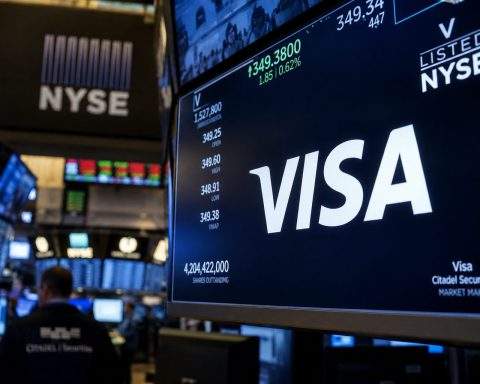
Visa Inc NYSE:V shares slipped $1.10, roughly 0.3%, closing at $328.03 on Friday. The stock fluctuated between $327.15 and $335.00 during the session. Mastercard dropped around 2%, while American Express climbed 1.6%, and PayPal nudged up 0.3%.
The move is modest, but the tape is active. Investors are weighing what truly impacts payments stocks as consumer spending holds steady, even while growth forecasts swing amid headline risk and sharp changes in risk appetite.
For Visa, the pressing issue isn’t just one quarter’s results—it’s figuring out where the next boost in volume will come from. Cross-border transactions often yield higher margins, but they bring along regulatory hurdles, the need for new partnerships, and execution challenges.
Visa Direct, the company’s real-time transfer service, will link up with UnionPay International’s MoneyExpress platform to handle cross-border remittances and B2C payouts to recipients in mainland China, American Banker reported. “Cooperation is the best path to extending reach in both directions,” said Aaron Press, research director at IDC. Meanwhile, Visa Direct chief Vira Platonova emphasized that “near-instant availability of funds isn’t just a nice-to-have, it’s the baseline expectation.” Mastercard noted its Move service already uses UnionPay as a remittance delivery endpoint, the report added. American Banker
On Thursday, Visa launched “Visa & Main,” a platform aimed at supporting U.S. small businesses with financing, customer outreach, and essential business tools. Kim Lawrence, Visa’s North America regional president, highlighted the role of small businesses as “the heartbeat of local communities” and noted they account for nearly half of the country’s economic activity. The company also announced a $100 million working-capital facility in partnership with community-focused lender Lendistry. Visa
The broader market mood played a role as well. U.S. indexes found their footing following a tough tech-driven selloff this week. Amazon, however, dipped after projecting a steep increase in capital spending linked to AI infrastructure. “There’s a stage where there’s almost unabashed enthusiasm and then there’s a period of greater discernment,” said Kristina Hooper, chief market strategist at Man Group. Reuters
Visa often moves as a stand-in for daily payment trends, rather than reacting solely to the latest headlines. This means the stock frequently mirrors broader macro shifts — like interest rates, growth forecasts, and how upcoming data influence the Fed story — even as the company rolls out new initiatives.
That said, the China connection has its uncertainties: terms remain undisclosed, and the benefits hinge on how fast partners channel volume and how seamlessly compliance checks go. The small-business effort is a slower play, making its initial effect on payment volumes tougher to measure.
Attention shifts to next week’s packed U.S. data slate, starting with January’s non-farm payrolls report on Wednesday, Feb. 11. The consumer price index for January follows shortly after, due Friday, Feb. 13.
Related articles: NYSE:V