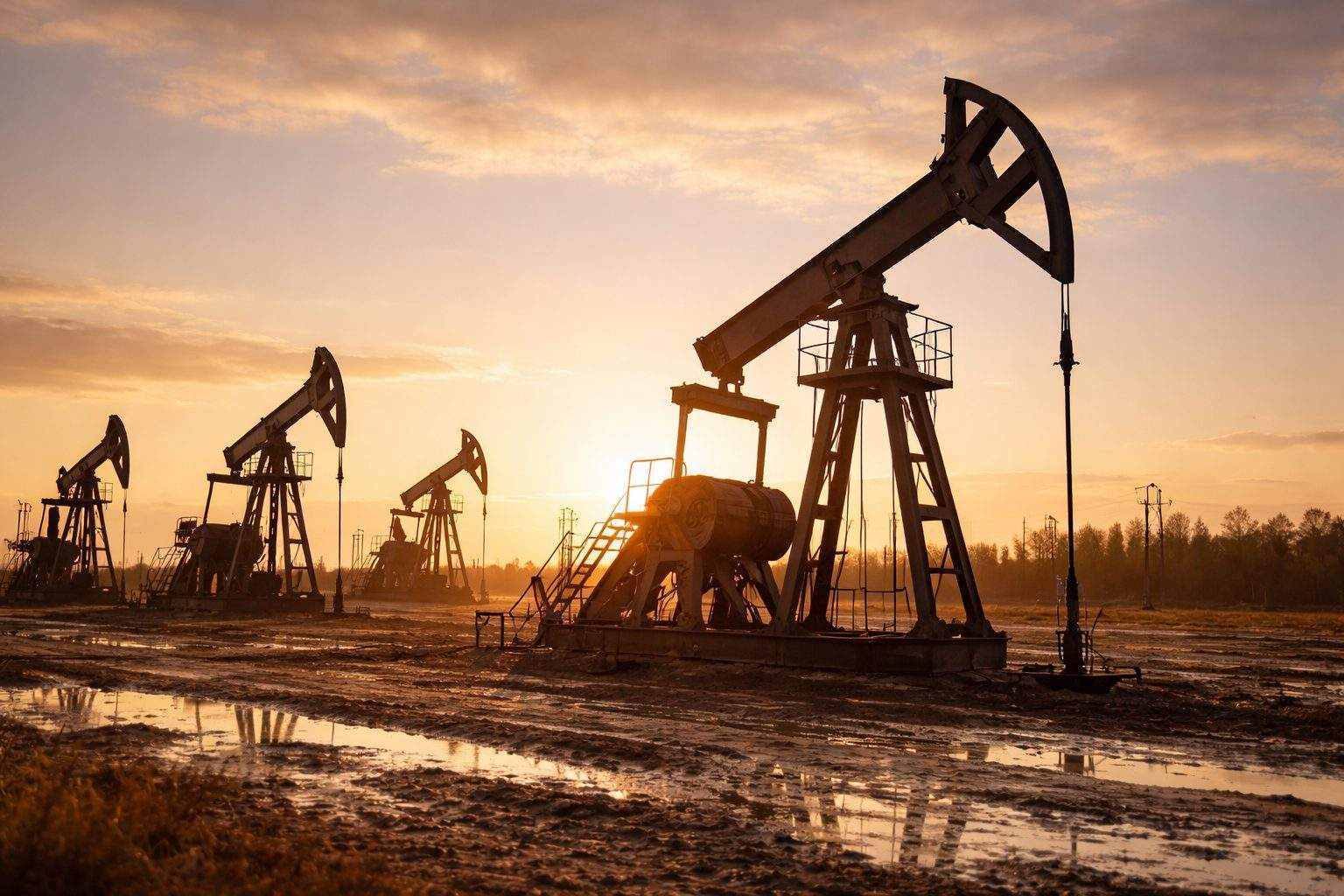

- Oil prices punch through to daily expenses quickly—whether it’s gas at the pump, shipping, diesel, flights, food delivery, or heating, the effect lands fast. For the U.S., crude oil made up just over half the average retail gasoline price over the past decade, EIA data show.
- This isn’t just theory at this point. The IEA’s April 2026 oil report flagged a sharp drop in global supply, with refinery runs strained and inventories getting depleted fast following turmoil in the Strait of Hormuz.
- Crude price forecasts shift as assumptions change. The EIA pointed to the uncertain duration of the Middle East conflict and the potential scale of production outages as key factors driving its outlook.
Ask a roomful of traders what pushes oil prices around—most reach for the same checklist: supply, demand, inventories, fear. Not wrong, but it leaves out half the game. Oil’s price also shifts on tankers, refinery bottlenecks, spare production, sanctions, interest rates, the U.S. dollar’s swings, weather disruptions, storage levels, and even next month’s rumors, not only this morning’s news. The EIA carves up the primary crude oil price drivers as spot prices, non-OPEC supply, OPEC output, inventories, the role of financial markets, plus demand trends split between OECD and non-OECD economies.
Oil just doesn’t move fast. Unlike a factory scrapping an order or someone holding off on a laptop, nobody can quickly throttle oil wells, pipelines, tankers, or all the support logistics. The EIA spells it out: both supply and demand for oil barely budge in the short run, so prices often swing sharply after even a modest jolt. That’s how crude futures can spike on what might seem like a minor headline.
Supply is front and center here. More barrels from outside OPEC—think the U.S., Brazil, Guyana, Canada, the North Sea, and others—mean a bigger global pool and, typically, price pressure. Hold back those barrels, whether it’s delays, sanctions, high costs, or outright shutdowns, and the market tightens. According to the EIA, non-OPEC producers were responsible for 65% of the world’s crude output in 2024; shifts in their supply hit prices directly.
Demand isn’t loud, but it can turn harsh fast. A hotter global economy chews through more diesel, gasoline, jet fuel, marine fuel, LPG, and feedstocks for chemicals. Developing countries are a big piece of the puzzle. According to the EIA, oil use outside the OECD has doubled since 2000 up through 2024. Goldman Sachs’ Daan Struyven put it this way: “we expect oil demand to grow for another decade,” citing both rising energy appetite in emerging markets and the tough road to decarbonize aviation and petrochemicals. U.S. Energy Information Administration
Rich economies haven’t faded—they just play a new role. The U.S., Europe, Japan, South Korea, and other OECD countries remain massive oil consumers, though their demand growth has cooled. Here, fuel efficiency mandates, taxes, wider public transit, and the urge to swap out oil all tend to shape use. According to the EIA, oil demand among OECD nations actually topped out back in 2005. Since then, recession, efficiency gains, or a policy pivot in these regions can unleash excess crude and send prices lower.
Now to OPEC and OPEC+. Here, the market shifts—no longer a straightforward supply-demand story, but more like a chess match. OPEC nations pump out roughly 35% of global crude, capturing about half the world’s internationally traded oil, EIA says, citing Vortexa. But the real lever? They sit on most of the globe’s spare production capacity—the industry’s safety net. Plenty of cushion, and price surges tend to calm down. If that buffer looks skinny, nerves start to show.
Not every quota hike means more oil in reality—a common misread. Back in March 2026, Rystad Energy’s Jorge Leon put it bluntly: “Prices will respond to developments in the Gulf and the status of shipping flows,” rather than a minor increase on paper. UBS oil analyst Giovanni Staunovo echoed this: if the barrels don’t actually show up, the quota bump doesn’t count for much. Reuters
Inventories act as the oil market’s shock absorber. If producers pump more than buyers want, barrels pile up—in tanks, refineries, pipelines, even on ships. Flip the balance, and stocks get pulled down fast. The overall idea is straightforward. But traders drill into the specifics: Is the oil crude or diesel? Commercial or strategic reserves? Stashed nearby or hard to get? Can the market even track it? The EIA calls petroleum inventories both a sign of market balance and a real-world buffer against swings.
The question of market visibility is only getting thornier. China’s role, the surge in floating storage, barrels under sanction, and swelling non-OECD stockpiles have all muddied once-reliable inventory signals. “More and more oil is outside of OECD,” Oilytics CEO Keshav Lohiya pointed out, cautioning that relying too much on OECD data just isn’t cutting it. Bottom line: traders are left reading gauges that aren’t telling the whole story. Reuters
Geopolitical flare-ups—wars, sanctions, coups, attacks on key infrastructure, export bans, shipping risks—don’t always yank barrels from the market on the spot. More often, it’s the threat alone that rattles traders. Fear itself drives up prices. So, when the IEA rolled out a massive, 400-million-barrel emergency stock release in March 2026, Executive Director Fatih Birol put it plainly: “Oil markets are global so the response to major disruptions needs to be global too.” That’s the scale. Fast moves, global nerves. IEA
Chokepoints are risky — they squeeze global flows through tight spots. Strait of Hormuz. Suez. Bab el-Mandeb. Turkish Straits. Panama Canal. Not all push the same oil volumes, but any one can spark a price move. In April 2026, PVM’s Tamas Varga warned: “every day 10-13 million barrels of oil fail to get to the international market” as Gulf shipments stall. Forget technicals. That’s just lost supply. Reuters
Refineries don’t always get the attention they deserve. Turning crude oil into gasoline, diesel, jet fuel, naphtha—none of it happens without them. A refinery shut down for repairs, hit by storm damage, dealing with the wrong crude blend, or stuck with shipping bottlenecks can still send fuel prices higher, even if crude itself is plentiful. According to the EIA, crude accounts for about half of the price drivers see at the pump; the rest comes from refining margins, plus distribution, retail markups, and taxes.
Barrels don’t come stamped with a uniform price. Brent, WTI, Dubai, Oman, Urals, Mars, Bonny Light—those names carry weight, and not just as branding. Crude quality splits quickly between light and heavy, sweet and sour grades. Geography tips the scales further. ICE points to Brent as a marker for about 80% of global crude thanks to its waterborne status—easy to ship. Over at CME, WTI futures are pitched as a go-to U.S. light sweet crude contract, liquid and central for both hedgers and speculators.
Prices often move in advance of actual oil flows—futures traders are quick to act on OPEC headlines, talk of recession, refinery margins, shifts in shipping rates, inventory trends, storms, central bankers’ signals. The U.S. dollar plays a role too, since crude is priced in dollars, but it’s not a simple cause-and-effect. The ECB notes that much of the recent oil-dollar tandem action boils down to particular shocks, not some single persistent link.
High prices have a way of fixing themselves, if not gently. Folks drive less, airlines drop flights, factories pull back, governments start rationing, companies chew through stockpiles, and parts of demand just disappear. OANDA’s Edward Moya flagged “elevated prices” triggering “demand destruction” after crude optimism overshot. The catch is timing—damage to households and businesses usually shows up before demand actually cracks. Reuters
Policy decisions out of government circles matter—though there’s no single fix. Tapping strategic reserves, altering sanctions (tightening or loosening), hiking or cutting fuel taxes, handing out subsidies, blocking imports, changing shipping regulations, or rolling out emergency conservation steps: all of it can move prices. The IEA points to demand-side measures—anything from tweaks in road traffic to shifts in aviation—as ways to take some heat off when supply levers fall short. The upshot: oil markets don’t just take cues from producers. They’re shaped by what consumers and governments actually do when things get tight.
Long-term oil prices ride on investment decisions. Fields drop off. Shale wells fade even faster. Offshore? Years before production hits. Underspending brings tight supply down the road; go too heavy on new projects and the market could crater. Chevron CEO Mike Wirth calls for “significant investment to close the oil supply gap.” ExxonMobil’s Darren Woods sees sharp declines unless companies keep backing unconventional fields. That, in essence, is oil’s slow-burning price dynamic. Reuters
What’s moving oil prices? It comes down to the barrels you can buy now, what traders expect tomorrow, and whether the market trusts there’s backup if things get tight. Cheap oil shows up when storage tanks are brimming, spare production isn’t in question, refineries keep humming, and demand lags. But block supply, watch inventories thin out, doubt spare capacity, and keep fuel buyers in the game—prices can jump fast. Goldman Sachs analysts, with Daan Struyven at the helm, put it bluntly: “Because extreme inventory draws are not sustainable,” the market might see sharper demand cuts if a supply shock drags on. Reuters
Related articles: Stock Market