
Mumbai, June 8, 2026, 15:25 IST
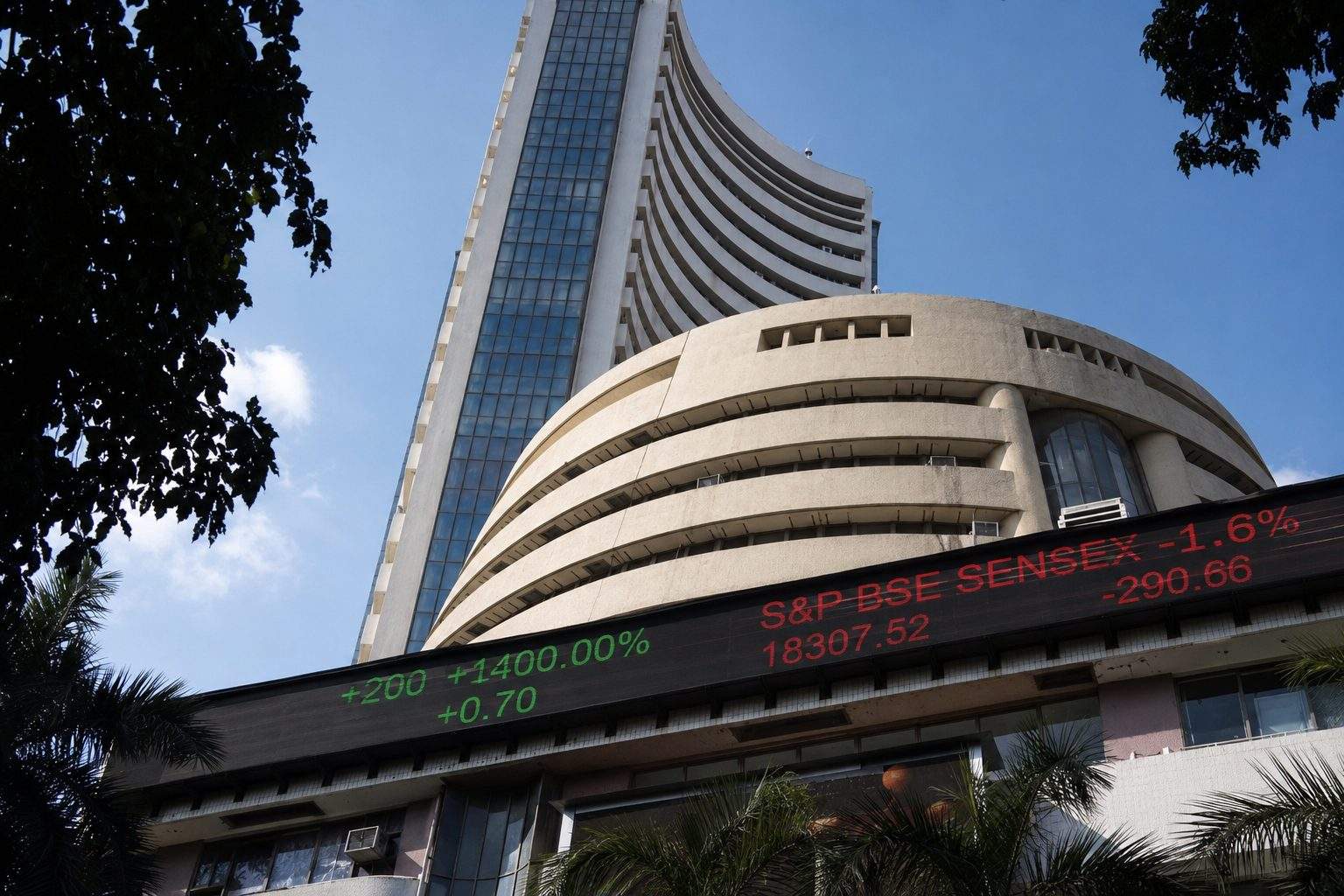
Indian shares fell about 1% in late Monday trade as higher oil prices, a sharp Asia selloff and renewed worries over U.S. rates drove investors out of risk assets. The Nifty 50, the National Stock Exchange’s 50-stock blue-chip gauge, was down 1.04% at 23,124.35 at 15:03 IST, while market data provider Trendlyne showed the BSE Sensex, a 30-share benchmark, down 694.45 points, or 0.94%, at 73,548.89 at 15:09 IST.
The timing matters. Brent crude, the global oil benchmark, climbed back above $97 a barrel after Israel said it struck an Iranian petrochemical plant, deepening concern over energy supply and the wider Middle East conflict. India imports a large share of its crude, so oil shocks quickly feed worries about the rupee, inflation and company margins.
The pressure was broad, not just one or two heavyweights. Reuters reported earlier in the session that 13 of 16 major sectors fell, with high-weightage financials and information technology — software and outsourcing companies that earn heavily from overseas clients — losing ground, while small- and mid-cap shares also dropped about 1%. Hariprasad K, research analyst and founder of Livelong Wealth, said the mix of Middle East tension and the AI-led unwind had “intensified investor nervousness.” Reuters
Asia gave India little cover. South Korea’s KOSPI slumped 8.3%, its worst day since March, with chip peers Samsung Electronics and SK Hynix down 10.2% and 7.7%, respectively, after strong U.S. payrolls data lifted bets that the Federal Reserve may raise rates. Han Ji-young, an analyst at Kiwoom Securities, said the jobs surprise “provided an excuse for correction” in a market already stretched by semiconductor gains. Reuters
Currency pressure added another drag. The rupee opened weaker at 95.32 per dollar against Friday’s close of 94.9450, despite Reserve Bank of India steps aimed at drawing in $30 billion to $50 billion of dollar inflows. Amit Pabari, managing director at CR Forex, said oil was again the “biggest risk for the rupee.” Reuters
Volatility rose too. India VIX, a gauge of expected swings in stocks, was up 8.49% at 17.13, while the Nifty 50 was down 0.91% on delayed market data shown by Mint. A higher VIX often signals traders are paying more to protect portfolios from sharp moves.
The global tech move was another reason dealers stayed defensive. David Chao, global market strategist for Asia-Pacific at Invesco, said Asia tech stocks are tied closely to the U.S. semiconductor cycle and that “market expectations have become too high” for AI guidance to keep being raised. That fed through to Indian IT shares, even though the direct exposure is different. Investing.com
But the risk is not all one way. A pullback in crude or calmer Asian tech trading could steady the market; the downside case is that oil stays high, foreign selling continues and the Nifty breaks technical support, a chart level where buyers often reappear. ETMarkets cited Rajesh Palviya, head of research at Axis Direct, as placing immediate support near 23,100, with a sustained breach risking 23,000 to 22,800, while Pabitro Mukherjee at Bajaj Broking said flows would remain “highly sensitive” to U.S.-Iran ties and oil prices. The Economic Times
For now, the story is less about a single domestic trigger and more about India catching a global risk-off wave at a bad moment: oil up, the rupee soft, overseas investors cautious, and Asia’s high-flying technology trade suddenly looking vulnerable.