
NEW YORK, August 8, 2026, 17:10 EDT — U.S. trading ended with markets closed.
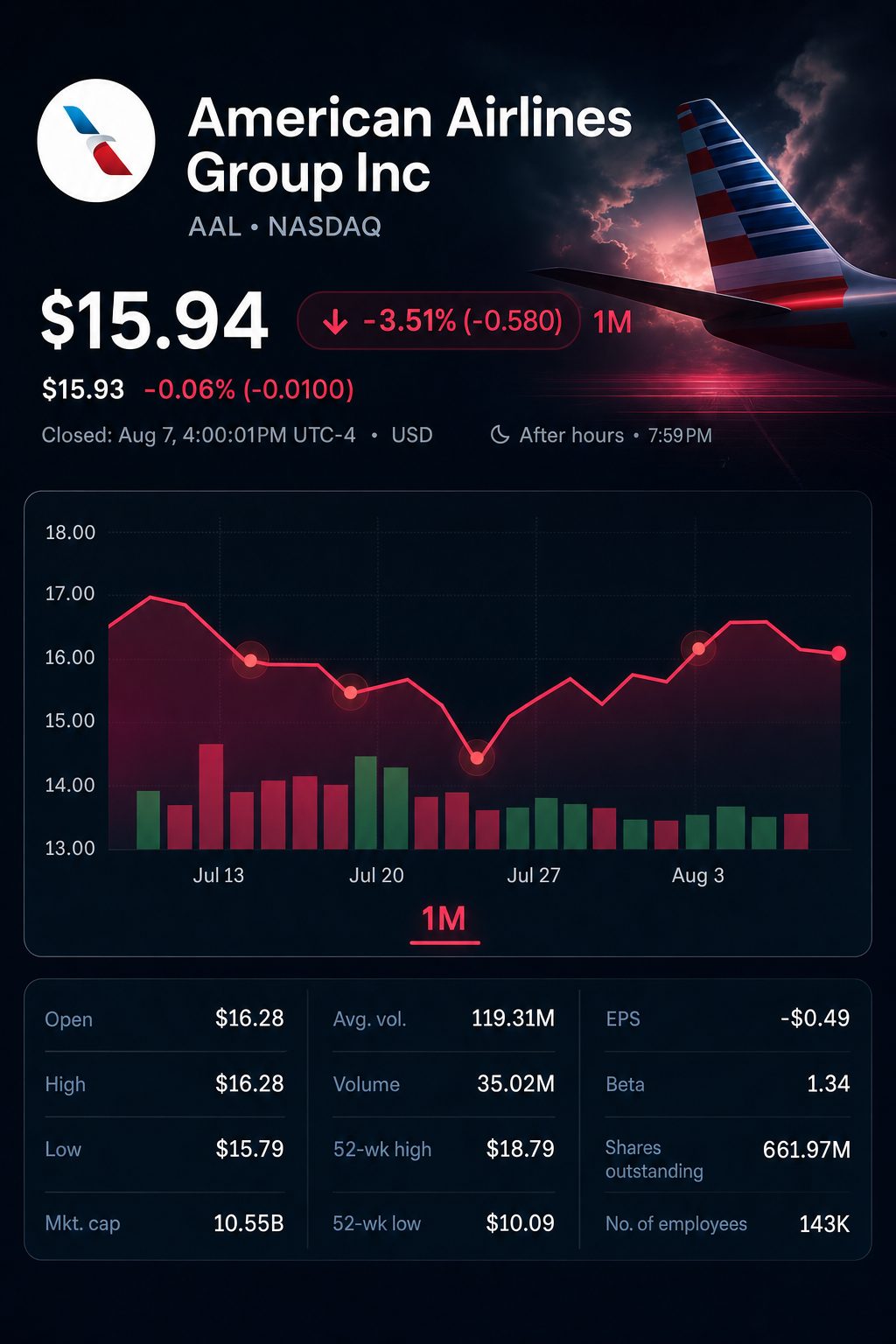
- The stock ended Friday at $15.94, slipping 0.56%, yet advanced 4.39% over the week.
- Starting August 25, direct upgrades from coach to business will be restricted on nine top domestic routes.
- Since early July, projected fuel costs have climbed by $1.6 billion, representing approximately 15.2% of the company’s market value as of Friday.
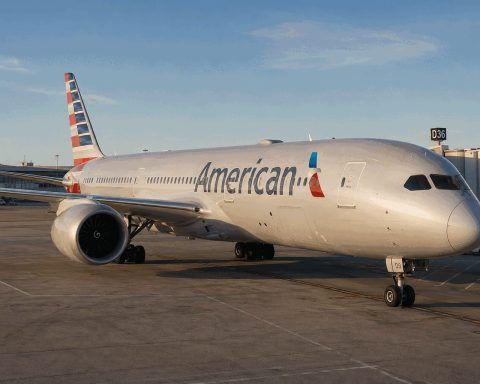
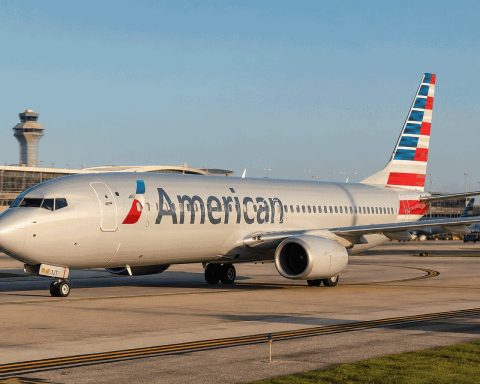
American Airlines climbed 4.4% over the past week. The company’s recent adjustment to its loyalty program points to efforts by management to protect premium-seat income amid margin pressure from rising fuel expenses.
Premium passenger unit revenue increased by 13.4% in the second quarter. Revenue per unit in the Main Cabin was up 8.8%, creating a spread of 4.6 points. Managed corporate revenue was up 26%.
Fuel continues to act as a balancing factor. Since early July, American’s projected fuel costs climbed by $1.6 billion. That jump represents roughly 15.2% of its $10.55 billion market capitalization as of Friday.
The fuel reset equates to 3.6 times the approximately $444 million in market value gained last week. This highlights that premium monetisation has a greater impact than the recent weekly surge.
Market activity reflected this tension. Shares climbed 5.0% on Monday, before dropping 3.3% on Thursday and another 0.6% on Friday. Despite these shifts, the stock remained ahead of the S&P 500, which advanced 3.58% for the week.
Key U.S. airline stocks, August 3–7
| Company | August 7 close | Friday | Week |
|---|---|---|---|
| American Airlines Group Inc. NASDAQ:AAL | $15.94 | declined 0.56% | rose 4.39% |
| Delta Air Lines Inc. NYSE:DAL | $91.34 | fell 0.70% | increased 4.46% |
| United Airlines Holdings Inc. NASDAQ:UAL | $129.56 | gained 0.34% | advanced 6.78% |
| Southwest Airlines Co. NYSE:LUV | $47.05 | added 0.23% | was up 4.63% |
| Alaska Air Group Inc. NYSE:ALK | $49.96 | dropped 1.44% | improved 5.29% |
Weekly shifts are measured between closing prices on July 31 and August 7.
Starting August 25, eligible Main Cabin passengers will be upgraded to premium economy on certain Hawaii and transcontinental routes. Nine routes will be included at launch, such as New York–Los Angeles, Boston–Los Angeles, and six Hawaii flights departing from Dallas, Phoenix, or Chicago.
Paid premium-economy bookings and flights that do not offer this cabin still qualify directly for business-class upgrades. Systemwide upgrades continue to be valid for moving up to the next cabin. Previously approved business-class upgrades will stand, unless the travel itinerary is altered.
The economic logic is straightforward. The rules seem to increase the number of business seats open for purchase, potentially raising yield, but some status holders lose a simple upgrade route from coach to business.
American reported a record $16.7 billion in second-quarter revenue, an increase of 16.3%. Adjusted net income reached $99 million, or 15 cents per share. Fuel costs climbed by more than $2.2 billion, up 83%.
Management projects an adjusted loss per share of between 70 cents and 10 cents for the third quarter. For the full year, the company guides for results ranging from a loss of 65 cents to a profit of 65 cents a share, with the midpoint representing breakeven.
Devon May, the Chief Financial Officer, explained the rapid shift in assumptions. “If we had guided on the same day as Delta, we’d have been guiding up for the year,” he told Reuters. Thirteen days before, the airline was ready to upgrade its forecast. MarketScreener UAE Emirates
American offset almost 50% of its rise in second-quarter fuel costs by raising fares. This equaled United’s recovery rate, was less than Delta’s, and surpassed Alaska’s.
Comparison of fuel recovery and guidance
| Carrier | Q2 fuel increase recovered | 2026 outlook response |
|---|---|---|
| American | Just under half | Reduced EPS range to project a $0.65 loss up to a $0.65 gain |
| Delta | Roughly 60% | Kept yearly outlook unchanged |
| United | Close to 50% | Raised guidance floor |
| Southwest | No details given | Lowered bottom end of forecast |
| Alaska | Minimal recovery | Full-year guidance not reinstated |
Company disclosures gathered by Reuters are the basis for recovery rates and guidance actions.
Opinions on Wall Street are divided. Recent post-earnings price targets span from $13 to $24. Three analysts maintained Buy or Overweight recommendations, with Goldman continuing to rate the stock as Sell.
Most recent analyst recommendations released
| Date | Firm and analyst | Rating | New target | Previous |
|---|---|---|---|---|
| July 27 | UBS Group AG NYSE:UBS — Atul Maheswari | Buy | $18 | $21 |
| July 24 | BMO Capital Markets, Bank of Montreal NYSE:BMO — Michael Goldie | Market Perform | $19 | $19.50 |
| July 24 | Goldman Sachs Group Inc. NYSE:GS — Catherine O’Brien | Sell | $13 | $15 |
| July 24 | JPMorgan Chase & Co. NYSE:JPM — Jamie Baker | Overweight | $24 | $22 |
| July 24 | Citigroup Inc. NYSE:C — John Godyn | Buy | $19 | $22 |
The guidance comes as the most recent measures announced after American released its quarterly earnings.
Analysts currently rate the stock as Overweight. The median price target sits at $19, representing an increase of roughly 19% from Friday’s closing price. The average target is $19.76, with the lowest estimate at $13.
Focus turns to fuel markets and demand in the coming week. The EIA releases its updated energy outlook on Tuesday, with weekly petroleum statistics due Wednesday. July data on inflation and retail sales will gauge consumer strength and pricing power.
Looking ahead to next week
| Date and time, ET | Release | Investor read-through |
|---|---|---|
| Tuesday, August 11 | EIA Short-Term Energy Outlook | Revised assumptions for oil and transport-fuel |
| Wednesday, August 12, 8:30 a.m. | July CPI | Initial Reuters expectations: 3.4% headline, 2.5% core |
| Wednesday, August 12 | EIA Weekly Petroleum Status Report | Latest figures on jet-fuel supply and demand |
| Thursday, August 13, 8:30 a.m. | July PPI | Indicators of cost inflation and pricing trends |
| Friday, August 14, 8:30 a.m. | July retail sales | Signals for consumer demand and travel-related spending |
Official U.S. release dates are used. Reuters consensus estimates provide preliminary CPI numbers.
The disappointing jobs report on Friday has become another source of concern. U.S. payrolls dropped by 23,000 in July, while a Reuters survey had forecast an increase of 80,000. While weaker employment may influence expectations for interest rates, it could also lead to reduced spending on travel.
Risks: A sustained reopening of the Strait of Hormuz might bring fuel prices down more rapidly than anticipated. If negotiations break down or additional shipping incidents occur, that benefit could be undone. The pivot to upgrades could support yield but potentially erode elite loyalty along impacted routes.
Related articles: NASDAQ:AAL