
NEW YORK, August 8, 2026, 17:09 EDT – Tesla NASDAQ:TSLA climbed 5.6% following the announcement of its $16.8 billion Terafab initiative, prompting renewed investor debate over how the ambitious project will be financed.
- Tesla Inc. NASDAQ:TSLA finished Friday’s trading at $328.58, up 2.8% on the day and rising 5.6% over the week.
- Retail investors purchased about $372 million in Tesla stock across five sessions, a figure more than three times higher than the previous week’s inflow.
- Jefferies Financial Group NYSE:JEF lowered its 2026 EBIT projection by 37%, now expecting $3.9 billion.
U.S. markets did not operate on Saturday. Tesla finished the previous week close to its strongest value since early July.
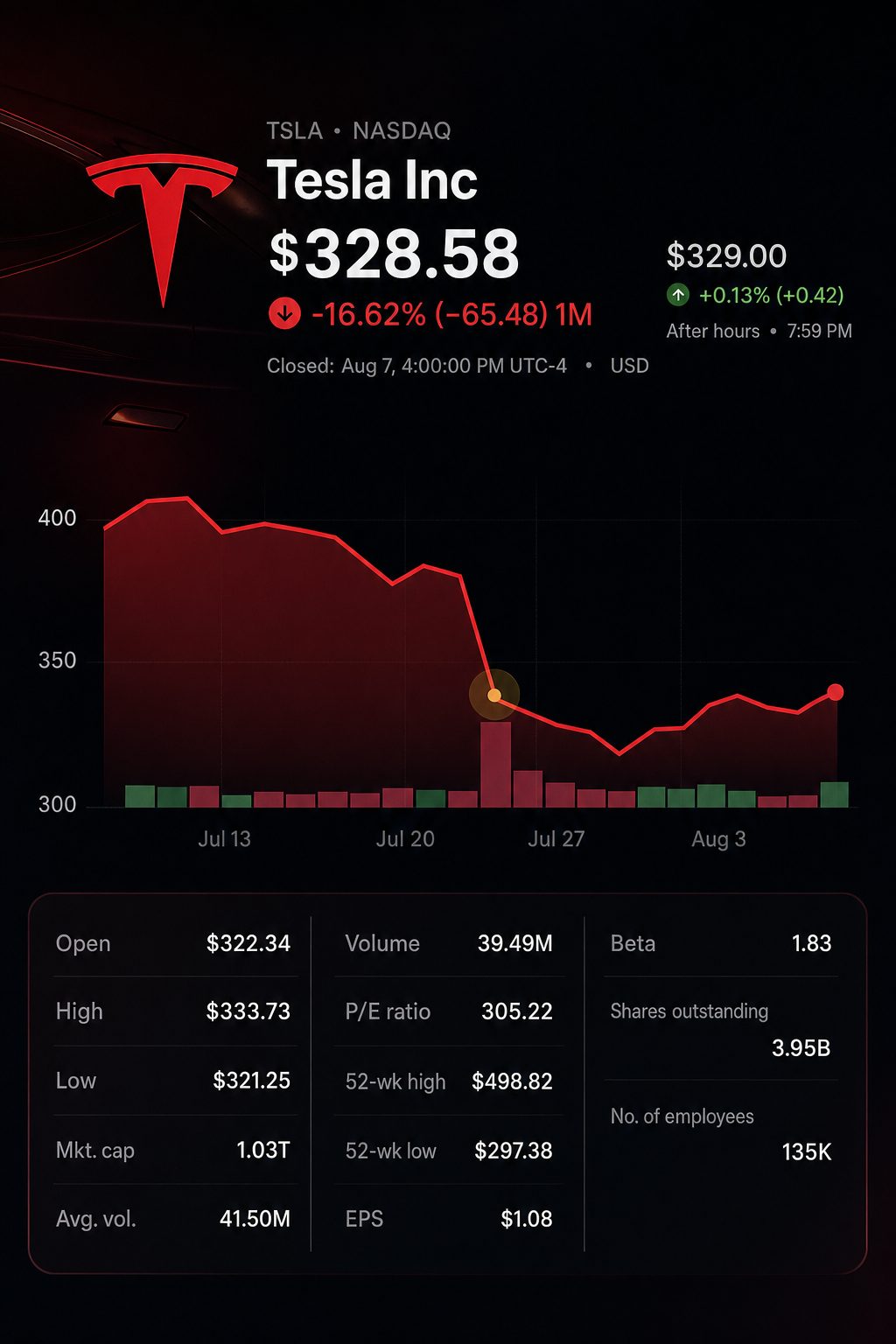
Tesla shares rose on renewed investor interest in the company’s artificial intelligence ambitions. Retail investors increased their buying activity significantly, with purchases totaling about $372 million across five trading sessions.
The most significant signal for investors was monetary. Tesla and SpaceX NASDAQ:SPCX unveiled a $16.8 billion initial investment for the Terafab chip facility. The companies have not revealed how much each has contributed.
The combined headline amount represents 38.6% of Tesla’s cash and short-term investments as of June. This number is also 2.9 times the automaker’s capital expenditure for the second quarter. These figures serve as scale comparisons, not commitments by Tesla.
Market performance versus prior week
| Asset | Friday close | Friday move | Weekly move |
|---|---|---|---|
| Tesla | $328.58 | up 2.8% | up 5.6% |
| Nasdaq Composite | 26,690.62 | rose 1.3% | gained 5.2% |
| S&P 500 | 7,757.64 | added 0.6% | advanced 3.6% |
Tesla’s weekly performance is calculated based on closing prices from July 31 and August 7.
Tesla edged ahead of the Nasdaq Composite over the course of the week. A broader market surge on Friday came after weaker U.S. jobs data, easing concerns over possible imminent rate hikes.
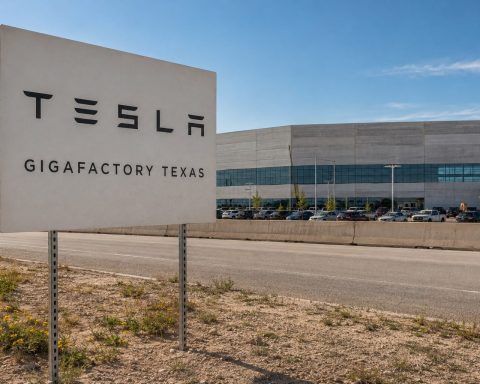
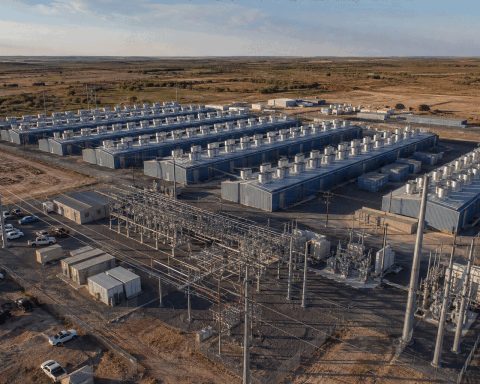
Terafab, a proposed manufacturing complex in Texas, is set to cover 100 million square feet. The facility would manufacture and package chips intended for Optimus robots, Cybercabs, and SpaceX data centers.
Chief Executive Elon Musk stated the initiative would allow AI chip production “at scale for use on Earth and in space.” The comment outlined a major goal, but did not specify a timeline for investment. Reuters
Terafab’s size compared to Tesla’s financials
| Comparison metric | Amount | $16.8 billion joint project relative to metric |
|---|---|---|
| Declared initial Terafab outlay | $16.80 billion | 100% |
| Total cash and short-term assets at Tesla | $43.52 billion | 38.6% |
| Tesla’s capital expense in the second quarter | $5.80 billion | 2.9 times |
| Tesla’s capital expense in the first half | $8.28 billion | 2.0 times |
| Tesla’s outlined capital expenditure for 2026 | More than $25 billion | 67.2% of stated minimum |
The comparison does not attribute the full Terafab investment to Tesla. Details on ownership structure, timing or financing conditions have not been made public.
The absent allocation is significant. Tesla has previously indicated that its higher expenditure may necessitate additional funding on top of operating cash flow.
Revenue for the second quarter climbed 25.5%, driven by an uptick in vehicle deliveries. However, operating income dropped 56.9% as research expenses grew 49.2%. This disparity highlights the pace at which increased spending on growth is consuming additional sales.
Tesla Q2 operational comparison
| Metric | Q2 2026 | Q2 2025 | Change |
|---|---|---|---|
| Revenue | $28.24 billion | $22.50 billion | +25.5% |
| Automotive revenue | $20.52 billion | $16.66 billion | +23.1% |
| Research and development | $2.37 billion | $1.59 billion | +49.2% |
| Operating income | $398 million | $923 million | -56.9% |
| Net income attributable to common shareholders | $1.11 billion | $1.17 billion | -4.9% |
Results shown are actual figures rather than preliminary numbers.
Free cash flow came in at negative $1.1 billion, following $5.8 billion in capital expenditures for the quarter. This marked Tesla’s first negative free cash flow in over two years. Direxion analyst Ryan Lee described monetisation as “the central concern” after the company missed earnings. Reuters
Demand for vehicles provided a boost. Tesla’s China-made vehicle sales totaled 93,579 units in July, up 37.8% year-on-year and an increase of 5% from June. This marked the ninth straight month of growth.
European software sales outlook is still unclear. The Dutch vehicle authority granted approval for Full Self-Driving, though it did not disclose specifics about its safety evaluations. A broader ruling by the European Union may be made in October.
Analysts are split. New neutral ratings appear alongside price targets projecting significant advances tied to autonomy, robotics, and AI infrastructure.
Analyst ratings
| Firm or consensus | Recommendation | Price target | Implied move from $328.58 | Latest action |
|---|---|---|---|---|
| Jefferies Financial Group NYSE:JEF | Hold | $350.00 | +6.5% | Lowered from $400 on Aug. 7 |
| UBS Group NYSE:UBS | Neutral | $385.00 | +17.2% | Maintained on Aug. 7 |
| Stifel Financial NYSE:SF | Buy | $491.00 | +49.4% | Reduced from $508 on Aug. 3 |
| Consensus, 47 analysts | Outperform | $396.62 | +20.7% | Most recent consensus |
Implied returns do not account for dividends and are based on Friday’s closing price.
Jefferies’ move highlights the ongoing uncertainty. The firm’s $350 price target suggests a potential gain of 6.5%, yet it has lowered its 2026 EBIT estimate by 37%. Much of the wider market consensus is tied to profits that are still expected from Tesla’s AI-related spending.
Several valuation challenges are set for the week ahead. Consumer inflation data is due on Wednesday, followed by producer prices on Thursday and retail sales on Friday. Typically, elevated yields weigh on long-duration growth stocks like Tesla.
Risks: Further pressure on margins is possible if vehicle prices drop. Terafab might require more outside funding, and regulatory holdups could impact software revenue. Other factors include shifts in consumer demand and changes in interest rates.
The next indication is not Terafab’s scale, but which parties provide funding, when capital outflows occur, and the speed at which the investment generates revenue.
Related articles: NASDAQ:TSLA