
Published: November 21, 2025
Ticker: TeraWulf Inc. NASDAQ:WULF
TeraWulf’s WULF stock finished Friday under pressure as a sharp selloff in Bitcoin and other risk assets collided with a name that has already more than doubled in 2025. Yet beneath today’s pullback, investors are still focused on the company’s rapid transformation from pure Bitcoin miner into a leveraged play on AI data centers and high‑performance computing (HPC).
How WULF Stock Traded Today
As of late trading on Friday, November 21, 2025, WULF stock was changing hands around $11.30, down roughly 2–3% from Thursday’s close. Intraday, shares swung between about $10.47 and $11.78, underscoring just how volatile the name remains.
Key trading stats for today: Yahoo Finance+1
- Last price: ≈ $11.29
- Day’s range:$10.47 – $11.78
- Previous close:$11.56
- Market cap (intraday): around $4.8 billion
- 52‑week range:$2.06 – $17.05
- Average daily volume: roughly 40–50 million shares
Even after today’s dip, WULF is still up well over 100% so far in 2025, trading several times above its 52‑week low near $2, thanks to relentless enthusiasm around its AI hosting deals and hyperscaler partnerships.
Why WULF Is Under Pressure Today
Two forces are hitting WULF at once:
1. A Brutal Day for Bitcoin and Risk Assets
Bitcoin extended its steep November slide on Friday, trading in the low‑$80,000s after briefly falling below $81,000. That’s roughly a one‑third drop from the record highs near $125,000 set in early October, and it puts the token on track for its worst month since the post‑FTX chaos in 2022.
The downdraft has erased over a trillion dollars in crypto market value and triggered waves of forced liquidations in leveraged positions. Crypto‑linked equities — from miners to trading platforms — have broadly sold off alongside the token.
Although TeraWulf is aggressively repositioning itself as an AI and HPC infrastructure provider, its legacy as a Bitcoin miner means the stock still trades with a “crypto beta” attached. When Bitcoin tanks, WULF tends to at least wobble, even if the long‑term AI story is unchanged.
2. Profit‑Taking After a Huge Run
In just a few months, WULF ripped from the low‑single digits to the mid‑teens at its peak, driven by a string of AI hosting announcements and a blockbuster Google‑backed deal with Fluidstack. One widely cited move saw the stock jump 40%+ in a single session after the AI partnership news, putting it firmly on traders’ radar as a high‑beta momentum play.
With the macro backdrop turning risk‑off and Bitcoin sliding, short‑term traders appear to be locking in gains, which amplifies intraday volatility for WULF.
From Bitcoin Miner to AI Infrastructure: The New WULF Story
TeraWulf started life as a Bitcoin miner, but in 2025 its narrative has shifted dramatically toward sustainably powered data centers for AI and high‑performance computing.
The Google‑Backed Fluidstack Alliance
The cornerstone of that pivot is a series of long‑term deals with AI cloud platform Fluidstack, backed by Google: TeraWulf Inc.+3TeraWulf Inc.+3Investors+3
- 200+ MW of HPC hosting under 10‑year contracts at TeraWulf’s Lake Mariner campus in New York, with initial contract value of $3.7 billion, potentially rising to $8.7 billion if fully extended.
- A 25‑year joint venture in Abernathy, Texas, initially sized for 168–240 MW of AI capacity and expandable to as much as 600 MW.
- Google credit support for more than $1.3 billion of Fluidstack’s lease obligations, significantly de‑risking TeraWulf’s cash‑flow visibility.
Combined with earlier Core42 and enterprise contracts, TeraWulf says it has signed more than $17 billion in long‑term, credit‑enhanced customer agreements across its AI and HPC pipeline, with over 520 MW of leased HPC capacity either contracted or in development.
In short: WULF is no longer just a Bitcoin miner. Management wants investors to value it closer to a high‑growth, infrastructure‑style AI data center operator — albeit one still deeply exposed to crypto prices.
Q3 2025 Results: Rapid Growth, Big Losses
TeraWulf’s third‑quarter 2025 earnings, released November 10, give a clearer view of how this transition is playing out in the numbers.
Top‑Line Momentum
For Q3 2025 (ended September 30):
- Revenue: about $50.6 million, up roughly 80–90% year over year, driven by higher Bitcoin prices earlier in the quarter, expanded mining capacity, and the first meaningful contributions from HPC lease revenue.
Management highlighted the quarter as “transformational,” with: TeraWulf Inc.
- Recurring HPC lease revenue beginning to flow.
- Over $17 billion in long‑term customer contracts signed.
- More than $5 billion in long‑term financings completed to support the build‑out of Lake Mariner and the new Abernathy campus.
Profitability and Net Loss
The flip side of that aggressive expansion is heavy losses:
- Net loss for Q3: around $455 million, reflecting massive capex, interest expense, and non‑cash charges linked to the company’s rapid scaling of both Bitcoin mining and HPC infrastructure.
- On a trailing 12‑month basis, TeraWulf has generated roughly $168 million in revenue but still posted about $564 million in net losses.
Balance Sheet and Debt Load
As of September 30, 2025, TeraWulf reported: StockAnalysis+3TeraWulf Inc.+3TeraWulf Inc.+3
- Cash, cash equivalents, and restricted cash: ≈ $713 million
- Total debt: about $1.5 billion, primarily convertible notes due 2030 and 2031 at that time
- Subsequent to quarter‑end, the company:
- Closed a $3.2 billion private offering of senior secured “green” notes due 2030
- Completed an additional $1.025 billion zero‑coupon convertible notes due 2032
These financings are intended to fully fund the Lake Mariner HPC buildout and TeraWulf’s equity stake in the Abernathy joint venture, but they also cement WULF as a highly leveraged bet on the long‑term AI and digital‑infrastructure cycle.
How Wall Street Sees WULF Right Now
Despite the volatility and losses, Wall Street analysts remain broadly constructive on WULF’s long‑term story: Investors+3StockAnalysis+3MarketBeat+3
- Consensus rating: often categorized as “Strong Buy” based on several recent notes.
- Average 12‑month price target: around $16–17, implying roughly 40–50% upside from current levels.
- Individual targets:
- One widely cited report maintains a $16.50 target and reiterates a Buy rating despite recent pullbacks, arguing the AI hosting pipeline outweighs near‑term volatility.
- Other firms have gone even higher; one group of analysts recently lifted its objectives into the $20–24 range, often paired with “market outperform” or “buy” labels. MarketBeat+1
At the same time, those same analysts frequently stress that:
- WULF carries a beta north of 4, meaning it tends to move several times more than the broader market on any given day.
- The company remains unprofitable, with substantial execution and balance‑sheet risk.
In other words, Wall Street likes the story, but knows it’s not for the faint‑hearted.
Key Risks WULF Investors Should Keep in Mind
For anyone considering WULF stock, today’s pullback is a reminder of how many different risk levers are attached to the name:
- Crypto Price Volatility
- Even as the AI narrative grows, WULF still generates a meaningful share of revenue from Bitcoin mining and holds digital assets on its balance sheet. Big moves in Bitcoin — like this month’s plunge — can quickly swing sentiment and cash flow.
- Execution on Massive AI and HPC Projects
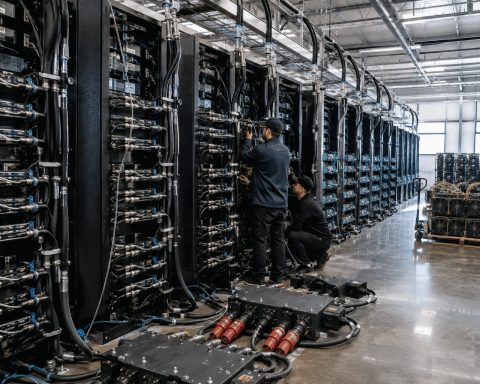
- Delivering hundreds of megawatts of AI capacity on time and on budget is a non‑trivial feat. Construction delays, power‑infrastructure issues, or supply‑chain problems for GPUs and cooling equipment could compress returns.
- High Leverage and Financing Risk
- With billions in new notes and convertibles, WULF is heavily reliant on capital markets staying open and supportive. If AI enthusiasm cools or credit spreads widen, refinancing that debt or funding additional expansions could get more expensive.
- Regulatory and Energy‑Market Uncertainty
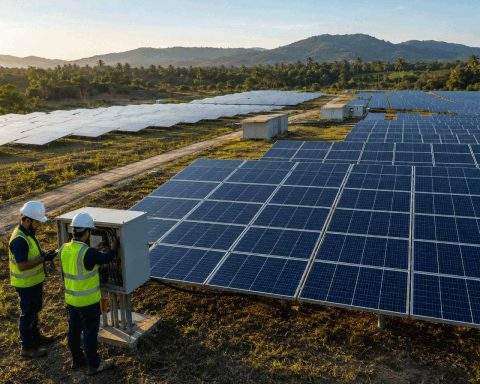
- TeraWulf’s strategy depends on access to large volumes of relatively cheap, low‑carbon power. Shifts in energy regulation, local opposition to large data centers, or changes in crypto policy could pressure profitability or restrict growth.
- Share Dilution and Volatility
- With a history of stock splits, at‑the‑market offerings, and convertible instruments, existing shareholders face ongoing dilution risk. Coupled with a high beta, that can make the ride exceptionally bumpy.
What to Watch Next for WULF Stock
Looking beyond today’s red numbers on the screen, here are the catalysts that could move WULF in the weeks and months ahead:
- Bitcoin Stabilization or a Fresh Slide
- A floor in Bitcoin could ease pressure on crypto‑exposed names. Conversely, a deeper leg down in BTC might weigh on WULF regardless of its AI ambitions.
- Construction Milestones at Lake Mariner and Abernathy
- Investors will be tracking updates on how quickly new AI halls are energized and leased, along with any revisions to capex budgets or timelines.
- New AI or Hyperscaler Deals
- With more than 500 MW of contracted HPC capacity already announced, any incremental agreements — or expansions of existing deals — could reinforce the “AI infrastructure leader” narrative and support higher valuation multiples. TeraWulf Inc.+2Investors+2
- Debt Markets and Interest‑Rate Direction
- Given the size of TeraWulf’s note offerings, changes in long‑term interest rates or risk appetite for high‑yield issuers could affect the company’s cost of capital and investor perception of its balance‑sheet risk.
Bottom Line: Is Today’s WULF Pullback a Buying Opportunity?
Today’s drop in WULF stock looks less like a company‑specific blow‑up and more like a combination of crypto‑wide selling and profit‑taking after a massive run. The fundamental story — a heavily funded, highly leveraged push into Google‑backed AI and HPC infrastructure — remains intact, but it carries significant execution and balance‑sheet risk.
For long‑term, risk‑tolerant investors who believe:
- AI workloads will keep exploding,
- sustainably powered data centers will command premium valuations, and
- TeraWulf can successfully deliver its contracted megawatts on time,
WULF offers high potential upside — and equally high volatility.
For more conservative investors, today’s action is a reminder that this is a speculative, high‑beta name that can move 5–10% or more in a single session, especially when Bitcoin is lurching lower.
Either way, anyone considering WULF should:
- Look closely at the debt stack, project timelines, and sensitivity to Bitcoin prices.
- Read the company’s most recent SEC filings and earnings materials.
- Make sure any position size reflects their personal risk tolerance and investment horizon.
Disclaimer: This article is for informational and educational purposes only and does not constitute financial advice, investment recommendation, or an offer to buy or sell any securities. Always do your own research or consult a licensed financial adviser before making investment decisions.
Related articles: NASDAQ:WULF