NEW YORK — As of 12:03 a.m. ET on Saturday, December 27, 2025, U.S. stock markets are closed for the weekend. XPeng Inc. (NYSE: XPEV) last traded around $20.78, after a volatile Friday session that saw the stock jump roughly 6% on the day and trade between about $19.55 and $21.18.
That move landed in the middle of a year-end tape that’s been unusually calm at the index level and unusually twitchy beneath the surface. On Friday (December 26), Wall Street ended a light, post-Christmas session nearly unchanged—snapping a five-session rally—while investors kept one eye on the seasonal “Santa Claus rally” window that runs through early January. Reuters
For XPeng stock, though, the story wasn’t seasonality. It was international expansion headlines, ongoing delivery momentum, and a renewed “Physical AI” narrative—all colliding with still-intense competition in China’s EV market.
Why XPeng stock jumped: Qatar launch and a wider Middle East & Africa push
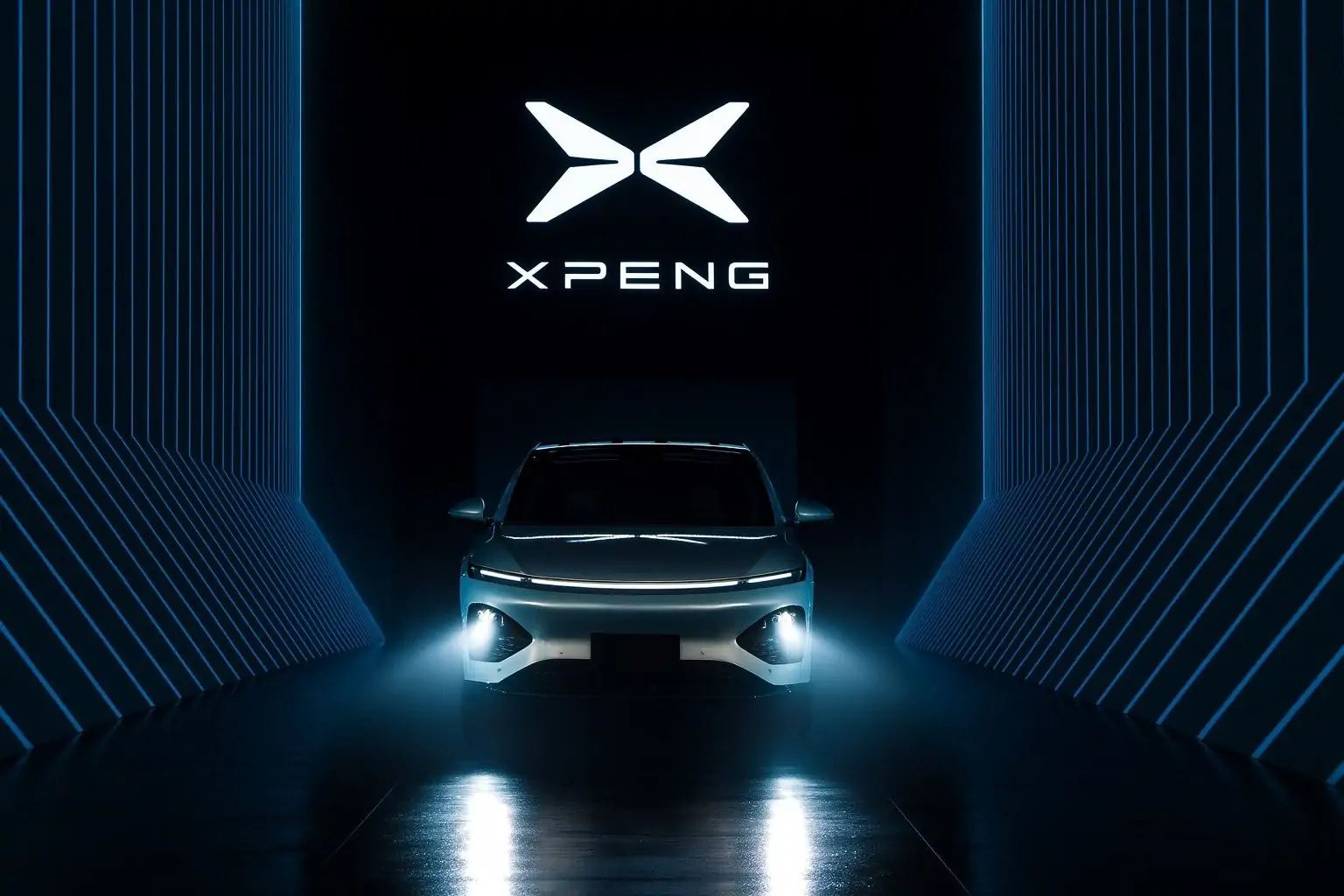
The clearest near-term catalyst for XPEV stock was XPeng’s announcement around its official entry into Qatar, including a brand launch event in Doha where it showcased the G9 and G6 SUVs and signaled an upcoming local launch of the P7+ sedan. Reports also noted that XPeng displayed products from its flying-car subsidiary at the event—an on-brand reminder that XPeng increasingly wants to be valued as more than “just” an automaker. Investing.com+1
The Qatar move is part of a broader effort to deepen XPeng’s footprint across the Middle East and Africa, with reported developments that include a regional parts warehouse in Dubai and new or expanded retail/service presence in places like Abu Dhabi and Cairo. Investing.com+1
Why markets cared: International expansion can matter for XPeng for two reasons:
- Diversification away from China’s EV price war. When competition compresses margins at home, investors tend to reward credible demand and pricing opportunities abroad.
- Narrative lift for “premium + tech.” The Middle East has historically been receptive to premium positioning and new technology rollouts, which can support pricing power compared with ultra-competitive domestic segments. Investing.com
The fundamental backbone: deliveries stayed strong into November
Behind the headlines, XPeng’s delivery numbers are what ultimately determine whether the stock’s rallies “stick.”
In its November delivery update, XPeng said it delivered 36,728 vehicles in November 2025 (up 19% year over year) and reached 391,937 cumulative deliveries from January through November (up 156% year over year). PR Newswire
XPeng also reported 39,773 overseas deliveries over the January–November period (up 95% year over year), which fits neatly with the market’s appetite for an “international growth” storyline. PR Newswire
Earlier, in its Q3 results materials, XPeng disclosed 42,013 deliveries in October 2025 and said year-to-date deliveries through October 31 were 355,209. PR Newswire
What investors are watching next: XPeng’s next major data point is its December 2025 delivery report, typically released in early January. With the stock already reacting to expansion and “AI mobility” narratives, a strong (or weak) December print can quickly reprice expectations for 2026.
Earnings and guidance: improving margins, but a Q4 revenue outlook that worried the Street
XPeng’s most recent quarterly reporting (third quarter of 2025) showed meaningful improvement in profitability metrics:
- Revenue: RMB 20.38 billion (up 101.8% year over year)
- Gross margin:20.1% (up from 15.3% a year earlier)
- Vehicle margin:13.1%
- Net loss: RMB 0.38 billion, sharply narrower year over year
- Liquidity: cash and equivalents plus related items of RMB 48.33 billion as of Sept. 30, 2025 PR Newswire+1
For Q4 2025, XPeng guided to:
- Deliveries:125,000 to 132,000 (up ~36.6% to 44.3% year over year)
- Revenue:RMB 21.5 billion to RMB 23.0 billion (up ~33.5% to 42.8% year over year) PR Newswire+1
However, Reuters reported that XPeng’s Q4 revenue outlook came in below the analyst average forecast cited in that coverage—an important reminder that even “good growth” can disappoint if expectations run ahead of fundamentals, especially in a sector facing fierce pricing pressure. Reuters
There’s also a strategic tension that sophisticated investors keep circling: XPeng is spending heavily on long-horizon bets (robotaxis, humanoid robots, flying cars) while simultaneously fighting for share and margins in the near-term EV market. Reuters highlighted that dynamic, along with commentary that XPeng’s pivot toward more affordable segments could dilute its higher-end brand appeal. Reuters+1
Global manufacturing strategy: Malaysia assembly and Europe tariff workarounds
Another thread that matters for the XPeng stock forecast conversation is manufacturing footprint—especially as tariffs and localization pressures reshape global EV trade.
Reuters reported that Malaysian automaker EPMB signed a deal to assemble XPeng EVs in Malaysia, including the G6 starting by March 31, 2026 and the X9 starting by May 25, 2026, along with a minimum monthly order arrangement. Reuters
Separately, Reuters also described earlier reporting around XPeng’s international manufacturing planning, including a strategy involving contract manufacturing in Europe (via Magna Steyr in Graz, Austria) tied to navigating EU tariff pressure, and prior overseas assembly steps (such as Indonesia). Reuters
Investor takeaway: Localization isn’t just a cost/efficiency story—it can be a market-access story. If tariffs rise or rules tighten, the companies with credible “build where you sell” options often get a valuation premium.
Safety and headline risk: China recall coverage investors should not ignore
Even while bullish narratives (deliveries, expansion, AI) dominate on up days, XPeng investors still have to price headline risk.
Reuters reported that China’s market regulator said XPeng would recall 47,490 P7+ vehicles over a potential safety issue tied to the power steering system. Reuters
Recalls aren’t unusual in autos—but for a brand trying to win on technology and trust, they can influence sentiment, especially if they cluster around new model ramps or new-market expansions.
The “Physical AI” premium: XPeng’s robotaxi, humanoid robot, and VLA 2.0 timeline
XPeng is leaning hard into an identity shift: from EV maker to what it calls a “global embodied intelligence company.”
At its 2025 XPENG AI Day (November 5, 2025), XPeng announced four major “Physical AI” applications: VLA 2.0, Robotaxi, Next-Gen IRON humanoid robot, and flying systems. XPeng also laid out deployment timing—inviting pioneer users to experience VLA 2.0 by the end of December 2025, and targeting a broader rollout to Ultra models in Q1 2026. XPENG+1
Notably, XPeng said it plans to open-source VLA 2.0 to global partners, and stated that Volkswagen would be the launch customer of VLA 2.0, while XPeng’s Turing AI chip secured a Volkswagen nomination. XPENG+1
XPeng also discussed ambitions for robotaxis (including multiple models in 2026 and trial operations) and a goal to achieve large-scale mass production of high-level humanoid robots by the end of 2026. XPENG
The valuation question: Markets can reward this story if investors believe XPeng can (a) commercialize its technology beyond its own vehicles and (b) translate AI spend into defensible margins. But markets also punish “big vision” if it looks like a cash burn without near-term payoffs—especially when core EV competition is brutal.
Analyst forecasts and price targets: bullish skew, but not unanimous
Wall Street’s view on XPEV stock is positive overall, but far from uniform.
MarketBeat summarized analyst positioning as a “Moderate Buy” consensus, with an average one-year price target around $25.37 (based on the figures it cited). MarketBeat
Several high-profile notes have leaned bullish:
- Goldman Sachs raised its price target to $25 and maintained a Buy, citing a 2026 growth outlook, including expectations around new model launches and continued revenue contribution tied to Volkswagen (as described in reporting summarizing the note). Investing.com+1
- Morgan Stanley raised its price target to $34 and maintained an Overweight, according to published reporting on the call. Investing.com+1
- The same Goldman-related coverage also referenced other firms’ targets and stances (including a more neutral posture from Bernstein and a bullish stance from Jefferies), underscoring how widely estimates can vary even when analysts agree on the general direction of travel. Investing.com
Meanwhile, Reuters quoted Rosalie Chen, an analyst at Third Bridge, flagging that XPeng’s move into more affordable EV segments could weaken its appeal in higher-end markets—an example of the “growth vs. brand” tradeoff that still hangs over the stock. Reuters+1
The stock market is closed now: what XPeng investors should watch before Monday’s open
Because it’s Saturday in New York, the NYSE is closed. The next core U.S. equity session begins Monday, December 29, at 9:30 a.m. ET (with the NYSE core session running 9:30 a.m. to 4:00 p.m. ET). NYSE
Here’s what matters most before the next session:
1) Year-end liquidity can amplify XPeng’s volatility.
Reuters noted thin, post-holiday trading conditions and emphasized the market is still inside the Santa Claus rally window—great for bullish sentiment, but also a setup where single-stock moves can get exaggerated. Reuters
2) Watch for follow-through (or fade) on the Qatar/MENA expansion headlines.
The Friday spike was tied closely to expansion news; follow-through depends on whether investors treat it as a one-day headline pop or a credible multi-quarter growth lever. Investing.com+1
3) Keep an eye on “tech monetization” signals, not just tech announcements.
XPeng’s AI Day roadmap is ambitious—and includes explicit partner language (notably Volkswagen). For many investors, the biggest driver of a sustained rerating is whether “Physical AI” becomes recurring revenue rather than just R&D and demos. XPENG+1
4) Know the calendar: three U.S. trading days remain in 2025, and New Year closures are coming.
Reuters noted only three trading days remained in the year as of Friday’s close. NYSE holiday schedules show New Year’s Day (January 1, 2026) as a market holiday. Reuters+1
5) Earnings date tracking is still fuzzy—plan around a window, not a single day.
Some tracking services list XPeng’s next report as March 17, 2026 (Zacks), while others show later March dates (e.g., March 23–24 on some finance platforms). Until XPeng confirms, treat it as an estimated window rather than a fixed appointment. Zacks+2Investing.com+2
Bottom line for XPeng stock right now
XPeng (XPEV) is trading like a hybrid story stock: part China EV volume-and-margin execution, part global expansion optionality, part AI-platform bet. Friday’s rally shows the market is willing to reward credible international momentum and long-term “Physical AI” narratives—especially into year-end when sentiment and positioning can move prices fast. Investing.com+1
But the company’s own guidance and Reuters’ coverage make the central debate hard to dodge: can XPeng grow deliveries while defending revenue quality and margins in a brutal home market—without letting big R&D ambitions overwhelm near-term fundamentals? PR Newswire+1