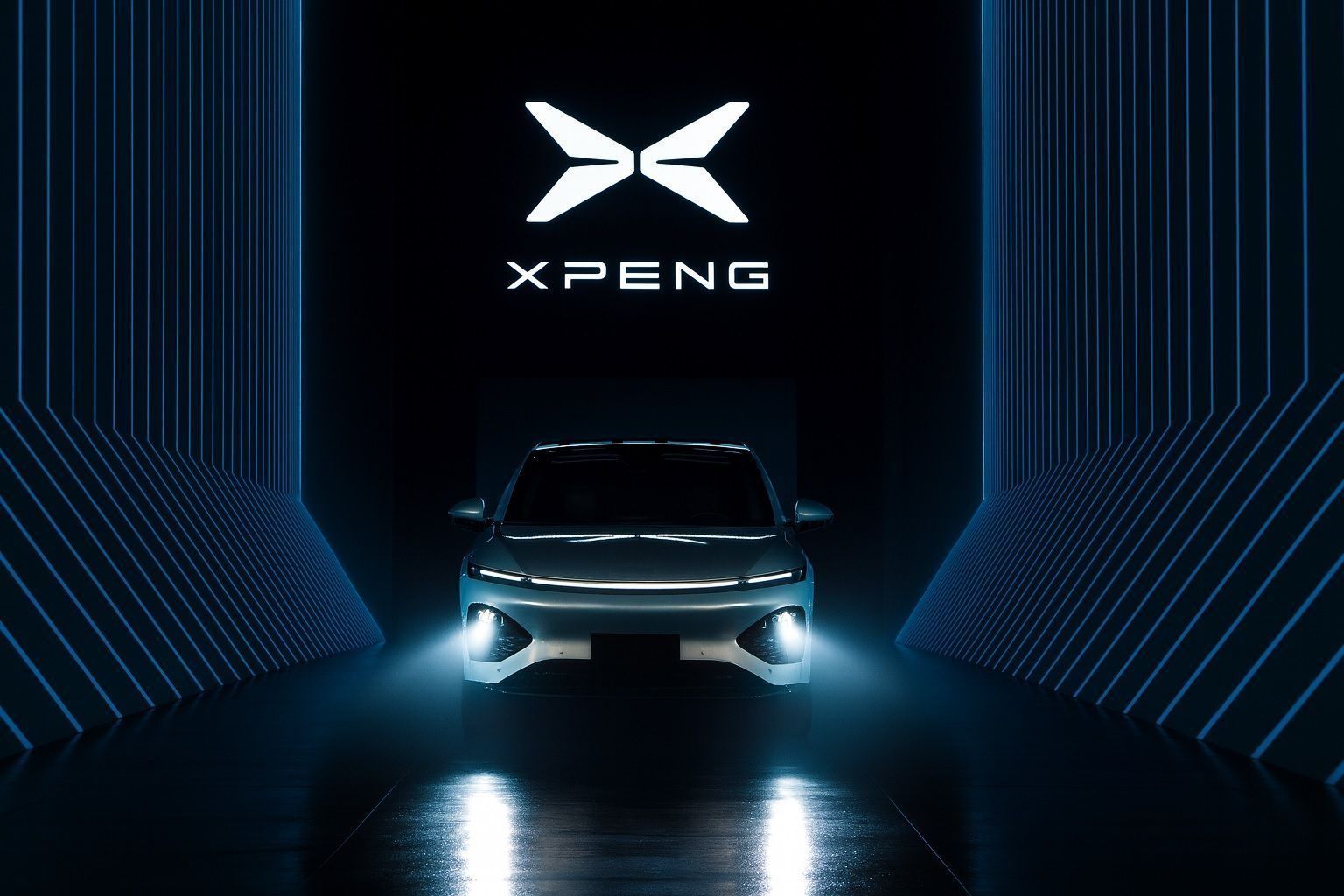

NEW YORK, Dec. 28, 2025, 2:22 a.m. ET, Market closed — XPeng Inc. NYSE:XPEV heads into the weekend with fresh momentum after the Chinese EV maker’s shares jumped in Friday’s session, fueled by a burst of headlines around Middle East expansion and a newly announced, mandatory China EV energy-consumption cap slated to take effect in 2026.
With U.S. markets shut until Monday’s open, investors’ focus now shifts to whether XPEV can hold onto its gains in the next session—and whether the latest catalysts translate into tangible overseas deliveries and healthier economics in 2026.
XPeng stock price recap: where XPEV stands with markets closed
XPeng shares finished Friday, Dec. 26 at $20.78, up 6.18%, after trading between $19.80 and $21.19. In after-hours activity, XPEV traded up to about $20.98.
Friday’s move matters in context: XPEV has been volatile this year, with Investing.com data showing a 52-week range of $11.14 to $28.24 and a one-year change of about +64.53%.
The market backdrop: year-end trading, thin volume, and “Santa Claus rally” psychology
XPeng’s rally landed in a broader tape shaped by post-holiday positioning. U.S. stocks ended Friday’s session only slightly lower in a light-volume environment, with traders watching the “Santa Claus rally” window that runs through early January. Ryan Detrick, chief market strategist at Carson Group, told Reuters the market was “catching our breath” after a strong run and suggested there may still be “a little more upward bias going forward.” Reuters
For single-name movers like XPeng, these thin, late-December sessions can amplify price reactions—especially when the news flow lines up with popular themes (China EV policy, exports, and global expansion).
What drove XPeng stock higher: Qatar launch and a wider Middle East & Africa push
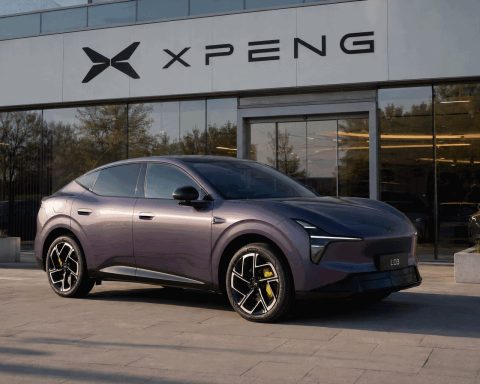
The most immediate company-specific catalyst was XPeng’s official entry into Qatar, marked by a brand launch event in Doha where the company showcased its G9 and G6 SUVs and flagged plans to roll out the P7+ sedan locally. XPeng also displayed products from its flying-car subsidiary Aridge, according to China EV-focused outlet CnEVPost.
CnEVPost also reported commentary from Wang Ke, general manager of XPeng’s Middle East and Africa region, framing Qatar as a strategic beachhead: “Qatar will serve as a vital gateway… [to] showcase cutting-edge smart technologies,” he said. CnEVPost
On the company’s own channels, XPeng Executive Chairman and CEO Xiaopeng He posted that the Qatar milestone expands XPeng’s Middle East and Africa footprint across multiple markets, naming the UAE, Qatar, Bahrain, Egypt, Morocco, Jordan, and Lebanon.
Meanwhile, XPeng’s official social post highlighted a cluster of operational steps around the region—a regional parts warehouse in Dubai, a partnership in Mauritius, and new showrooms in Abu Dhabi and Cairo—signaling an effort to build service infrastructure alongside sales.
Benzinga and Investing.com both tied Friday’s share strength to the Doha event and XPeng’s broader Middle East and Africa expansion narrative.
Why investors care about the Middle East and Africa narrative
For XPeng, overseas expansion is more than a map with extra pins—it’s a strategic attempt to diversify demand away from the bruising competitive dynamics in China’s EV market.
Reuters has repeatedly noted how China’s prolonged EV price war and intense competition have pressured profitability across the sector, pushing Chinese EV makers to look abroad for growth and margin relief.
A second tailwind: China announces a mandatory EV energy-consumption cap starting in 2026
Alongside XPeng’s Qatar headlines, Chinese EV stocks also drew attention after a major policy signal out of Beijing.
China’s state media outlet Xinhua reported that China will implement a new state standard beginning in 2026 that caps mandatory EV energy consumption. As an example, Xinhua said a two-tonne vehicle must consume less than 15.1 kWh per 100 km under the new standard, according to China’s State Administration for Market Regulation.
Benzinga argued that the regulation’s focus on efficiency helped lift Chinese EV names, with investors reassessing which manufacturers are best positioned under tighter consumption limits heading into 2026.
It’s important to separate two things here:
- The rule is real and significant (per Xinhua’s reporting).
- Exactly which automakers benefit most will depend on model-by-model compliance, how regulators implement testing and certification, and whether automakers respond with hardware/software efficiency upgrades.
Still, the direction of travel is clear: efficiency becomes a harder requirement, not just a marketing bullet point.
Wall Street’s forecast snapshot: what analysts are projecting for XPEV
On the analyst front, MarketBeat data (based on 17 analyst ratings) lists XPeng with a “Moderate Buy” consensus rating and an average 12-month price target of $25.37, with a high target of $34.00 and a low target of $18.00. MarketBeat
MarketBeat’s summary also points to notable firm targets including Morgan Stanley’s $34 target and Daiwa’s $29 target.
Investors should treat price targets as conditional forecasts, not promises—especially in a sector where demand, subsidies/standards, and competitive pricing can change quickly. But the takeaway is that, at least in published sell-side positioning, the Street remains split-but-leaning-positive at current levels.
Bigger-picture fundamentals: growth ambitions vs. margin pressure
Even with a rally, XPeng’s longer-term story still revolves around execution—and the cost of competing.
In November, Reuters reported that XPeng forecast fourth-quarter revenue below estimates amid the EV price war, and cited Third Bridge analyst Rosalie Chen saying that following the launch of the lower-end Mona 03 (and reduced investment in intelligent driving), XPeng had “lost its brand appeal” in models priced above 200,000 yuan. Reuters
Meanwhile, Reuters also reported in December that XPeng said it was in negotiations to partner with Malaysia’s EP Manufacturing Bhd (EPMB) to begin mass production in Malaysia in 2026, part of a broader effort to scale overseas and build regional manufacturing options.
Put together, that creates a familiar (and very 2020s) EV equation:
- Expand globally to find new demand pools and reduce reliance on China’s price war,
- while managing R&D intensity and profitability headwinds at home.
What investors should know before the next session
Because U.S. markets are closed today, the next real test for XPeng stock comes when trading resumes Monday. Here are the practical pressure points investors typically watch going into the next session after a news-driven jump:
1) Can XPEV hold gains when liquidity returns?
Big Friday moves can fade if Monday brings heavier volume and profit-taking, especially in year-end trading when rebalancing can kick in.
2) Watch for follow-through on the Qatar rollout—not just headlines
The expansion story will be judged by distribution execution (showrooms, service, parts logistics) and, ultimately, deliveries. XPeng’s own posts emphasized infrastructure buildout across the region, which is a good sign—but investors will want to see conversion into orders and unit sales.
3) China’s new mandatory efficiency cap is a sector-wide catalyst—expect “winners vs. losers” debate
The Xinhua-reported standard gives analysts and traders a new framework for comparing Chinese EV makers’ platforms and efficiency. Expect more commentary (and possibly volatility) as market participants try to handicap who benefits most by Jan. 1, 2026 implementation. Xinhua News+1
4) Keep an eye on the broader risk tape
Reuters described Friday as a low-catalyst session with investors still leaning into the year-end “Santa Claus rally” narrative. If that risk-on mood continues, high-beta names like XPEV can get an extra tailwind; if it breaks, they can give back ground fast. Reuters
Bottom line
XPeng stock’s latest jump reflects a market that’s still willing to reward clear signs of international expansion—especially when paired with a major policy headline that reframes the competitive landscape for China’s EV industry heading into 2026.
The next question for XPEV investors isn’t whether Qatar makes for a good headline—it’s whether XPeng can translate new market entries and infrastructure buildouts into sustained overseas deliveries and improving economics, even as competitive pressure in China remains intense.
Related articles: NYSE:XPEV