
- Harvest Moon on Oct. 6–7, 2025: The first full moon after the autumn equinox (Sept. 22) will light up the sky on the night of Oct. 6 (peaking at 11:47 p.m. EDT) livescience.com space.com. This marks the Harvest Moon – traditionally the time when bright moonlight helped farmers gather crops late into the night livescience.com space.com. In 2025 this full moon falls in October (rarely it falls in September) because it is closest in date to the equinox space.com.
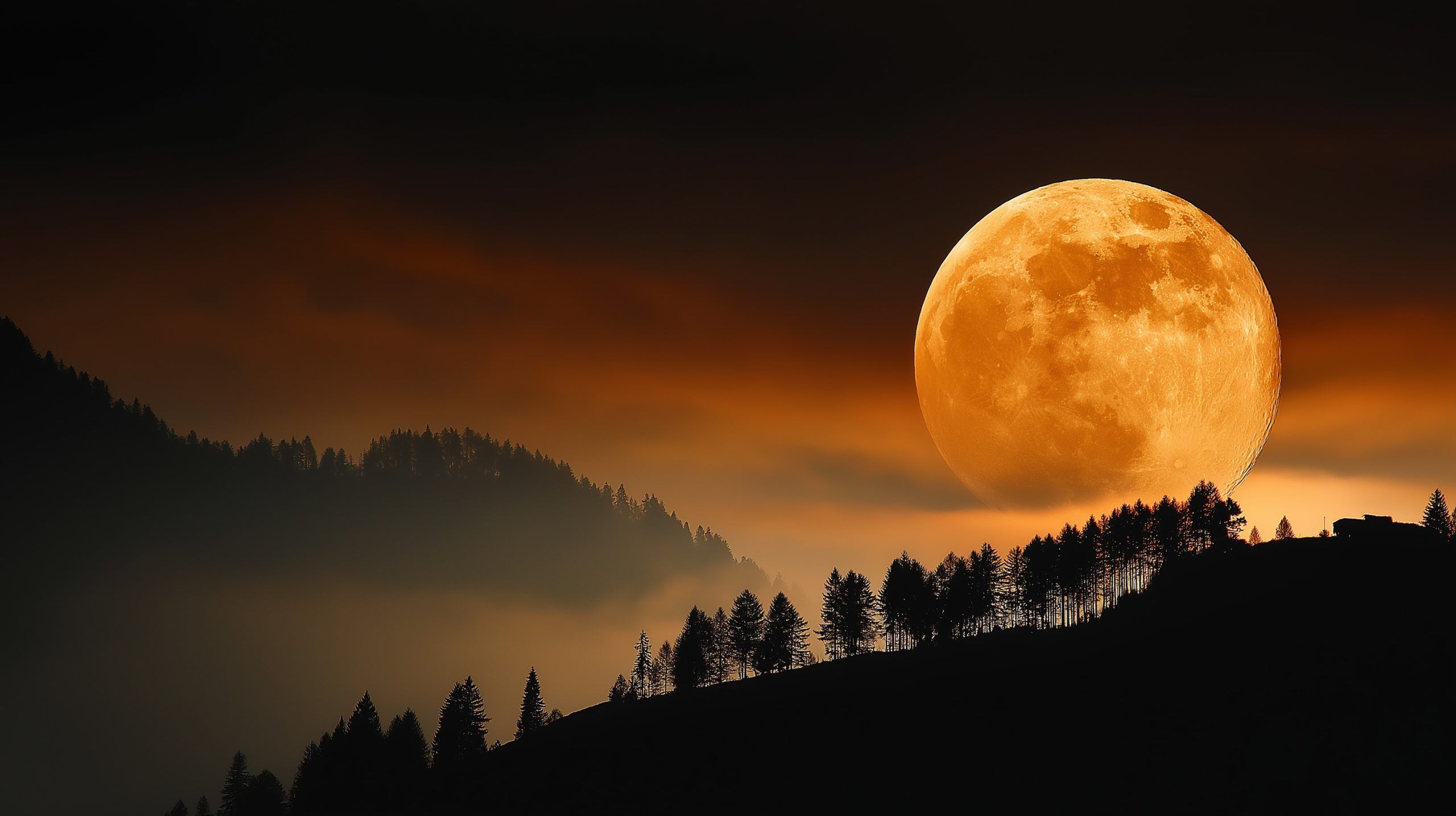
- Rare October Supermoon: The 2025 Harvest Moon is also a supermoon – the Moon will be about 10–16% closer (perigee) than usual, making it roughly 30% brighter and up to 14% larger in diameter than an average full moon livescience.com nationalgeographic.com. EarthSky’s Deborah Byrd calls the Oct. 6–7 full moon “a Super Harvest Moon — bigger, brighter, and later than usual in 2025” earthsky.org. It will be the first of three supermoons in a row (Oct, Nov, and Dec 2025) and will appear orange-gold as it rises above the horizon livescience.com people.com.
- Rare Timing: Harvest Moons in October are uncommon. As Space.com notes, between 1970 and 2050 only 18 Harvest Moons fall in October (the last was 2020, next will be 2028) space.com. In 2025 the September full moon came early (Sept. 7), making the Oct. 6 moon the closest to the equinox. Skywatching columnist Joe Rao explains that the October 2025 full moon is about 14 hours closer to the equinox than September’s full moon, so “the 2025 version of the Harvest Moon falls in October” space.com.
- Where & How to See It: Observers should look east at sunset on Oct. 6. The Harvest Supermoon will rise at roughly the same time for a few nights in a row (due to its proximity to equinox) skyatnightmagazine.com. Around moonrise it will appear especially large – the brain’s “moon illusion” makes the low-horizon moon look gigantic space.com people.com. A clear eastern horizon and binoculars will give great views of the golden-orange lunar disk and its dark maria (lava plains) livescience.com space.com. Notably, Saturn will be about 15° above and to the upper right of the Moon that evening, forming a pretty sky pair space.com skyatnightmagazine.com.
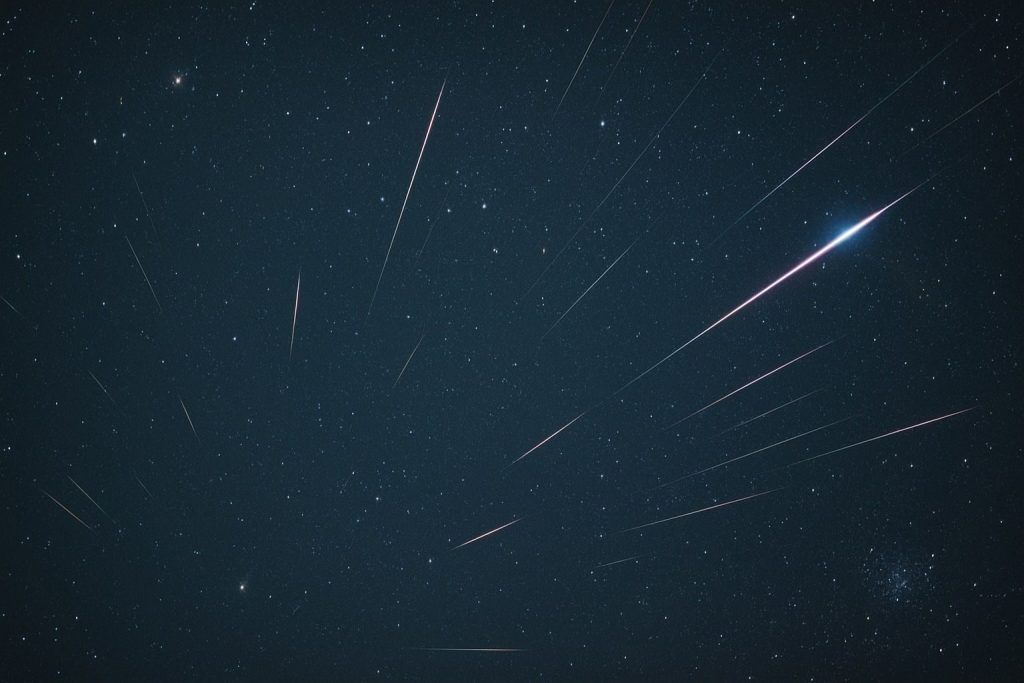
- Shooting Stars (Meteor Showers): October also brings two meteor showers. The Draconids peak on the night of Oct. 8 (debris from Comet 21P/Giacobini-Zinner); however, the bright Harvest Moon may drown out all but the brightest meteors livescience.com nationalgeographic.com. Nevertheless, astronomers say the Moon’s peak comes just 1.3 days before Draconid peak, making “shooting stars… possible” on Oct. 8 livescience.com. Later, the Orionid shower (debris from Halley’s Comet) peaks Oct. 21 under a new moon, offering up to ~20 meteors per hour in a dark sky science.nasa.gov nationalgeographic.com.
The 2025 Harvest Moon brings a spectacular conjunction of lunar and celestial events. On Oct. 6 (Oct. 7 UTC) the Moon will be full and at perigee, meaning it’s unusually close to Earth livescience.com nationalgeographic.com. NASA explains that when a full moon coincides with perigee, its disk can appear about 30% brighter and 14% larger than average science.nasa.gov. In fact, the 2025 Harvest Moon will be about 224,600 miles from Earth – roughly 10% nearer than a typical full Moon livescience.com. This proximity makes it a supermoon; as NASA notes, “the moon is bigger and brighter because…it’s a supermoon!” on Oct. 6 science.nasa.gov.
The term “Harvest Moon” has its roots in farming lore. According to Space.com, Native American and early colonial farmers coined the name because this full moon’s early-evening light allowed them to continue harvesting crops into the night space.com earthsky.org. By custom, the Harvest Moon is defined as the full moon closest to the autumnal equinox, and in 2025 that happens to fall in early October space.com. As Joe Rao explains, the 2025 Harvest Moon occurs laterthan usual – indeed, he points out that it is 14 hours and 39 minutes nearer the equinox than September’s full moon – so it earns the title in October rather than September space.com. Normally the Harvest Moon “mimics” itself by rising 20–25 minutes later each night around full moon (rather than the usual ~50 minutes later), shortening the dark hours between sunset and moonrise space.com earthsky.org. This is why harvest moons appear to rise at almost the same time for several nights, giving farmers extra moonlit worktime before electric lights.
Public skywatchers can easily enjoy the 2025 Harvest Moon with the naked eye. As Space.com advises, pick a spot with a clear view of the eastern horizon just after sunset on Oct. 6. The full moon will appear on the horizon around local dusk, looking especially large and orange – part optical illusion, part atmospheric reddening space.com people.com. Binoculars or a small telescope will reveal details of the lunar surface (craters and dark maria) livescience.com. Nearby Saturn (glittering like a bright star just above the Moon) can help guide skywatchers. According to amateur skywatchers, Saturn will be about one fist-width above the upper right of the Moon as it rises space.com skyatnightmagazine.com, offering a bonus planetary view.
In addition to the Harvest Moon, October’s skies feature other treats. NASA’s “What’s Up” guide points out that World Space Week (Oct 4–10) kicks off with International Observe the Moon Night on Oct. 4 – a global event encouraging public moon-gazing. The Draconid meteors (Oct. 8 peak) may grace the sky if the Moon allows science.nasa.gov nationalgeographic.com, and photographers can prepare by keeping the moonlight in mind. Meanwhile, the Orionid shower peaks Oct. 21 under virtually moonless conditions, promising a good show as fast, bright meteors streak from Orion’s direction science.nasa.gov nationalgeographic.com. There are even faint comets (C/2025 A6 Lemmon around Oct. 8 and C/2025 R2 SWAN around Oct. 20) reaching their nearest approach as the Orionids peak livescience.com, though these will require dark skies and possibly binoculars to spot.
This exceptional set of sky events makes October 2025 a banner month for stargazers. As Deborah Byrd enthuses, the Harvest Supermoon will “light up the eastern sky” on Oct. 6, the first of four consecutive supermoons (Oct–Dec) earthsky.org earthsky.org. So plan an evening outing: enjoy the bright orange moon rising over the landscape (with Saturn as a companion), and stay up late to watch for meteor “shooting stars” racing across the sky. By combining tradition and science – from farming folklore to modern astrophysics – skywatchers around the world will celebrate this rare October Harvest Moon and all the celestial highlights of the season space.com nationalgeographic.com.
Sources: Live Science livescience.com livescience.com, Space.com space.com space.com, EarthSky earthsky.org earthsky.org, NASA/JPL science.nasa.gov science.nasa.gov, National Geographic nationalgeographic.com nationalgeographic.com, People.com people.com people.com.