
- Gold’s historic surge: The price of gold shattered the $4,000 per ounce mark for the first time ever this week, after soaring over 50% year-to-date – on track for its strongest year since 1979 investing.com ts2.tech. Investors have piled into the yellow metal as a safe-haven amid economic jitters, from a U.S. government shutdown to global conflicts, driving bullion to a record high above $4,000/oz ts2.tech reuters.com.
- Stocks touch new peaks: At the same time, Wall Street rallied to fresh highs: on October 6, the S&P 500 and Nasdaq Composite closed at record levels ts2.tech, fueled by euphoria over artificial intelligence breakthroughs. A blockbuster deal for AMD to supply chips to OpenAI sent its stock soaring ~24% in one day reuters.com, igniting a tech-led surge. However, the very next day saw a mild pullback – the S&P slid 0.4% and Nasdaq 0.7% on profit-taking after the extended run-up ts2.tech.
- AI boom meets bubble fears:Artificial intelligence mania has been a key driver of 2025’s market gains, with Big Tech and chipmakers roaring ahead. “The market is still very much centered on AI driving everything,” noted one portfolio manager ts2.tech. Yet signs of caution are emerging – experts warn of “lofty” valuations and a potential AI bubble, as even minor negative news now prompts investors to tap the brakes ts2.tech reuters.com. “Some of the bloom is off the rose” after the initial AI euphoria, the same manager added, urging vigilance going forward ts2.tech.
- Safety trades in vogue: Gold’s record run reflects a rush to safety across markets. Defensive assets are soaring – gold up over 50%, silver up ~60% (near $48/oz), and even Bitcoin briefly hit ~$125K ts2.tech ts2.tech. Central banks and ETFs are buying en masse: global central banks are on pace to add ~1,000 tons of gold to reserves this year reuters.com, and Q3 saw a record $26 billion flow into gold-backed ETFs ts2.tech. One analyst quipped that “everything that is a traditional gold driver is happening” simultaneously reuters.com – from war fears to a weaker dollar – driving the safe-haven frenzy.
- Fed and forecast: With U.S. economic data blacked out by a government shutdown, the Federal Reserve is “flying blind” and leaning dovish ts2.tech. Markets are betting the Fed will start cutting interest rates imminently – possibly as soon as the end of October – to counter slowing growth ts2.tech. That prospect of easier money is bolstering both stocks and gold. Looking ahead, major banks see more upside for gold – UBS now targets $4,200/oz in coming months ts2.tech and Goldman Sachs just hiked its 2026 forecast to $4,900 reuters.com – although some warn the rally may pause if conditions stabilize ts2.tech. Stock bulls likewise remain optimistic but cautious, with many watching if earnings and Fed moves will justify the 2025 melt-up.
Gold Soars to Record High as Risks Mount
Gold’s astonishing climb to record highs above $4,000 per ounce underscores how anxious the global backdrop has become. The metal has spiked over 50% in 2025, an “unbelievable” rally that signals “something bad is happening and that we should be nervous,” warns Dan Smith, a commodity analytics director reuters.com. Indeed, analysts say little stands in the way of gold’s surge given the current climate reuters.com. Virtually every classic gold driver is flashing green: geopolitical strife, economic uncertainty, and expectations of easier monetary policy have all converged. “Right now, everything that is a traditional gold driver is happening,” observed David Wilson of BNP Paribas reuters.com. In other words, fear is in the air – and investors are racing into gold as a refuge.
Multiple crises are fueling that fear. In Europe, the war in Ukraine rages on, marking the continent’s biggest conflict since WWII reuters.com. In the Middle East, a new Israel–Hamas war erupted, with fighting spilling beyond Gaza and unsettling global stability reuters.com. Meanwhile, the U.S. faces its own turbulence: Reuters notes that President Donald Trump’s tariff moves have upended trade and stoked uncertainty about U.S. economic policy reuters.com. Add persistent inflation worries and sputtering growth in parts of Europe reuters.com, and it’s a perfect recipe for safe-haven demand.
This year’s gold rush has been extraordinary. Bullion jumped 12% in September alone, and by early October it punched through the major psychological mark of $4,000/oz for the first time reuters.com. U.S. gold futures briefly touched $4,005.80 before settling around $4,000 on October 7 ground.news. Bullion is now up 53% year-to-date and has logged a string of all-time highs in recent weeks reuters.com. It’s on pace for the best annual gain in 46 years ts2.tech ts2.tech. Each new high has drawn in more buyers rather than prompting profit-taking – a sign of just how deep the conviction (and fear) runs ts2.tech.
Who’s buying? In short, almost everyone. Central banks have been voracious purchasers of gold to diversify away from the U.S. dollar; they are collectively on track to accumulate about 1,000 metric tons in 2025, marking a fourth straight year of massive gold buying reuters.com. Exchange-traded funds (ETFs) that track gold have seen record inflows – roughly $26 billion poured in during Q3 2025, the biggest quarterly haul ever ts2.tech. The World Gold Council reports over $64 billion of inflows globally this year, including an unprecedented $17.3 billion in September alone reuters.com. Retail investors are clamoring for physical gold, too. Coins and bars are selling briskly, with some U.S. retailers like Costco even selling out of gold bars within hours of restocking, according to news reports. It seems “FOMO” (fear of missing out) has even spread to the gold market, as everyday buyers join institutions in chasing the momentum ts2.tech.
Why now? Gold thrives on “a plethora of worries,” and there’s no shortage of those. Political drama across major economies has markets on edge. “Markets are wrestling with political drama in Japan, France and the U.S., pushing safe-haven of choice, gold, past $4,000 per ounce to yet another record high,” Reuters noted reuters.com. In the U.S., a federal government shutdown (now in its second week) has undermined confidence in Washington and weakened the U.S. dollar, traditionally gold’s main competitor as a safe store of value ts2.tech. The budget standoff has also delayed key economic data releases, from jobs to inflation reports, leaving investors flying blind and more inclined to brace for trouble by holding gold ts2.tech.
Overseas turmoil only adds fuel. France was plunged into chaos this week when its prime minister suddenly resigned, the fifth PM to depart in two years, sparking talk of a snap election reuters.com. French bond yields spiked to multi-month highs on the uncertainty, and the euro weakened – dynamics that often send investors scurrying to gold. Japan, meanwhile, installed a new ruling party leader, Sanae Takaichi, whose dovish fiscal stance hammered the yen (a fellow safe-haven asset) down to 8-month lows reuters.com. That yen drop, in turn, helped propel gold higher in USD terms. Beyond these, the list goes on: China’s economy has been underperforming, energy prices are fluctuating with OPEC+ policy tweaks, and parts of the U.S. government face unprecedented legal battles – all contributing to a general atmosphere of uncertainty ts2.tech ts2.tech. “The rally is unbelievable… we should be nervous,” as Dan Smith put it bluntly reuters.com.
Critically, expectations around the Federal Reserve have amplified gold’s appeal. Traders widely believe the Fed will pivot to cutting interest rates soon, perhaps even at its upcoming meeting. Those expectations have caused the U.S. dollar and Treasury yields to slip from their highs – removing some attractive alternatives to gold investing.com investing.com. Historically, low or falling interest rates are bullish for gold, since they reduce the opportunity cost of holding a non-yielding asset. Right now, with a possible Fed rate-cutting cycle on the horizon and the U.S. fiscal outlook clouded (the government’s debt and budget woes are in focus), big money is hedging with gold investing.com. “If you’re worried about the outlook for the U.S. economy and debt… do you want to buy Treasuries? No,” explained BNP’s Wilson, noting that even traditionally safe U.S. bonds have lost some luster reuters.com. That leaves gold shining by default.
Stocks Rally on AI Hype, Then Hit Speed Bump
In a seeming paradox, risk assets like stocks have also been booming – at least until a slight stumble – even as safe-haven gold rockets upward. Early this week, Wall Street’s major indexes stretched to all-time highs on a wave of optimism. On Monday, October 6, the S&P 500 and Nasdaq Composite both closed at record peaks, continuing a string of new highs set throughout late September ts2.tech. The tech-heavy Nasdaq jumped 0.7% that day and the S&P 500 rose 0.4%, while the Dow Jones Industrial Average lagged slightly (down 0.1%) ts2.tech. This marked seven straight up sessions for the S&P – a strong momentum run that had bulls cheering.
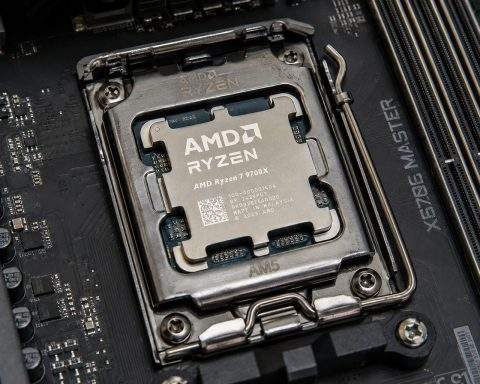
The catalyst? In a word, AI. Investors have been in a frenzy over anything related to artificial intelligence, and Monday delivered a bombshell: Advanced Micro Devices (AMD) announced a multi-year partnership to supply AI chips to OpenAI (creator of ChatGPT), in a deal reportedly worth tens of billions of dollars. The news acted like rocket fuel for chipmakers and AI-linked stocks. AMD’s share price skyrocketed 23.7% in one trading day on Oct. 6 ts2.tech, its biggest one-day gain in decades, after the OpenAI deal signaled huge confidence in the company’s technology and included an option for OpenAI to take an equity stake. The surge didn’t stop there – AMD shares rose another ~3.8% on Oct. 7 ts2.tech, making for a stunning two-day gain of nearly 28%. This “AI deal mania” lifted the broader semiconductor sector (Philadelphia SOX index +2.9% on Monday) and rippled through tech: the S&P 500’s information technology sector leapt over 2% on Oct. 6, leading all sectors ts2.tech.
Beyond AMD, other AI plays also basked in the glow. For instance, IBM stock jumped after unveiling a partnership with Anthropic (an AI startup), Dell shares rallied as it raised revenue guidance on AI server demand, and Nvidia (the AI-chip king) climbed to just shy of its record high. “The market is still very much centered on AI driving everything,” noted Paul Nolte, a portfolio manager at Murphy & Sylvest ts2.tech. This enthusiasm for all things AI has been a major pillar of the 2025 stock rally. It helped the Nasdaq soar ~35% year-to-date and pushed the global MSCI All-Country index up almost 19% for the year reuters.com – far outpacing the real economy’s growth. In short, investors’ risk appetite has been supercharged by the tech sector’s promise, seemingly glossing over many macro worries for a time reuters.com.
However, even a red-hot market needs to pause for breath. On Tuesday, Oct. 7, U.S. stocks finally hit a speed bump. After notching intraday record highs early in that session, the market reversed course by the close. The S&P 500 fell about 0.4% and the Nasdaq Composite dropped 0.7% Tuesday, while the Dow slipped 0.2% ts2.tech. This modest pullback snapped the S&P’s seven-day winning streak ts2.tech. What changed the mood? Largely a bout of profit-taking and a reality check on valuations. Analysts noted the market had enjoyed a virtually uninterrupted melt-up, so any excuse to lock in gains would eventually suffice. “Stocks were knocked off their record-high perches by a mix of profit-taking and jitters over political gridlock,” Reuters reported ts2.tech. A downbeat consumer sentiment survey (one of the few data points not delayed by the shutdown) came out that day, giving traders an “excuse to take some profits,” explained Sam Stovall, chief investment strategist at CFRA ts2.tech. In other words, the market was looking for a breather, and it found one.
Notably, Tuesday’s dip was fairly orderly – more of a rotation than a rout. Money moved out of the high-fliers and into safer corners of the stock market. Defensive sectors actually rose on Oct. 7: consumer staples and utilities were the top gainers, each up ~0.9%, even as tech and consumer discretionary names lagged ts2.tech ts2.tech. This classic “risk-off” shift signaled that investors were becoming more cautious, but not panicked. “The pullback was moderate – a sign of consolidation more than panic,” observed analysts at Tech Space 2.0 ts2.tech. Many market-watchers noted that dip-buyers remain waiting in the wings, ready to step back in if prices fall further ts2.tech. That dynamic – avid bargain hunters on standby – likely helped limit the downturn. Indeed, some of the biggest AI winners like AMD still managed gains on Tuesday despite the broader weakness, a testament to the strong bullish undercurrent ts2.tech.
Crucially, concerns about overvaluation have started creeping in. After the huge run in tech shares, even bulls concede that parts of the market look stretched. “Some of the bloom is off the rose,” Nolte said of the once-euphoric sentiment, noting that investors are now seeking concrete earnings and results to justify the lofty prices ts2.tech. On Wall Street, major banks like Morgan Stanley have cautioned that AI stocks may be “running too hot”, urging clients not to chase the rally blindly. This doesn’t mean the AI trade is over – far from it. But it suggests a more discriminating approach going forward, where the market could reward actual performance (companies delivering AI-driven growth) and punish mere hype. Volatility could increase as traders parse the winners and losers of the AI revolution.
Fed “Flying Blind” and Dovish Tilt Boosts Both Sides
One big factor uniting both gold bugs and stock bulls is the U.S. Federal Reserve’s policy path. For different reasons, both camps see a friend in the Fed right now. Investors in equities are cheering the possibility of lower interest rates (which make stocks more attractive relative to bonds), while gold investors are equally excited by the prospect of easier monetary conditions (which tend to weaken the dollar and spur inflation hedges like gold). Lately, the Fed’s trajectory has indeed shifted more dovish, especially with Washington’s political mess in the mix.
As of early October, the U.S. government remains partially shut down due to Congress’s failure to pass spending bills. Apart from rattling confidence, this shutdown has an unusual market impact: it has blinded policymakers by halting economic data releases. Important reports – jobs, inflation, consumer spending – are not being published on schedule. The Fed is essentially “flying blind” without its usual data stream ts2.tech, which makes it more cautious about tightening policy further. Fed officials have openly voiced concern that they could miscalculate if they don’t know where the economy stands. In this context, the bias shifts to avoiding harm – i.e. not raising rates unnecessarily and risking an overshoot. One Fed governor even urged more rate cuts to prevent over-tightening, given the murkier outlook in a data vacuum ts2.tech.
Market expectations have swung firmly toward an impending rate cut. Futures traders are pricing in a high chance that the Fed will cut interest rates by the end of this month (October) ts2.tech. Just a few months ago, the debate was whether the Fed would raise again; now the question seems to be how soon and how fast it eases. Fueling this sentiment, recent speeches from Fed officials have struck a gentler tone. Even traditionally hawkish voices have acknowledged that long-term Treasury yields rose sharply on their own in September, tightening financial conditions – which reduces the need for the Fed to do more. With inflation appearing to gradually cool and risks to growth rising, the Fed paused its rate hikes in September and is widely expected to stand pat or cut at the upcoming meetings.
This anticipated Fed pivot has powerful effects. First, it has helped push the U.S. dollar off its highs. The dollar index had been strong for much of 2025, but in the past couple of weeks it softened as traders bet on fewer rate hikes and maybe rate cuts ahead. A weaker dollar tends to boost dollar-priced commodities like gold by making them cheaper for foreign buyers – one more tailwind for precious metals. Second, lower yields make stocks relatively more attractive: if bonds pay less, investors are willing to pay more for equities. The promise of Fed easing is one reason stock valuations have remained rich despite middling economic growth. Indeed, the equity risk premium (stocks’ earnings yield minus Treasury yield) has been notably slim, indicating confidence that interest costs will decline. “The broad expectation of the Federal Reserve cutting rates in the near term… [is] cited as a reason for gold to become the favoured hedge,” Reuters reported reuters.com – and the same expectation underpins the 2025 stock rally to a large extent.
Of course, the Fed’s next moves are not guaranteed. The central bank’s October 8 meeting minutes (from the September policy meeting) are being closely parsed for any hint of hesitation or debate among officials. For now, markets seem convinced the Fed will be gentle: if the economic data (once available) shows further slowing or if the fiscal standoff in Washington persists, the case for cutting rates grows stronger. It’s telling that despite oil prices creeping up and Middle East conflict flaring (which could be inflationary), investors remain more focused on the downside risks to growth and over-tightening. The Fed itself, in earlier statements, talked about acting “carefully” and being mindful of lagged effects of past hikes.
In summary, monetary policy is turning into a tailwind for both gold and stocks. Easy money typically lifts all assets – a rising tide that floats equity boats and hard-assets like gold alike. This dynamic is reminiscent of past cycles where late-stage Fed easing led to asset bubbles but also hedging frenzies. We’re seeing a bit of both now: speculative fervor in tech stocks on the one hand, and an aggressive hedge into gold on the other. The common thread is the belief that the era of ever-higher interest rates is over.
Outlook: Can the Frenzy Continue?
With markets sending mixed signals – gold screaming fear, stocks signaling greed – many investors are asking how long this unusual tandem rally can last. Is a reckoning coming, or can both asset classes keep climbing? Opinions are divided, but here’s what experts are saying about the road ahead:
For gold, the majority view is that momentum remains strong. Several big banks have raised their gold price forecasts in light of recent events. UBS now projects gold will hit $4,200/oz within the next few months ts2.tech, citing the “perfect storm” of drivers in place. HSBC analysts concur that gold “could trade above $4,000 per ounce in the near term” given rising geopolitical and fiscal risks ts2.tech. Societe Generale’s commodities chief even said he “sees gold passing through $4,000 by the turn of the year” if uncertainty stays high ts2.tech. On a longer horizon, Goldman Sachs on Oct. 6 raised its forecast for gold, predicting it will reach $4,900 by December 2026 reuters.com. The fact that gold sliced through Goldman’s previous target ($4k for mid-2026) a full nine months early underscores how rapid this run has been.
Importantly, few see an immediate end to gold’s shine. “Maybe it will keep on going. Maybe right now there is no dip,” BNP’s David Wilson remarked, reflecting the sentiment that absent a major positive turn in world affairs, buyers will keep flocking to safety reuters.com. The question gold bulls pose is: what would make investors suddenly feel less worried? At the moment, it’s hard to imagine a sudden outbreak of peace or stability that would relieve the many pressures supporting gold reuters.com. As Wilson put it, “What series of events has to happen to make the world take a deep breath and go, actually, it’s not so bad?” reuters.com – implying that such a scenario is not yet in sight.
That said, a few voices urge caution that gold could see a pullback. Technical indicators show the metal in overbought territory after its vertical climb reuters.com. If any of the current fears ease even slightly – say, U.S. lawmakers reach a funding deal, or the Fed sounds less dovish than expected – gold might correct or at least consolidate. Bank of America analysts warned that some correction is possible if real interest rates tick up or if the dollar strengthens unexpectedly (for instance, if the Fed delays rate cuts). However, most think any dip in gold would likely be limited and met with fresh buying, unless a truly game-changing improvement (like a sudden end to war threats or a big economic boom) comes along ts2.tech. In essence, the bias remains to the upside for bullion in the current environment.
For stocks, the outlook is more nuanced. The recent rally has delivered substantial gains to investors, especially in tech. If the Fed indeed cuts rates soon, equity bulls argue there could be more room to run. Lower borrowing costs can boost corporate profits and valuations, and a Fed easing cycle has often extended bull markets in the past. The optimists also point to the potential of AI and other innovations to drive an earnings acceleration in 2024–2025, which could fundamentally justify higher stock prices. In that narrative, the market’s strength is not just hype – it’s looking ahead to a real boost in productivity and growth from transformative tech (much like the internet boom of the 1990s).
However, even bullish analysts concede that volatility is likely to increase from here. “Stock gains [are] making us a ‘little nervous’,” one portfolio manager admitted in a CNBC interview, reflecting a broader unease that the market may have come too far, too fast. Key risk factors loom on the horizon: corporate earnings season (will results and guidance back up the lofty valuations?), a resolution (or further escalation) of the U.S. government shutdown, and evolving news from overseas hotspots that could either deteriorate or improve. Any of these could jar investor sentiment. Valuation-wise, the S&P 500 is trading at over ~20 times forward earnings – expensive by historical standards unless growth surprises significantly to the upside. That leaves little margin for error if something goes wrong.
One scenario some strategists envision is a market rotation rather than an outright crash. We already saw a hint of this on Oct. 7 when defensives rose and tech fell. We could see more funds rotating into lagging sectors (like energy, healthcare, or value stocks) if the AI trade cools, rather than money fleeing stocks altogether. This would mean the index might stay elevated even if the leadership changes. Another possibility is a mild correction – perhaps a 5-10% dip – that relieves some froth without ending the bull market. Given the strong “buy the dip” mentality this year, many institutional investors are waiting for just such an entry point, which could cushion any decline.
In summary, 2025’s markets are at a crossroads between exuberance and anxiety. Gold at $4,000 and stocks at record highs together paint a picture of investors simultaneously bracing for the worst and reaching for the best. “It’s telling us something’s not right,” as Dan Smith said of gold’s message reuters.com, yet at the same time the stock tape is saying opportunity abounds. This dichotomy may continue in the short term – it’s possible for safe-havens and risk assets to rise in tandem when liquidity is ample and narratives abound. But eventually, one side usually gives. Either fears will overwhelm the risk appetite (pushing stocks down), or optimism will prove correct (easing the rush into hedges like gold).
For now, prudent investors are hedging bets and staying nimble. Keeping some exposure to gold or other hedges, while also participating in the equity rally, has been a winning strategy so far. 2025 has clearly shown that diversification and vigilance are key – the only certainty is uncertainty. As we head into the final months of the year, all eyes will be on central banks, geopolitical headlines, and corporate earnings for clues about which way the scales will tip. Boom or bust, the next chapter in this financial frenzy is sure to be dramatic, and we will be watching closely to see if today’s gold and AI boom turns into tomorrow’s bust – or if it truly is a new paradigm for markets.
Sources:
- Reuters – Gold’s rush to record heights propelled by global anxieties reuters.com reuters.com reuters.com reuters.com
- Reuters – Morning Bid: Gold at $4K – Be afraid, be very afraid reuters.com reuters.com
- Reuters – Morning Bid: AI and deals fizz drown out politics reuters.com reuters.com
- Tech Space 2.0 (ts2.tech) – Wall Street’s Wild 48 Hours: Record Highs, AI Deals & Gold’s $4,000 Breakout ts2.tech ts2.tech ts2.tech ts2.tech
- Tech Space 2.0 – Gold Smashes Past $4,000 as Safe-Haven Demand Fuels Record ETF Inflows ts2.tech ts2.tech ts2.tech
- Investing.com – Gold soars above $4,000 an ounce; FOMC minutes ahead investing.com investing.com
- Reuters – AMD signs multi-year AI chip-supply deal with OpenAI (market impact) reuters.com
- Reuters – Stocks knocked off record perch as investors take profits ts2.tech (via ts2.tech)
- Reuters – Fed official urges caution amid data blackout ts2.tech (via ts2.tech)
Related articles: NASDAQ:AMD