
- All-Time High: Palantir Technologies NYSE:PLTR shares just hit a record intraday high near $190 – roughly a $400 billion market cap – after skyrocketing about 300% in 2025ts2.tech. The stock is one of this year’s top tech performers, up nearly 18-fold since its late-2020 IPOts2.tech.
- Recent Rally: The stock surged into the high-$180s over the past week, riding a broader AI-driven market rally. It closed around $189 on Monday, capping a year-to-date gain of over 150%benzinga.com. As of Tuesday, shares are hovering just below their 52-week peak (approx. $192) amid heavy trading volumebenzinga.com.
- New Defense Deals: In the last few days Palantir inked a major AI partnership with Poland’s Defense Ministry, expanding its NATO foothold, and announced a $200 million+ strategic deal with telecom Lumen Technologiesbarchart.comreuters.com. These follow a drumbeat of big contracts – including a $10 billion U.S. Army program and a £1.5 billion UK defense AI pact – that have fueled investor enthusiasmts2.techts2.tech.
- AI Hype Factor: Palantir’s rise comes amid surging excitement for all things AI. The company sits at the lucrative intersection of defense and artificial intelligence, benefiting from booming military tech budgets and corporate AI adoption. As Reuters noted, “enthusiasm for artificial intelligence extends to data-focused stocks like Palantir” in this rallyts2.tech. Tech leaders like Oracle’s Larry Ellison have even argued that AI’s future “depends on [the] private data analysis” central to Palantir’s business modelbenzinga.com.
- Analysts Split: Wall Street is sharply divided on PLTR. Bulls (e.g. Wedbush’s Dan Ives) call Palantir “one of the best AI stocks” and see its valuation rising toward $1 trillion by 2028ts2.tech. Bears warn the stock – now trading at 100×+ forward sales and >200× earnings – is wildly overvaluedts2.tech. An RBC analyst just reiterated an Underperform rating with a $45 target (–76% downside), calling Palantir’s valuation “unsustainable” absent extraordinary growthfinbold.comfinbold.com. Consensus analyst opinion sits at Hold with a median price target in the mid-$150sts2.tech, well below current levels.
- Looking Ahead: Palantir reports Q3 earnings on Nov. 3. Analysts expect around $1.08–$1.09 billion in revenue (+~50% YoY) and EPS of ~$0.15–0.17benzinga.comfinbold.com. With the stock “priced for perfection”ts2.tech, Palantir likely needs a solid beat and upbeat guidance to sustain its momentum. Any hint of slowing growth or shaky government spending could spark a pullback in this high-flyer, which some warn embodies both an “AI goldmine” and bubble risk at the same timets2.tech.
Red-Hot Stock Hits Record High in AI Rally
Palantir’s stock has been on fire, relentlessly climbing to fresh highs as investors pile into AI-focused names. On Monday, PLTR surged to an intraday record of roughly $190 per sharets2.tech. It closed around $189 (a new all-time closing high) after a 2–3% jump for the daybarchart.combarchart.com. That capped an astonishing run – the stock is up about 300% year-to-date in 2025ts2.tech, vastly outperforming the broader market. By Tuesday, shares were trading flat around $188–$189 as the rally took a breatherbenzinga.com. Even so, Palantir remains just shy of its 52-week peak (approximately $192) amid strong bullish momentumbenzinga.com.
This meteoric rise has transformed Palantir from a mid-cap data firm into one of the most valuable tech companies. At ~$190 per share, Palantir’s market capitalization is about $400 billionts2.tech – putting it in league with legacy defense giants like Lockheed Martin and Northrop Grumman. In fact, Palantir’s valuation now “rivals legacy defense giants” by some measurests2.tech. The stock’s climb has been so steep that long-term holders have seen incredible returns; an investment five years ago (near Palantir’s late-2020 IPO) would have multiplied nearly 18× to datets2.tech.
What’s driving this red-hot rally? In short, Palantir has the right story at the right time. The company is hitting on all cylinders just as Wall Street is obsessed with artificial intelligence. Palantir’s software sits at the nexus of two powerful themes – AI and defense – and traders have latched onto it as a premier “AI play.” Over the past year, nearly every major piece of Palantir news has been positive, creating a constant stream of bullish headlines. “Every few weeks, another headline hits about Palantir landing a major deal or partnership,” noted analysts at TS2.tech, which “shows Palantir’s tech is in high demand” and underpins the stock’s climbts2.tech. This momentum has attracted waves of momentum investors. However, it also brings volatility. Case in point: when a leaked U.S. Army memo in early October raised alarm about security flaws in a Palantir-built system, the stock plunged ~7.5% in one day – only to rebound after the concerns were addressedts2.techts2.tech. The episode showed how hypersensitive Palantir shares are to any hint of bad news, given their stretched valuation. Still, bullish traders have repeatedly used dips as buying opportunities, keeping the uptrend intact.
Major Deals in Defense and Tech Drive Momentum
Palantir’s fundamentals have increasingly justified some of the hype, thanks to a flurry of big contract wins and partnerships in 2025. The company has effectively been on a business development “deal spree,” securing major agreements across government, military, and industry. TechStock² (TS2.tech) analysts pointed out that 2025 brought a “steady drumbeat of contract announcements – almost one every month” as Palantir expanded its reachts2.techts2.tech. These deals are a key pillar of the bull case, signaling real-world adoption of Palantir’s technology. Among the standout wins:
- $10 Billion U.S. Army Program: Over the summer, Palantir won its largest contract ever – a 10-year Army deal worth up to $10 billion to serve as a backbone for the Army’s intelligence and operational data systemsts2.tech. Announced in late July, this blockbuster agreement consolidates dozens of Army programs under Palantir’s platform, firmly entrenching the company in the Pentagon. Investors saw it as a huge vote of confidence from the U.S. military.
- UK Ministry of Defence Partnership: In September, Palantir inked a multi-year partnership with Britain’s MoD valued around £750 million to £1.5 billionts2.tech. Billed as Palantir’s biggest non-U.S. deal to date, it will deploy Palantir’s AI and data software across the UK’s defense operations. This not only brings in substantial revenue but also showcases Palantir’s geopolitical reach, with a key U.S. ally entrusting it with critical military systems.
- “Game-Changing” Boeing Alliance: Major corporations are also teaming up with Palantir. In one high-profile example, Boeing’s Defense, Space & Security division announced a new alliance to integrate Palantir’s AI-driven platform into its manufacturing and supply chaints2.tech. Boeing’s defense chief lauded the Palantir-powered system as “game-changing,” enabling decision-making “not in weeks, but in days and hours” thanks to AI speeding up data analysists2.tech. This kind of endorsement from an industrial giant bolstered Palantir’s credibility in the private sector.
- U.S. Government Contract Wins: Palantir has kept up a steady pace of U.S. federal deals. In early October alone, it secured a $385.4 million contract with the Department of Veterans Affairs and a $29.9 million project with U.S. Immigration and Customs Enforcement to deploy its software for data analyticsts2.tech. While smaller than the multi-billion dollar deals, these wins expand Palantir’s footprint across agencies (from defense to healthcare to law enforcement) and add stable revenue streams. They underscore that Palantir is becoming mission-critical to many government functions.
- Snowflake & Cloud Partnerships: Palantir is also extending its influence in the enterprise tech world. On Oct. 16, it announced a strategic partnership with cloud data company Snowflake (SNOW) to integrate Palantir’s AI platform with Snowflake’s Data Cloudts2.tech. This allows corporate customers to use Palantir’s AI/analytics tools on data stored in Snowflake’s platform without migration hassles. The collaboration was well-received – Snowflake’s stock even got a small boost on the newsts2.techts2.tech. For Palantir, teaming up with a cloud leader both validates its technology in mainstream enterprise IT and opens doors to Snowflake’s large customer base.
- New Telecom Pact (Lumen): Just last week, Palantir revealed a multi-year telecom partnership with Lumen Technologies aimed at accelerating AI adoption for businesses. Lumen agreed to spend over $200 million on Palantir’s software as it integrates Palantir’s AI platforms with Lumen’s high-performance network infrastructurereuters.comreuters.com. The goal is to make analyzing big data across networks “200× faster” for enterprise customers, according to the companiesbenzinga.com. This deal highlights Palantir’s push beyond government into commercial telecom and edge computing – and the hefty contract value impressed investors.
- Poland Defense Partnership: In a sign of its growing international presence, Palantir this week signed a letter of intent with Poland’s Ministry of Defense to provide data-analytics, AI, and cybersecurity systems to the NATO countryainvest.com. The agreement, announced on Oct. 27 in Warsaw, underlines the growing European demand for AI-enabled defense tools. It also gives Palantir a strategic foothold on NATO’s eastern flank amid heightened regional security needs. News of the Poland deal helped lift Palantir’s stock about 1% in Tuesday tradingainvest.com, adding to the positive momentum.
All told, these recent wins paint a picture of surging demand for Palantir’s platforms across sectors. Each major contract or partnership announcement has effectively served as rocket fuel for the stock. “The steady drumbeat of big deals – from the Army and UK Ministry of Defence to Boeing, Snowflake, and others – shows Palantir’s tech is in high demand across both government and industry,” TS2.tech analysts observedts2.techts2.tech. In turn, each success story has fed the narrative that Palantir is becoming an indispensable AI provider to large institutions. This virtuous cycle of news and stock performance is a key reason Palantir’s rally has been so fierce in 2025. (It also illustrates why Palantir’s dual focus on government and commercial clients is significant – the company is firing on both cylinders.)
AI Hype Lifts Palantir Amid Tech Sector Boom
Palantir’s rise hasn’t happened in a vacuum – it’s riding a broader wave of AI euphoria sweeping the tech sector. Throughout 2025, anything related to artificial intelligence has been a magnet for investor money, and Palantir has been a prime example. The Nasdaq Composite and S&P 500 hit record levels this month, fueled by excitement over AI and hopes that cooling inflation will lead to interest rate cutsts2.tech. On days when AI bellwethers like Nvidia report blockbuster earnings or upbeat forecasts, it often ignites rallies in other AI-exposed stocks, Palantir includedts2.tech. For instance, on October 24 the Nasdaq jumped over 1% – lifting many high-growth tech names – as strong chipmaker results and Fed optimism boosted sentimentts2.tech. Palantir’s stock “rode that wave” with heavy trading volume as it pushed toward the top of its rangets2.tech.
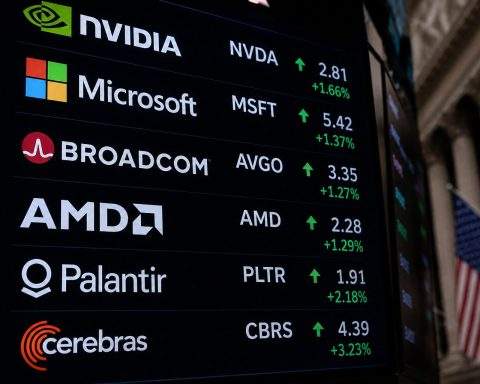
Investors are essentially betting that AI is the next big gold rush, and Palantir checks multiple boxes: it specializes in big data analytics (critical for AI), it has a head start in deploying AI solutions at scale, and it serves lucrative government and defense clients in addition to commercial ones. This unique positioning – at the intersection of Silicon Valley software and Pentagon defense tech – gives Palantir a compelling story amid the AI craze. “Enthusiasm for artificial intelligence extends to data-focused stocks like Palantir,” Reuters noted during the recent rallyts2.tech. Indeed, Palantir is frequently mentioned on financial media shortlists of “AI winners” alongside companies like Nvidia, Microsoft, and others pushing the AI frontierts2.tech.
At the same time, Palantir is benefiting from macro trends in its key markets. Global defense spending is on the rise, and allied nations are racing to incorporate advanced AI and data systems into their militaries. Palantir has positioned itself as a go-to contractor for this modern “digital warfare” domaints2.tech. Its software helps armies and intelligence agencies make sense of vast datasets, which is increasingly seen as a strategic advantage. With geopolitical tensions high, countries are investing heavily in such capabilities – a tailwind for Palantir’s government business. On the commercial side, companies in sectors from healthcare to energy are pouring money into AI transformation as well. This represents hundreds of billions in potential IT spending over the next decade, a slice of which Palantir aims to capture by offering ready-made AI solutionsts2.tech. In short, the addressable market for Palantir’s services is enormous and still growing, which gives bulls confidence that today’s lofty revenue projections could eventually be met.
Crucially, influential voices in tech have also validated Palantir’s approach. For example, Oracle co-founder Larry Ellison recently argued that the future of AI depends on secure access to private enterprise data – exactly what Palantir specializes inbenzinga.com. Ellison’s point was that while many AI applications get publicity for analyzing public internet data, the real value for businesses and governments lies in mining their own sensitive data (with proper security and privacy). This is essentially Palantir’s wheelhouse – building platforms that let organizations harness their internal data for AI-driven insights. Such commentary from a tech titan bolstered the narrative that Palantir is uniquely positioned for the next phase of AI adoption.
However, with hype comes risk. There is growing chatter that the AI investing boom of 2025 may be getting frothy. A recent Bank of America survey indicated many fund managers worry an “AI bubble” is forming as investors indiscriminately bid up AI-related stocksts2.tech. Palantir is often cited as a poster child of this exuberance – a company with great prospects, yes, but one whose valuation has far outpaced its current earnings. Any stumble in the broader tech rally or a shift in market mood could quickly deflate these high-multiple names. Additionally, external factors like interest rates matter: if inflation flares up again or central banks turn more hawkish, richly valued growth stocks like Palantir could see a sharp correctionts2.tech. And on the regulatory front, Palantir’s heavy government work means political changes or stricter data/AI rules (especially in Europe) could pose headwindsts2.tech. For now, though, the bullish sentiment prevails – Palantir is a momentum darling riding the AI wave, and many investors are eagerly staying along for the ride.
Wall Street Analysts Split: “Boom or Bubble?”
Amid Palantir’s extraordinary run, Wall Street analysts have been deeply divided about what happens next. The stock’s extreme valuation and rapid ascent have prompted wildly different forecasts, pitting exuberant bulls against skeptical bears. This divergence in opinion was perhaps best captured in a recent TS2.tech analysis titled “Boom or Bubble Ahead?”, which noted Palantir currently embodies both the sky-high optimism and the risks of an overheated marketts2.tech. Here’s a look at what each side is saying:
➤ The Bulls: Optimistic analysts see Palantir as a generational success story in the making – an “AI arms dealer” uniquely positioned to dominate a huge emerging marketts2.tech. Wedbush Securities’ tech analyst Dan Ives has been one of the most vocal bulls, calling Palantir “one of the best AI stocks” and predicting the company could hit a stunning $1 trillion valuation within the next 3–5 yearsts2.tech. (For context, Palantir is ~$425 billion now.) Similarly, Piper Sandler recently hiked its 12-month price target to $201 and reiterated an Overweight rating, citing Palantir’s “robust revenue visibility” and deepening roster of AI partnershipsts2.techfinbold.com. Other bullish analysts argue that Palantir’s accelerating growth (revenue up ~48% YoY last quarter) and improving profitability justify a premium valuation. They believe we are only in the early innings of an AI spending supercycle, and that Palantir will continue to land massive contracts as organizations worldwide invest in AI-driven data analytics. In the bullish scenario, Palantir could “grow into” its valuation over time by compounding revenue at a high rate for yearsts2.techts2.tech. In fact, some bulls envision decades of growth ahead, likening Palantir to an enterprise software equivalent of early Amazon or Google if it executes well.
➤ The Bears: On the other side, skeptics contend that Palantir’s stock has become dangerously detached from reality. With the share price up 3×–4× in a year, valuation concerns dominate the bear case. Palantir trades at around 100 times forward sales and over 200× earnings – “one of the most expensive” multiples ever seen for a large-cap stockts2.tech. Even Salesforce’s CEO was quoted as saying Palantir is the “most expensive enterprise software” stock he’s encountered at ~100× revenuets2.tech. These bears argue that such a valuation leaves no margin for error: if Palantir’s growth even modestly disappoints, the stock could unravel quicklyts2.tech. In a recent striking example, RBC Capital’s analyst Rishi Jaluria doubled down on his bearish stance – reiterating an Underperform rating and a mere $45 price target for PLTRfinbold.com. That implies a jaw-dropping ~75% crash from current levels. He described Palantir’s valuation as “unsustainable,” noting the stock trades at over 20× expected 2026 revenues – by far the priciest in RBC’s software coveragefinbold.com. According to Jaluria, exceptional execution (huge beats and raises each quarter) would be required just to support the current stock price, and anything less could send it tumblingfinbold.com. Likewise, noted short-seller Citron Research has lambasted Palantir’s valuation as “absurd,” arguing the stock’s fair value based on fundamentals should be closer to ~$65–$70ts2.tech (nearly 2/3 below where it trades now). The bearish camp also points out that Palantir’s own management has cautioned about lumpiness in government spending and that competition in the AI software arena is growing. In their view, Palantir’s stock is a bubble waiting to burst if the AI hype falters or if the company hits any execution snags.
For now, the consensus on Wall Street sits somewhere in the middle, albeit with a wary tilt. The average analyst rating is essentially Hold, and the median 12-month price target is around $155–$165 per sharets2.tech – meaning analysts collectively think the stock could drift lower or stabilize, rather than keep exploding higher. It’s worth noting that Palantir is already trading above even the highest end of many analysts’ valuation models. This disconnect between analyst targets and market price highlights just how much future success is already “priced in”. Bulls say analysts are behind the curve (as often happens with disruptive companies), while bears say it’s a red flag when a stock trades on narrative over fundamentals. The truth will likely depend on Palantir’s upcoming results and whether it can continue delivering the kind of stellar growth that justifies the market’s optimism.
High Stakes Ahead: Earnings Test and Outlook
The next big catalyst for Palantir is just around the corner: its Q3 2025 earnings report, due after the market close on Nov. 3. With the stock at stratospheric levels, expectations are running high. Analysts project Palantir will report roughly $1.08–$1.09 billion in quarterly revenue (around +48–50% year-over-year) and adjusted earnings of about $0.15–0.17 per sharebenzinga.comfinbold.com. Hitting those numbers would mark another quarter of accelerating growth – Palantir only surpassed $1 billion in revenue for the first time last quarterts2.tech, and it has already guided for ~$4.15 billion in full-year 2025 salests2.tech. The company has also achieved consistent profitability in recent quarters, a milestone after years of losses. All of this is encouraging to investors. However, merely meeting forecasts may not be enough given Palantir’s lofty valuation. To keep the rally going, Palantir likely needs to beat expectations handily or raise its outlook, demonstrating that demand for its AI platforms is even stronger than anticipated.
Management’s commentary will also be closely scrutinized for any signs of slowdown or caution. Key areas to watch include the rollout of that massive Army program (is it ramping smoothly?), the pipeline of big deals (can Palantir keep announcing new contracts in coming months?), and progress with its newer products like the Artificial Intelligence Platform (AIP) for commercial customers. Any hints of softness – whether due to longer government procurement cycles, macroeconomic issues, or competitive pressures – could be a reality check for the stock. As one market strategist noted about tech stocks in this environment: there is “zero margin for error” when valuations are this stretchedts2.tech. In Palantir’s case, that means the company must execute nearly flawlessly to justify the market’s heady optimism.
On the other hand, if Palantir delivers another blowout quarter, it could reinforce the bulls’ case that the company is truly special. Continued 40–50% growth with expanding margins would signal that Palantir is successfully capitalizing on the rush to AI and gaining share across its markets. Bulls argue that Palantir has multiple years of high growth ahead given its recent contract wins will translate into revenue, and that many organizations are only now beginning large-scale AI adoption. They also note that Palantir’s total addressable market – spanning defense, intelligence, healthcare, finance, energy and more – is enormous. As long as Palantir remains on the cutting edge (e.g. integrating the latest AI advances, tailoring solutions for new industries) and keeps customers happy, it could grow into today’s valuation over timets2.techts2.tech. In that optimistic outlook, today’s $190 share price might look justified (or even cheap) in hindsight if Palantir eventually becomes a ubiquitous backbone for AI-driven operations globally.
Ultimately, Palantir’s remarkable 2025 run-up encapsulates both the promise and peril of the AI boom. The company has executed impressively – landing huge deals, dramatically improving its financials, and establishing itself as a key player in the hottest tech trend of the decade. By all accounts, 2025 has been a banner year for Palantir, validating much of the hype that has surrounded it. Yet the stock’s white-hot rally also means any stumble could be dramatic. As TS2.tech observed, Palantir today embodies both the excitement of an “AI goldmine” and the fraught bubble risk that define the current marketts2.tech. For investors, Palantir has become a high-stakes bet on the future of AI: it offers the tantalizing promise of exceptional long-term rewards, but with plenty of white-knuckle volatility likely along the way. The coming weeks – from the earnings release to any new contract announcements – will go a long way to determining if Palantir’s astounding rise can continue, or if gravity will finally start to take hold of this AI rocket ship.
Sources: Financial press releases and earnings forecasts; TS2 TechStock² analysests2.techts2.tech; Reuters and Bloomberg reports on Palantir’s contractsreuters.com; Benzinga and AInvest market updatesbenzinga.comainvest.com; Wall Street analyst commentary from MarketBeat/Finboldfinbold.comfinbold.com. All information is up-to-date as of Oct. 28, 2025.
Related articles: NYSE:PLTR