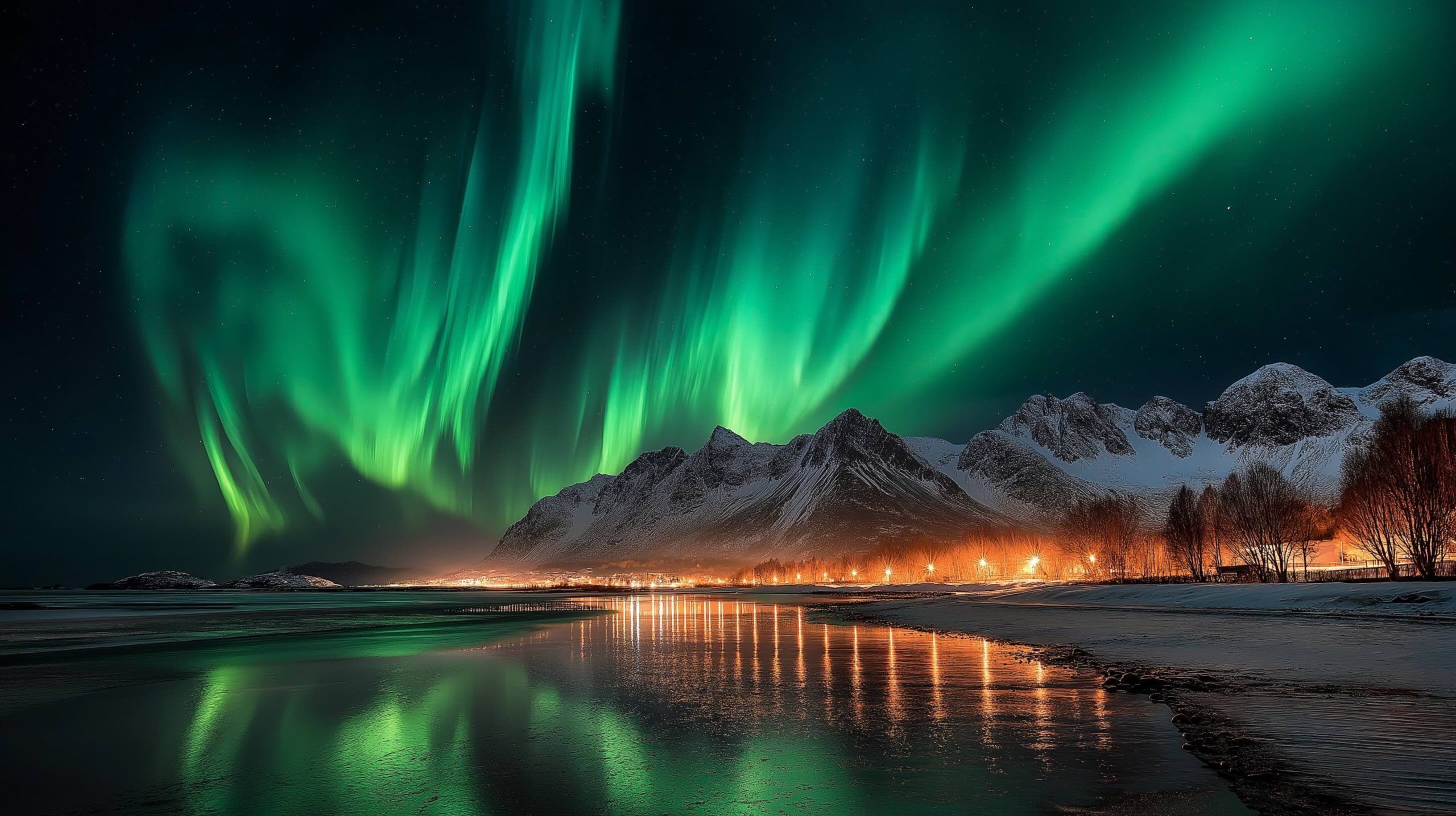

Canada is primed for another night of northern lights. After an eye‑popping display late Tuesday, forecasters say geomagnetic storming will persist through tonight, with a Severe G4 watch in effect and high Kp values likely after dark. Western Canada looks favoured by clearer skies, while clouds could spoil the view for many in the East. Here’s the latest, what it means for visibility, and how to catch the show safely.
What’s driving tonight’s aurora over Canada
NOAA’s Space Weather Prediction Center (SWPC) has a G4 (Severe) geomagnetic storm watch in effect for Wednesday, November 12, following multiple coronal mass ejections (CMEs) from the Sun since Nov. 9. The most energetic CME is tied to an X5.1 solar flare that peaked at 10:04 UTC (5:04 a.m. EST) on Nov. 11. SWPC says confidence is high that Earth is catching a piece of this CME, with timing and intensity dependent on how the solar wind arrives at Earth.
Overnight, G4 storm levels were already observed around 01:20 UTC (8:20 p.m. EST Tue.), and SWPC noted storming was expected to continue into the night and beyond as additional solar ejecta interact with Earth’s magnetic field.
The forecast at a glance (Nov. 12–13, local night)
- Kp Index: Model guidance points to Kp 6–7 for the evening and overnight hours across Canada, with brief spikes higher possible as the CME evolves. That’s strong enough for auroras to reach well into the southern provinces—weather permitting.
- Canada-wide geomagnetic conditions: Natural Resources Canada’s short‑term forecast shows “stormy” to “major storm” levels across the auroral and sub‑auroral zones through the next 6–24 hours—supportive of another widespread aurora night. Updates are issued every 15 minutes. Space Weather Canada
- Clouds may be the decider: Prairie provinces (AB/SK/MB) have the most promising skies tonight. British Columbia is broadly cloud‑covered, and Eastern Canada faces extensive cloud as well—northwestern Ontario and parts of Labrador are the brighter spots for breaks.
Best time to look (convert from UTC Kp peaks to local time)
NOAA’s 3‑hour Kp forecast suggests elevated activity from late afternoon into the overnight. After dark, the prime window generally runs from early evening to after midnight, varying by time zone:
- Pacific (BC, Yukon) — ~7 p.m.–1 a.m. PST (strongest roughly 7–10 p.m. and 10 p.m.–1 a.m.).
- Mountain (AB, NT) — ~8 p.m.–2 a.m. MST (notably 8–11 p.m. and 11 p.m.–2 a.m.).
- Central (SK, MB, western NU) — ~6 p.m.–3 a.m. CST (especially 9 p.m.–2 a.m.).
- Eastern (ON, QC, eastern NU) — ~7 p.m.–4 a.m. EST (especially 10 p.m.–2 a.m.).
- Atlantic (NB, NS, PEI) — ~8 p.m.–5 a.m. AST (best 11 p.m.–2 a.m.).
- Newfoundland (NL) — ~8:30 p.m.–5:30 a.m. NST (best 11:30 p.m.–2:30 a.m.).
Note: The strongest modelled burst arrived around midday in Eastern time—unhelpful for viewing—but storming is forecast to persist into the night, and the timing can wobble ± a few hours as the CME evolves.
Canada forecast by region (tonight)
British Columbia (BC)
Confidence is low due to widespread cloud cover from the coast to many interior areas. If breaks open—most likely in pockets of the interior or northeast—look north and away from city light.
Prairies (Alberta, Saskatchewan, Manitoba)
This is the sweet spot tonight. Abundantly clear skies are forecast for many Prairie locations. With Kp 6–7, expect bright curtains and arcs from the northern horizon to overhead, especially outside city lights. Last night’s show produced vivid reds and greens across Alberta and Saskatchewan—another strong round is plausible.
Ontario & Quebec
Clouds dominate for much of the region. Northwestern Ontario has the best shot at both clearer skies and strong aurora; extreme southwestern and parts of eastern Ontario could squeeze out brief windows if thin clouds part. In Quebec, the far north has the best odds; central and southern areas rely on lucky breaks.
Atlantic Canada & Labrador
The Maritimes contend with widespread cloud. Labrador stands out with better chances if skies cooperate; western Newfoundland might also catch glows near the northern horizon during gaps.
The North (Yukon, Northwest Territories, Nunavut)
Long November nights plus stormy auroral conditions in the auroral/polar zones bode well. As always, local cloud cover rules; when clear, activity should be frequent and bright.
How bright and how far south could it reach?
With Kp 6–7 in play, auroras can extend far south of their usual haunts—often visible from the northern sky across the southern Prairies and parts of southern Ontario/Quebec if clouds break. Overhead displays favour the territories, northern Prairie/Shield regions, and higher latitudes. G4‑level storming can also briefly push visibility even farther south, though cloud cover will be the limiting factor tonight.
Safety & quick‑capture tips
- Get away from light pollution. Even 15–30 minutes outside urban glare makes a huge difference.
- Let your eyes adapt. Give yourself 10–20 minutes; auroras can intensify quickly.
- Face north, watch the whole sky. Arcs can blossom overhead without warning.
- Photography basics: Use a tripod; wide lens; manual focus to infinity; start around ISO 1600–3200, 5–10 s exposure, f/1.8–f/2.8, then adjust.
- Tech impacts: Strong storms can disturb GPS, HF radio, and satellites—don’t panic; these effects are usually temporary and localized.
Live trackers and official resources
- NOAA Aurora Dashboard & 30‑min “Ovation” nowcast for real‑time view of the auroral oval. NOAA Space Weather Prediction Center
- NOAA 3‑Day Geomagnetic Forecast (Kp by 3‑hour block) to time your outing.
- Natural Resources Canada (Space Weather Canada) Zonal Forecast for Canada‑specific “stormy/major storm” status, updated every 15 minutes. Space Weather Canada
- SWPC storm updates (e.g., “G4 levels reached”) for confirmation of current intensity. NOAA Space Weather Prediction Center
Bottom line
Tonight (Wednesday, Nov. 12, 2025) offers another high‑probability aurora window for Canada, especially across the Prairies. Kp 6–7 is enough to bring the northern lights well south—if your skies cooperate. Check the live dashboards before you head out, pick a dark northern view, and be patient; the show often comes in waves.
Reporting based on live forecasts and updates issued Nov. 11–12, 2025 by NOAA/SWPC and Natural Resources Canada, plus Canadian cloud/sky guidance.
Related articles: Canada