
December 8, 2025
Oil prices are holding close to two-week highs on Monday as traders balance growing confidence in a U.S. Federal Reserve interest rate cut with stubborn geopolitical risks around the Ukraine war and Russian supply. Brent crude is trading just under $64 a barrel and U.S. West Texas Intermediate (WTI) around $60, extending gains from late last week but still locked in a relatively narrow trading range.
Fed Rate Cut Expectations Put a Floor Under Oil Prices
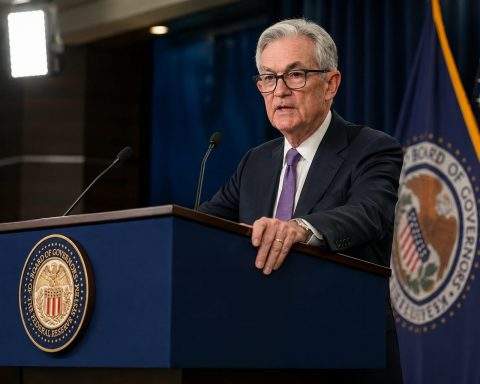
The dominant macro story for oil markets this week is the Federal Reserve’s December 9–10 policy meeting, where investors increasingly expect a cut in U.S. interest rates. Fed funds futures and LSEG data imply roughly an 80–85% probability of a quarter-point reduction, reflecting softer economic data and a desire to insure against slower growth.
Lower borrowing costs would, in theory, support economic activity and energy consumption in 2026, a key reason why Brent and WTI have climbed to their highest closes since November 18.
However, signals from Fed officials suggest one of the most contentious meetings in years, with policymakers split over how aggressively to ease. That internal debate is feeding day‑to‑day volatility: traders are confident about some support for demand from easier policy, but far less sure about the pace and depth of the cycle, limiting the upside for oil prices.
Ukraine War, Sanctions and Peace Talks: A Fragile Geopolitical Backdrop
US–Russia Talks Fail to Deliver Breakthrough
Geopolitics remain the key bullish counterweight to softening fundamentals.
After several rounds of U.S.–Russia discussions on a possible peace framework for Ukraine, negotiators have yet to resolve core issues such as security guarantees for Kyiv and the status of Russian‑occupied territories.
According to analysts cited by Reuters, the range of possible outcomes from Washington’s latest peace push is huge: depending on whether sanctions are tightened, relaxed, or largely frozen in place, global oil supply could swing by more than 2 million barrels a day.
Right now, the market is trading on the assumption of stalemate rather than quick peace. That keeps a risk premium baked into prices — sanctions remain in place, Ukrainian attacks on Russian energy assets continue, and traders are reluctant to price in a large return of Russian barrels to Western buyers.
Ukrainian Strikes on Russian Infrastructure Keep Supply Risk Alive
Ukraine has intensified drone and missile campaigns against Russian energy infrastructure, including refineries and the Druzhba pipeline system. In early December, strikes targeted pipeline facilities in Russia’s Tambov region, one of several attacks in recent months.
Consultancy analysis referenced by Reuters suggests repeated strikes have pushed Russian refining throughput down by hundreds of thousands of barrels per day versus a year earlier, with gasoline and gasoil particularly affected.
So far, operators say key pipelines remain operational and Russian crude exports have not collapsed. But the campaign reinforces a sense of fragility: traders must constantly discount the possibility that a future attack hits a chokepoint and triggers a more sustained supply disruption.
Stalled Peace Talks Support, Rather Than Lift, Prices
The Reuters‑linked CNBC piece and related summaries describe oil prices holding steady late last week, with Brent around $63 and WTI near $59–60, as stalled Ukraine peace talks and a mixed supply outlook effectively pinned crude in a tight range.
Analysts quoted in those reports note a push‑and‑pull dynamic:
- Lack of tangible progress in peace efforts is mildly bullish, because it reduces the odds of sanctions being lifted and Russian exports surging back to Western markets.
- At the same time, resilient OPEC+ output and expectations of future oversupply act as a “bearish backstop,” preventing prices from breaking decisively higher.
In short, geopolitics are supporting prices — but not enough, on their own, to ignite a sustained rally.
ING’s “Commodities Feed”: From Early-Week Weakness to Today’s Rebound
The current firmness in prices marks a reversal from conditions earlier in the week.
In its December 3 Commodities Feed, ING reported that ICE Brent had fallen to the lowest level since late October as markets reacted to the start of US–Russia talks on Ukraine. The logic was simple: if Moscow and Washington edged toward a settlement, traders could eventually see more Russian barrels properly re‑entering the global market.
Yet ING also highlighted a disconnect between flat prices and market structure. Even as Brent’s headline price weakened, prompt timespreads stayed in backwardation — nearby contracts trading above later ones — suggesting that the physical market for prompt barrels was tighter than the broader oversupply narrative implied.
On the data side, ING pointed to bearish American Petroleum Institute (API) numbers:
- U.S. crude inventories up about 2.5 million barrels
- Gasoline stocks up just over 3 million barrels
- Distillates (including diesel) up close to 3 million barrels
Such builds typically pressure refinery margins and fuel spreads, reinforcing expectations that fundamental balances will loosen further into late Q4 2025 and early 2026.
The shift from that early‑week softness to today’s two‑week highs reflects how quickly sentiment can swing when geopolitics and central-bank policy reassert themselves over inventory data.
Sanctions Debate: EU–G7 Shift From Price Cap to Shipping Ban
One of the most important medium‑term stories for oil is the potential overhaul of Western sanctions on Russian exports.
According to an exclusive Reuters report, Group of Seven nations and the European Union are discussing replacing the current price cap regime with a near‑total ban on maritime services for Russian oil shipments.
That would mean:
- Western insurers, shippers and other service providers could be barred from handling Russian cargoes entirely, rather than simply restricted by price.
- Moscow would be pushed to rely even more heavily on “shadow fleet” tonnage and non‑Western service infrastructure.
- Freight costs and logistics risks for Russian barrels would likely increase, potentially reducing net flows and injecting more volatility into seaborne markets.
The mere possibility of such a shift is helping to sustain a geopolitical risk premium in today’s prices, even as traders acknowledge that Russian exports have generally remained robust under the existing cap.
Venezuela, Iran and the Role of “Sanctioned” Barrels
US Pressure on Venezuela Adds to Supply Uncertainty
The United States has stepped up pressure on Venezuela, including strikes against vessels Washington says were involved in drug smuggling and renewed talk in some political circles of possible military action against President Nicolás Maduro’s government.
While none of this has yet translated into a clear, immediate loss of Venezuelan barrels, it adds another layer of uncertainty around supplies from a key OPEC member that has been trying to rebuild exports after years of sanctions and under‑investment.
Chinese Refiners Absorb More Iranian Crude
At the same time, Chinese independent refiners — the so‑called “teapots” — have been quietly easing some of the supply tightness by tapping more Iranian oil stored in onshore tanks. With fresh crude import quotas in hand, they are stepping up purchases of discounted barrels that many Western buyers still avoid due to U.S. sanctions. Reuters
These parallel flows highlight a paradox of the current market:
- Official sanctions and political rhetoric point toward tighter supply.
- In practice, alternative routes and buyers continue to keep a large portion of sanctioned crude moving, blunting the impact on global balances.
OPEC+, Oversupply Fears and 2026 Price Outlook
Even as geopolitical risk supports prices in the short term, many medium‑term forecasts still revolve around oversupply.
Recent OPEC+ decisions have implemented only cautious output increases, but the group’s own outlook now shows the market moving into a modest surplus in 2026, as non‑OPEC production and some sanctioned barrels grow faster than demand.
Fitch Ratings has already cut its oil price assumptions for 2025–2027, citing expectations that supply growth will outpace consumption, even accounting for Ukrainian attacks, sanctions and occasional disruptions.
That view is echoed in Monday’s Reuters coverage, where analysts at Commonwealth Bank of Australia argue that:
- A durable ceasefire in Ukraine would represent the main downside risk to oil prices by eventually easing sanctions and restoring more Russian volumes.
- Conversely, sustained damage to Russian energy infrastructure would be the key upside risk, by physically removing barrels from the market for longer.
On balance, they still expect futures prices to trend back toward roughly $60 a barrel through 2026 as oversupply gradually reasserts itself — remarkably close to where WTI is trading today.
Market Levels on 8 December: Range-Bound, Not Surging
Across today’s intraday data and weekend commentary, a consistent picture emerges:
- Brent crude: around $63.7–63.9 per barrel in early Monday trade.
- WTI crude: near $60.1–60.2 per barrel.
BusinessToday’s summary — citing Bloomberg — notes that oil is “staying calm” even as India continues to shop for discounted Russian crude and Ukraine “ups the pressure” with ongoing strikes, underlining the range‑bound character of the market. BusinessToday
Energy briefings from OPIS and others point out that, so far in Q4, the gap between the quarterly high and low for Brent and WTI has been only about $7–8 per barrel, unusually tight by historical standards.
In other words, oil prices today are elevated relative to recent lows, but far from surging. The market is leaning slightly bullish, yet still constrained by the expectation that barrels will be plentiful in 2026.
How the CNBC Angle Fits In: Steady Prices Amid Stalled Talks
The CNBC article you referenced — as reflected in secondary write‑ups and social posts — framed Friday’s session as one of relative calm:
- Brent and WTI were little changed intraday.
- Stalled Ukraine peace talks offered support by reducing chances of a quick sanctions rollback.
- At the same time, the supply outlook — resilient OPEC+ production and expectations of future surplus — limited any immediate breakout.
That narrative still holds on December 8:
- The Fed rate‑cut story has added a modest extra bid under prices.
- Geopolitics provide an ongoing risk premium.
- Oversupply forecasts and rising inventories act as a cap.
The result is a classic, news‑friendly setup: oil prices are interesting — hovering at two‑week highs, sensitive to every headline about the Fed or Ukraine — but not yet explosive.
What Oil Traders Are Watching Next
Going into the rest of the week, three catalysts dominate trading desks:
- The Fed decision and press conference
- Whether the central bank delivers the widely expected 25‑basis‑point cut.
- How strongly Chair Powell signals additional easing in 2026.
- Any hints about growth, inflation and financial conditions that could reshape demand expectations.
- Fresh US inventory data
- Official Energy Information Administration (EIA) figures will confirm or contradict the bearish API builds that ING highlighted.
- A surprise drawdown in crude or products could tighten near‑term balances and steepen backwardation again.
- Developments in Ukraine and sanctions policy
- Any concrete outcome — positive or negative — from ongoing Ukraine‑related diplomacy.
- Progress (or lack thereof) on the EU–G7 plan to toughen maritime restrictions on Russian oil.
For now, the path of least resistance appears to be continued range‑bound trading around the $60–64 band, with short, sharp moves driven by headline risk rather than big changes in underlying supply and demand.