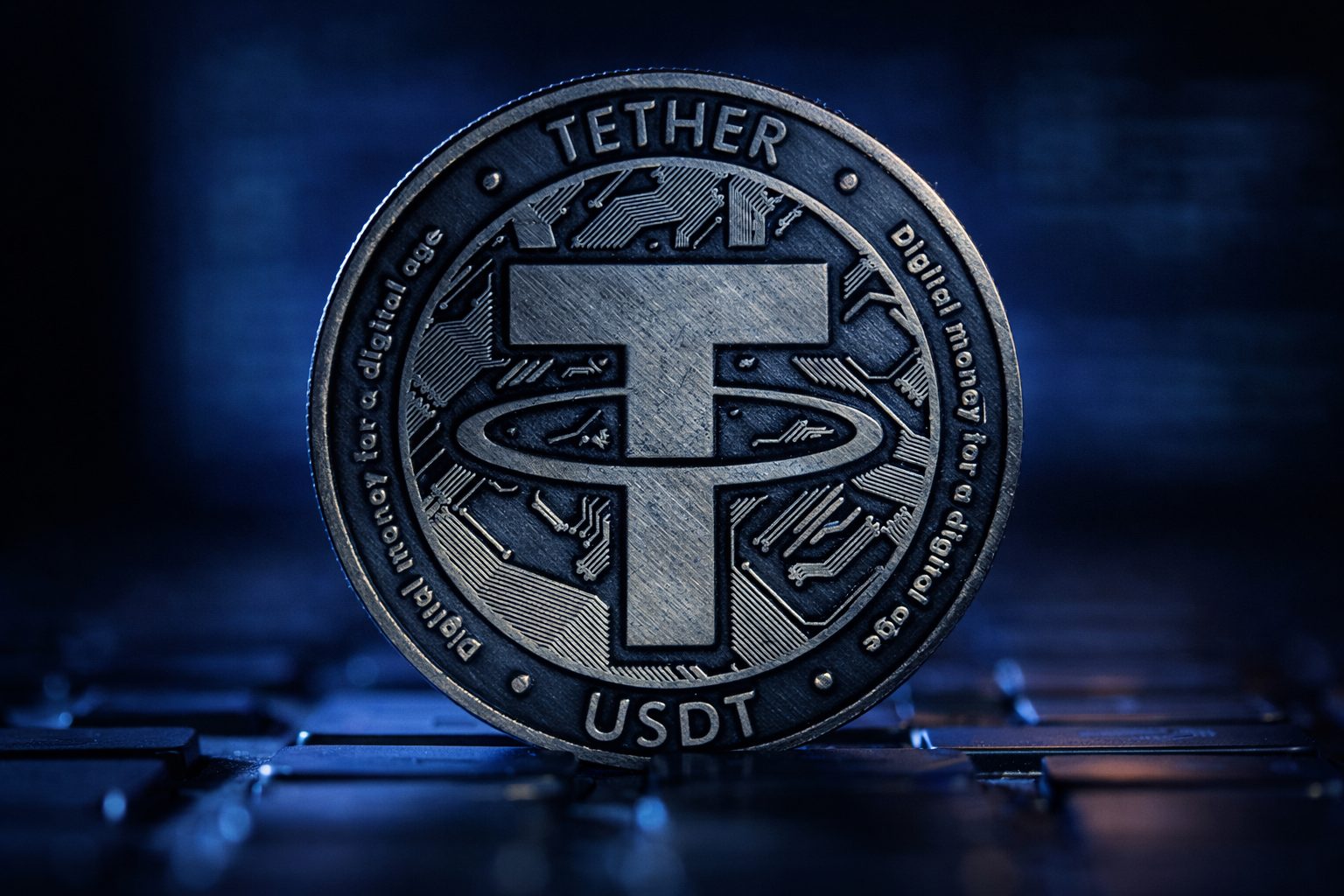
Tether USDt (USDT), the world’s largest U.S. dollar–pegged stablecoin, is doing exactly what it was engineered to do today: stick close to $1.
As of December 18, 2025, major price trackers show USDT-USD hovering around $1.00, with tiny intraday deviations that look dramatic only if you zoom in with a microscope. CoinGecko has USDT at about $0.9996, while MetaMask displays $1.00—a difference that mostly reflects venue, liquidity, and timestamp rather than a meaningful “move.” CoinGecko+1
That said, “stable” doesn’t mean “uninteresting.” Today’s USDT story is less about the price tick and more about what’s happening around the peg: stablecoins are pushing deeper into payments, bank-issued competitors are arriving, and regulators are tightening the rules of the game.
USDT price today: where Tether is trading right now
Here’s the practical snapshot for USDT-USD on Dec. 18, 2025:
- Price: about $0.9996 (CoinGecko)
- 24-hour range: roughly $0.9995 to $0.9999 (a spread of about 0.04%)
- 24-hour trading volume: about $86.18B
- Market cap: about $186.25B
- Circulating supply: about 186.32B USDT
MetaMask’s market-cap figure is essentially the same scale, also around $186.26B, reinforcing the “giant and steady” theme. MetaMask
Why the USDT-USD price barely moves even when crypto is chaotic
USDT isn’t priced like Bitcoin or Ethereum because it’s not trying to be “an asset that goes up.” It’s trying to be a dollar proxy that can move across crypto rails quickly.
When USDT drifts slightly below $1 (like $0.9996), it can reflect things like:
- momentary imbalances in exchange order books,
- regional demand spikes,
- fees and settlement frictions between venues,
- risk sentiment (a tiny “confidence haircut” during stress).
When it trades slightly above $1, it’s often the mirror image: traders urgently need dollar liquidity inside crypto venues.
The key point for readers tracking “USDT price prediction” headlines: USDT’s normal state is boring. The real question is whether anything threatens the peg mechanism—or reinforces it.
What’s driving attention on December 18: adoption headlines, not a price breakout
USDT payments: $156B in small transfers under $1,000
One of today’s most-circulated USDT data points isn’t about exchanges—it’s about everyday-sized transactions. According to figures shared by Tether CEO Paolo Ardoino and referenced with Chainalysis and Artemis data, USDT processed about $156 billion in 2025 transfers of $1,000 or less, with reported average daily volumes above $500 million for sub-$1,000 activity.
In plain English: USDT’s “killer app” is increasingly payments plumbing—remittances, small business flows, payroll-style transfers—especially where traditional banking access is limited or expensive. BeInCrypto
Stablecoins are starting to look like a major payment rail
A Delphi Digital–cited roundup circulating today says stablecoin transaction volumes now outpace Visa and PayPal on a monthly adjusted basis, with supply crossing roughly $300B and stablecoin issuers collectively holding around $133B in U.S. Treasuries. It also notes the market remains concentrated, with USDT ~60.8% of total stablecoin supply and USDC ~25.4%.
Even if you treat the “outpacing Visa” framing cautiously (methodology matters), the direction is hard to miss: stablecoins are migrating from “crypto trading chips” to financial infrastructure.
Banks are issuing stablecoins now: SoFiUSD launches today
A big competitive signal dropped on Dec. 18: SoFi announced SoFiUSD, a “fully reserved” U.S. dollar stablecoin issued by SoFi Bank, positioning itself as a stablecoin infrastructure provider with near-instant settlement and 24/7 money movement. MarketScreener+1
Why does that matter for USDT’s forecast? Because regulated-bank stablecoins don’t need to dethrone USDT globally to pressure it at the margins—especially in jurisdictions or use cases where compliance and bank oversight are the selling points.
Regulation is no longer hypothetical in the U.S.
The GENIUS Act became U.S. law in July 2025, creating a federal framework for payment stablecoins and emphasizing reserve backing and disclosures. The White House+1
This week, the FDIC also approved a proposal tied to implementing application procedures for FDIC-supervised institutions seeking to issue payment stablecoins through subsidiaries.
Translation: the U.S. is building a more formal on-ramp for stablecoin issuers—an environment where USDT remains dominant globally, but faces increasingly institutional competition.
Europe remains a friction point for USDT
In a Cointelegraph interview surfaced today, Tether CEO Paolo Ardoino criticized Europe’s regulatory posture and referenced MiCA-related dynamics, noting that Tether has been prominent in refusing MiCA compliance and that this stance has led many European crypto asset service providers to delist USDT.
This matters not because it moves USDT-USD to $0.90 tomorrow, but because it shapes liquidity distribution—where USDT pairs remain deepest, and where alternatives (often USDC) gain share.
Reserves and risk: what analysts keep circling back to
Tether has leaned hard into reserves messaging in 2025. In its attestation-related communications for Q3 2025, Tether reported:
- year-to-date net profit surpassing $10B,
- excess reserves of about $6.8B,
- total USDT supply above $174B at the time,
- total exposure to U.S. Treasuries (direct and indirect) around $135B,
- gold and bitcoin reserves cited at $12.9B and $9.9B, respectively.
But not all external assessments are flattering. The Financial Times reported recently that S&P Global Ratings downgraded its assessment of Tether’s reserves, citing increased exposure to riskier assets and concerns about transparency and disclosure details.
For forecasting USDT’s price behavior, these reserve debates matter mainly in one way: they influence confidence, and confidence influences whether USDT trades with a tiny discount/premium… or faces a real stress test.
USDT price forecast: the peg is the forecast, but the spread tells the story
Forecasting USDT is different from forecasting a volatile crypto asset. A sensible USDT forecast is really a peg-stability outlook.
Base-case forecast: USDT stays near $1
Given today’s observed trading band (roughly $0.9995–$0.9999) and the stablecoin’s role as a liquidity backbone, the base case remains:
- Near-term (next 24–72 hours): USDT likely oscillates tightly around $1.00, with minor basis-point deviations driven by exchange flows and risk sentiment.
- Into early 2026: the most probable “forecast” is continued peg behavior—USDT acting as a transactional dollar rather than an appreciating asset—unless a major liquidity or confidence shock emerges.
Stress-case forecast: temporary depegs are possible in market shocks
USDT has a long trading history, and both CoinGecko and MetaMask show that extreme prints have occurred historically (for example, the trackers list an all-time high around $1.32 and an all-time low around $0.57).
Those extremes aren’t “targets.” They’re reminders that in crisis conditions—when redemptions surge, liquidity fragments, or confidence drops—stablecoins can briefly trade away from the peg.
What could widen the USDT-USD spread in 2026
Based on today’s news and current macro/regulatory trajectory, the main spread-widening catalysts to watch are:
- Regulatory divergence: the U.S. framework is formalizing under the GENIUS Act, while Europe’s posture toward USDT remains contentious.
- Competition from regulated issuers: bank-issued stablecoins (like SoFiUSD) can siphon flows in certain corridors.
- Reserve-risk narratives: external ratings/analyst scrutiny can influence market psychology even if day-to-day redemption mechanics hold.
- Structural growth in stablecoin payments: paradoxically, more usage can increase resilience (more liquidity) while also increasing the systemic importance—and scrutiny—of the stablecoin sector.
What the “prediction” sites are saying—and how to interpret them
A lot of automated “USDT price prediction” tools exist, but many are built for volatile assets and can produce misleading results for a pegged instrument.
- A 3Commas prediction page, for example, shows USDT hovering essentially at parity (fractions of a cent around $1).
- Binance’s user-consensus-style predictor shows values above $1 in some forward years—numbers that would be unusual for a stablecoin unless market structure or peg conditions changed materially.
- Kraken’s prediction tool is explicitly dependent on user assumptions (e.g., assuming a fixed growth rate), which is not how a fiat peg is meant to behave.
The practical takeaway: for USDT, the “forecast” worth following is peg health, not upside price targets.
Bottom line for December 18, 2025
USDT-USD is stable near $1 today, with a very tight 24-hour range and enormous trading volume—exactly what you’d expect from the dominant global stablecoin.
What’s new on Dec. 18 is the surrounding ecosystem:
- USDT is being framed more as payments infrastructure (the $156B small-transfer narrative).
- Stablecoins as a category are being compared to major payment rails, and issuance remains concentrated with USDT on top.
- Regulated competition is accelerating, including bank-issued stablecoins like SoFiUSD.
- Regulation in the U.S. is maturing under the GENIUS Act, which could reshape how stablecoin trust is priced over time.
For readers tracking a “Tether forecast,” the most realistic expectation remains: USDT continues to hug $1, and the real story is whether it does so with a near-zero spread… or under growing regulatory and competitive pressure that occasionally widens the wobble.