
New York, February 25, 2026, 19:02 EST — After-hours
- Eli Lilly shares slipped, but the obesity-drug franchise remains the key focus for daily moves.
- The FDA has signed off on a multi-dose Zepbound KwikPen, expanding the lineup of delivery options beyond what’s already out there.
- Novo Nordisk’s CagriSema trial update stuck firmly at the center of investor focus on the ongoing rivalry.
Eli Lilly and Company ended Wednesday’s session off 1.28% at $1,028.83, with traders once again zeroing in on the obesity-drug story instead of the wider market action.
The retreat is notable—investors have been quick to react to any new detail in the weight-loss drug story, treating each update as something that can move prices. Delivery tweaks, direct trial comparisons: analysts feed these into their models in real time, and it’s reflected almost immediately in the share price.
The past two sessions have only heightened that sensitivity. Clearance for Lilly’s Zepbound landed, while disappointing efficacy data from Novo Nordisk’s next-gen candidate surfaced—investors are circling the same question: who’s got the upper hand here, and what’s the shelf life?
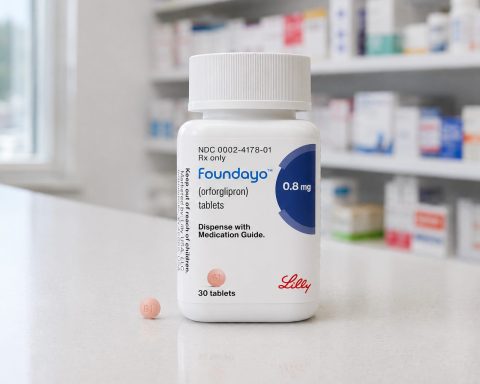
Lilly on Monday announced that the U.S. Food and Drug Administration approved a four-dose KwikPen for Zepbound. The device is meant to supply an entire month’s treatment in a single pen. Pricing for cash customers begins at $299 per month for the 2.5 mg dose, and Lilly said the pen will roll out in six dose strengths.
Novo’s setback has become the big headline on this side. In the direct comparison, Novo announced CagriSema led to 23% weight loss over 84 weeks, coming up short against the 25.5% posted by Lilly’s tirzepatide—the same drug in Zepbound. The trial didn’t blind anyone; both patients and doctors knew which treatment was on hand. “This is a worst-case scenario for Novo,” Union Investment’s Markus Manns told reporters. Nordnet’s Per Hansen called the result “very significant” for investors. Reuters
Some analysts aren’t mincing words about the gap. “They literally ran a trial that said that Lilly’s product is better,” said BMO Capital’s Evan Seigerman, after Novo managers dismissed Zepbound’s results as an “abnormality.” Reuters cited Deutsche Bank, which said the market is “likely to coalesce around Lilly’s portfolio.” Lilly, for its part, is expecting U.S. approval for its competing weight-loss pill in April. Reuters
For Lilly holders, the takeaway isn’t really tied to where shares end up today. It’s about where Zepbound stands against Novo’s Wegovy, and what that could mean for market share. The sector has seen time and again that factors like dosing method and patient adherence can quickly shift prescription trends.
Lilly’s been pushing that point hard. “Zepbound is the #1 prescribed injectable obesity‑management medication,” executive vice president Ilya Yuffa said in a statement picked up by PR Newswire as the company introduced its KwikPen device. PR Newswire
Still, risks linger at the margins. In a business where insurers and pharmacy benefit managers press hard for discounts, pricing pressure can spike fast. A single strong trial result or a dosing profile that’s easier to handle from a rival can flip the competitive picture in a hurry.
The market’s attention swings to April, when a U.S. ruling on Lilly’s weight-loss pill could serve as the next major trigger. Investors are also waiting for clearer signals on whether alternative delivery formats can actually drive ongoing prescription growth.
Related articles: NYSE:LLY