
NEW YORK, March 1, 2026, 07:20 (EST) — Market closed.
- Monday’s open looks set to hinge on headlines out of the Middle East and any fresh oil supply disruptions.
- February wrapped with U.S. stocks in the red on Friday, as hotter inflation numbers chipped away at rate-cut hopes.
- Factory surveys kick things off Monday, followed by heavyweight earnings and the February jobs report landing March 6.
U.S. stocks approach Monday’s open under renewed pressure, after Israel confirmed another strike on Tehran, days after joint U.S.-Israel attacks killed Supreme Leader Ayatollah Ali Khamenei. In response, Iran launched missiles targeting Israel and sites in the Gulf, keeping markets on edge over escalating conflict.
Oil takes the hit first. Sources said OPEC+—that’s the Organization of the Petroleum Exporting Countries and partners like Russia—reached a preliminary deal to bump output by roughly 206,000 barrels per day. But with shipowners told the Strait of Hormuz was shut to traffic, flows from the Gulf ground to a halt.
Roughly a fifth of the world’s oil and petroleum products move through the Strait of Hormuz, keeping equity desks alert to crude as an inflation signal whenever news breaks. Brent hovered near $73 a barrel Friday, showing a 20% gain for the year. Capital Economics’ William Jackson flagged that even a limited conflict could send prices climbing closer to $80.
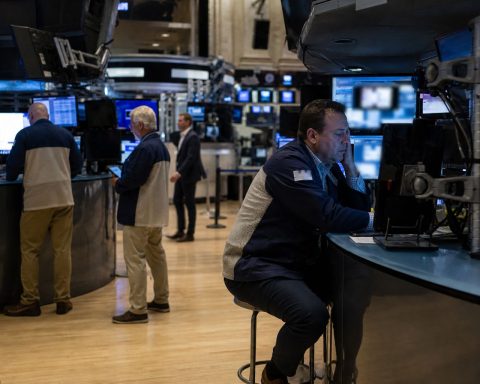
Wall Street wrapped up February in the red. The Dow finished Friday off 1.05%, the S&P 500 slipped 0.43%, and the Nasdaq closed down 0.92%. Both the S&P 500 and Nasdaq notched their sharpest monthly losses since March 2025. Dell surged 21.9% after projecting robust AI-server demand, while Block soared 16.8% as it announced plans to eliminate 4,000 jobs alongside a new AI push. LSEG data put the odds at 94.1% for the Fed to keep rates steady in March. “We were reminded there are still some cracks out there,” said Carson Group’s chief market strategist Ryan Detrick. Reuters
Inflation jitters got a fresh jolt from January’s Producer Price Index, which posted a 0.5% gain. Strip out food and energy, and the “core” PPI jumped 0.8%. That combination, economists said, points to the Fed keeping rates steady until at least the June 16-17 meeting. “Wider margins for producers could add some upside for consumer costs in coming months,” Ben Ayers, senior economist at Nationwide, said, noting he doesn’t see the Fed making a move in March. Reuters
Some analysts are already flagging potential fallout if oil supply remains tight. “The ultimate oil price impact … is going to hinge on whether the IRGC folds,” said Helima Croft, RBC’s global commodity strategy chief, highlighting the escalation risk. Barclays sees Brent possibly hitting $100. OCBC’s Christopher Wong points to an “upside gap” for gold, and says volatility could stay “sticky.” Investing.com
Geopolitics isn’t the only factor weighing on sentiment. UBS just cut its rating on U.S. equities to neutral, citing stretched valuations and what it called weak operational leverage. If global growth tops expectations, the bank said, the U.S. could underperform other markets.
OpenAI is going for a hefty $110 billion in this latest funding round, putting its valuation at $840 billion. Amazon is leading the charge with a $50 billion commitment, trailed by $30 billion each from Nvidia and SoftBank. In a separate move, Amazon signed on to supply OpenAI with 2 gigawatts of compute power via its Trainium chips. OpenAI, though, emphasized the deal won’t affect Microsoft’s exclusive rights to its APIs.
Earnings are back in focus this week as markets look for clues on consumer demand and AI-related outlays. Target and Best Buy step into the spotlight Tuesday. Broadcom drops its results after the bell on Wednesday, with Costco and Marvell Technology lined up for Thursday. Susquehanna’s Christopher Rolland notes Broadcom’s demand picture “remains robust,” pointing to ongoing spending from major cloud customers. Kiplinger
Monday’s docket features February’s factory numbers: S&P Global’s final manufacturing PMI and the ISM reading—both using 50 as the dividing line for growth. On Tuesday, Fed watchers get comments from New York’s John Williams and Minneapolis’ Neel Kashkari. Wednesday lines up ADP’s employment snapshot, ISM’s read on services, and the Fed’s Beige Book. Marc Giannoni, chief U.S. economist at Barclays, is calling for a 25,000 increase in February payrolls and sees unemployment steady at 4.3%.
RBC Economics is penciling in a stronger jobs increase—around 65,000—with unemployment edging up to 4.4%. The bank is also calling for a 0.5% decline in January retail sales, with that delayed report expected Friday, March 6, right beside payrolls.
War news over the weekend remains the big variable here—a fast fix in the Strait of Hormuz could shave off the oil premium, but if the choke point stays blocked, rates and risk assets will feel it. Wrapping up the week, the U.S. February jobs data and the postponed January retail sales figures both land on Friday, March 6, following several days packed with survey results and earnings releases.
Related articles: NYSE:DELL