
London, March 4, 2026, 09:24 GMT
Oil climbed over 3% Wednesday, with Brent crude hitting $84.07 per barrel and U.S. West Texas Intermediate settling at $76.80. The U.S.-Israeli war on Iran hit Middle East supply lines hard, forcing tanker traffic to a halt at the Strait of Hormuz. “The primary near-term driver for oil prices remains the US-Iran conflict,” OANDA’s Kelvin Wong said. U.S. President Donald Trump suggested Navy escorts for commercial vessels, but that didn’t calm the market. Reuters
Benchmark European gas prices surged over 50% on Monday, prompting the EU’s gas supply coordination group to schedule a meeting for Wednesday, according to a European Commission spokesperson. The front-month Dutch TTF contract, the region’s main gas benchmark, changed hands at 48.66 euros per megawatt hour. Officials will also bring together the bloc’s oil coordination group.
About 200 ships—among them oil and LNG tankers—are currently anchored in and around the Strait of Hormuz, according to shipping data. LNG imports traveling through this critical chokepoint have become especially vital for European nations like Britain, Italy, Belgium, and Poland, Reuters reports. Their reliance on these supplies intensified after Europe’s shift away from Russian energy following the 2022 invasion of Ukraine.
South Korean stocks just logged their steepest single-day drop in 46 years. The KOSPI closed 12.06% lower, landing at 5,093.54, after circuit breakers halted trading for 20 minutes. The won also slipped, briefly crossing the 1,500 mark against the dollar overnight. “Positioning unwind and risk reduction,” summed up Maybank Securities’ Tareck Horchani. Reuters
Stocks worldwide took a hit Tuesday, with MSCI’s world equity index losing 1.91% and the STOXX 600 in Europe tumbling 3.08%. “Potential for whiplash in parts of the market is very high,” noted Kevin Gordon, who leads macro research and strategy at Charles Schwab. Reuters
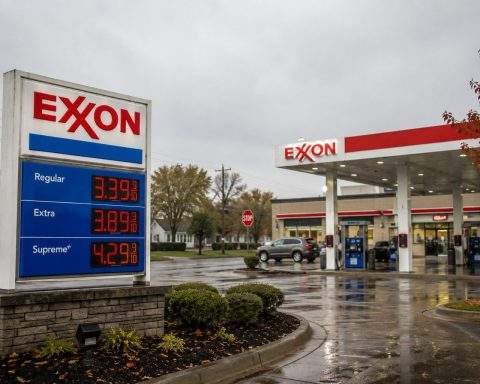
Energy names climbed, boosted by sharp moves higher in crude and natural gas, Reuters reported. Shares of Exxon Mobil and Shell moved up. Airline and travel stocks didn’t fare as well—Ryanair and IAG both dropped. J.P. Morgan analysts flagged that demand for flights typically falls during conflicts. Qatar suspended LNG output, cutting roughly 20% from global supply.
Wholesale gas prices in Britain jumped to £1.54 a therm early Wednesday, then slipped, according to Sky News. The FTSE 100 had finished the previous day down 2.75%, closing at 10,484 points. The pound was trading at roughly 1.15 euros. Brent crude hovered close to $84 a barrel.
Shipping rates are climbing, driven by higher fuel costs. London’s Joint War Committee has expanded its high-risk zone to now cover waters off Bahrain, Djibouti, Kuwait, Oman and Qatar, according to Reuters, with war-risk insurance premiums jumping fivefold in the last few days. Munro Anderson at marine war insurer Vessel Protect called the broader designation “a step that helps stabilise global supply chains by reducing uncertainty.” Reuters
The big unknown, analysts point out, is the duration of the Hormuz closure. J.P. Morgan figures Iraq and Kuwait’s crude shipments could stop in just a few days if the strait doesn’t reopen, taking as much as 4.7 million barrels per day off the market. ANZ bumped its average Brent forecast for the first quarter to $90 a barrel.
Even so, banks aren’t on the same page about oil’s next moves. Citi flagged a possible $80 to $90 range for Brent in the next week, but said prices could slide back to $70 if the conflict lets up. Macquarie’s Vikas Dwivedi noted the market might absorb a shutdown for one or two weeks—beyond that, the effects ramp up quickly.
Goldman Sachs bumped its Q2 2026 Brent estimate up by $10, now calling for $76 a barrel. The bank said Brent could climb to $100 if export flows through Hormuz remain unchanged for another five weeks—a price point Goldman flagged as a trigger for demand destruction and dangerously low stockpiles.
According to the Guardian, traders are now factoring in the chance that an energy shock could make inflation tougher to bring down and throw off the path for rate cuts. On Tuesday, UK gas soared 30%, reaching its highest level in three years, while Brent crude rallied around 6% to $83. The paper noted the pound slipped versus the dollar, and yields on UK government debt moved higher.
UK equities slipped again Monday, with the FTSE 100 shedding 1.2%. Shell and defense contractor BAE Systems managed to push higher, but bank stocks and travel names dragged heavily. “New inflationary pressures” could become a concern if turmoil keeps up, warned AJ Bell’s Dan Coatsworth. Traders, meanwhile, pulled back on bets for a Bank of England rate cut later this month—now pricing in just a 52% chance, down from around 78% a week ago. Reuters
Related articles: NYSE:CVX




![Asia Stock Market Today 28/08/2026 [UPDATE: 00:51 SGT] [Salesforce Leads KASE Global Into Final Minutes After Asia’s Split Close]](https://ts2.tech/wp-content/uploads/2026/08/Asia-market-dashboard-2026-08-28-0051-480x384.jpg "Asia Stock Market Today 28/08/2026 [UPDATE: 00:51 SGT] [Salesforce Leads KASE Global Into Final Minutes After Asia’s Split Close]")