
NEW YORK, March 13, 2026, 18:45 EDT
Navitas Semiconductor ended Friday at $10.10, up 1.2%, sticking close to highs set during this week’s volatile run. The Nasdaq power-chip maker spiked 24.88% Wednesday, dropped 7.93% Thursday, and landed at $10.04 in after-hours action Friday.
Traders are pressing to see if Navitas can actually deliver on its AI and infrastructure product ambitions. Back in February, management flagged that higher-power markets finally made up the bulk of quarterly revenue. Still, fourth-quarter sales tumbled 59% year-on-year, landing at $7.3 million. For the first quarter, the company projected revenue between $8 million and $8.5 million and told investors to expect sequential growth all the way through 2026.
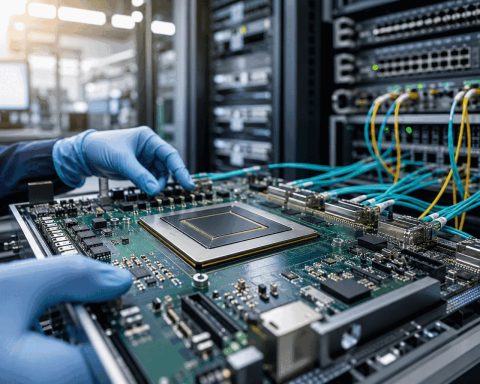
This week’s action came after Navitas unveiled its latest silicon carbide products on March 11. The launch featured a top-side cooled QDPAK and a slim TO-247-4L package, targeting AI data centers, energy grids, and industrial setups. Paul Wheeler, who heads up SiC at the company, described the move as an answer to the push for “more power in less space.” GlobeNewswire
Later that day, Navitas tapped Tonya Stevens—most recently chief accounting officer and interim CFO at Lattice Semiconductor—to take over as finance chief starting March 30. In both the filing and a company statement, Stevens cited Navitas’s position in high-power markets “driven by the AI catalyst” as a key reason for her move. CEO Chris Allexandre, for his part, pointed to her experience as critical as Navitas aims to “scale our operations to a larger, profitable company as part of Navitas 2.0,” the company’s name for its move into higher-power markets.
Allexandre hasn’t been shy about that point. Speaking at a Morgan Stanley conference this month, he described AI data centers, grid infrastructure, and other power-hungry sectors as shifting to “a much higher level of power and density and efficiency”—despite Navitas’s traditional strength in mobile. Seeking Alpha
But that brings sharper competition, too. Navitas called out Infineon, Wolfspeed, and ON Semiconductor as key silicon-carbide competitors in its annual filing, while demand tied to AI has already lifted the mood for others in the space—Texas Instruments got a boost earlier this year.
The turnaround remains tangled. Navitas cautioned that its customer design wins—essentially, when a chip is chosen for an upcoming project—and pipeline stats aren’t the same as booked orders. Real revenue will depend on when customers qualify products, how production lines up, and how rivals move. Fourth-quarter numbers included an operating loss of $41.4 million, though year-end cash climbed to $236.9 million thanks to a private placement.
Wall Street isn’t piling in just yet. Rosenblatt’s Kevin Cassidy, per a GuruFocus note, stuck to his neutral stance and kept his $7 price target on Thursday. MarketWatch, tallying up nine ratings, found the average call is still “hold,” with consensus target price landing at $8.15. GuruFocus