
Copenhagen, April 24, 2026, 18:06 (CEST)
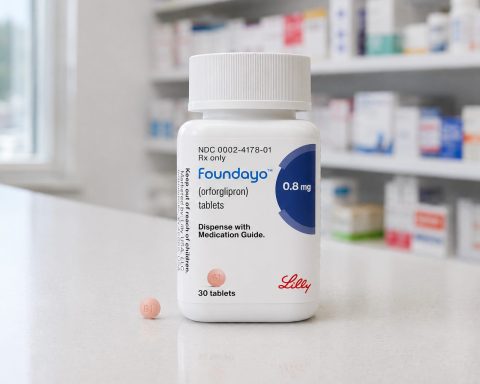
Novo Nordisk A/S’s Wegovy pill stayed ahead in the early going, with 18,410 U.S. prescriptions at the same stage of launch where Eli Lilly’s Foundayo managed 3,707 in its second week, according to analysts referencing IQVIA data. RBC Capital Markets analyst Trung Huynh flagged that it’s early days and comparisons can be tricky, but noted that Foundayo’s latest numbers are likely to be viewed as a disappointment.
Investors are watching the numbers closely, looking for signs that weight-loss pills might expand the market beyond injections. That could mean more out-of-pocket customers and possibly change the dynamic between the two main players in the GLP-1 drug space. GLP-1 drugs work by acting on a hormone linked to appetite and blood sugar. Pills offer a needle-free alternative, but injections are still projected to account for a big share of the market.
Novo’s U.S.-listed shares were last at $40.76, up $2.24. Lilly, on the other hand, changed hands at $882.39, marking a drop of $35.26, as of 15:50 UTC, market data showed.
Lilly has another advantage up its sleeve. Patients can take Foundayo whenever they want, food or no food, unlike Novo’s Wegovy pill, which requires a morning dose on an empty stomach and no other medications. BMO’s Evan Seigerman noted this month that investors are paying attention to whether Foundayo’s “lack of a food effect” will influence patient adoption. Reuters
The early numbers don’t always tell the whole story. Lilly has pointed out that those weekly prescription stats might miss some pharmacy partners and are best viewed in context, over a longer stretch. J.P. Morgan’s Chris Schott noted Foundayo’s launch pace trails oral Wegovy, which isn’t unexpected since Novo had a head start and more established branding.
Novo reported Thursday that its oral semaglutide reduced HbA1c by 0.83 percentage points over placebo in the PIONEER TEENS phase 3a study, which enrolled 132 patients ages 10 to 17 with type 2 diabetes. Safety came in line with what’s been seen in past semaglutide trials, according to the company.
Novo is looking to file for U.S. and EU approval in the back half of 2026 to widen use of Rybelsus and the Ozempic pill to pediatric and adolescent patients. So far, no oral GLP-1 drug has cleared the regulatory bar for children or teens, Reuters reported.
Martin Holst Lange, Novo’s chief scientific officer and research and development head, said the PIONEER TEENS data back oral semaglutide as an “effective treatment option” for young people whose blood-sugar levels aren’t controlled by standard therapies. GlobeNewswire
This isn’t some niche segment. Treatment choices for younger patients are limited—doctors usually prescribe either metformin or insulin. But metformin alone doesn’t cut it for about 50% of adolescents, blood sugar stays high. Insulin brings its own baggage: risk of hypoglycemia, weight gain, according to Reuters.
Regulators in Europe aren’t standing still either. On Wednesday, European Medicines Agency chief Emer Cooke said the EU is set to wrap up its review of the first of a new crop of weight-loss pills this summer. That news comes after Novo and Lilly rolled out their pills in the U.S. not long ago.
Access is still a sticking point. The Centers for Medicare & Medicaid Services confirmed that a bridge program for obesity drugs will run from July 1, 2026, through Dec. 31, 2027. But after pushback from insurers, the agency postponed the Medicare Part D portion of the BALANCE model. Analysts say that’s positive for near-term demand, though it leaves longer-term prospects less certain.
Novo faces a multi-pronged battle: protecting Wegovy in obesity, expanding semaglutide’s diabetes footprint, and fending off Lilly’s bid to win customers with easier dosing. Early prescription numbers lean Novo’s way. Bigger hurdles remain—getting patients to stick with treatment, securing backing from insurers, and passing regulatory checks.
Related articles: NYSE:LLY