
WASHINGTON, April 30, 2026, 14:03 EDT
- Brent crude spiked above $126 a barrel, with traders factoring in a potentially extended closure of the Strait of Hormuz and weighing fresh U.S. military moves against Iran.
- Gasoline in the U.S. surged to $4.300 a gallon—up by 27 cents over the past week—as the oil shock starts eating into household budgets.
- Washington is back to courting partners for a maritime coalition, while also tapping the Strategic Petroleum Reserve once more.
Brent crude spiked past $126 a barrel on Thursday—its highest since 2014—before sliding back as President Donald Trump got ready to review fresh military strategies on Iran. Tehran threatened to target U.S. assets if attacks restart. Central Command chief Adm. Brad Cooper and other top brass were set to brief Trump on plans aimed at pressuring Iran to the table, a U.S. official told Reuters.
This shift hits the market hard, with the impact now showing up at the pump instead of just along shipping routes. AAA data shows the U.S. national average for gasoline jumped to $4.300 a gallon on April 30. That’s up from $4.031 just a week before, and a sharp climb from $3.183 a year back—the highest reading in four years.
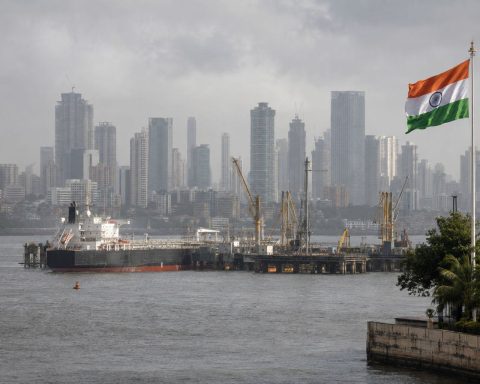
The Strait of Hormuz—vital and narrow—moves roughly a fifth of the world’s oil and LNG, fuel cooled for export by tanker. Reuters says the shipping lane is still closed off, now two months into the U.S.-Israeli conflict involving Iran, despite a ceasefire that took effect on April 8.
Washington is working to keep the pressure up, but risks triggering more economic blowback. According to Reuters, a State Department cable went out to partner nations, asking them to join a Maritime Freedom Construct, or MFC, aimed at helping ships through the strait. Trump is still considering whether to extend the blockade, or possibly roll out fresh military measures.
Iran turned up the heat. A senior Revolutionary Guards figure warned of “long and painful strikes” on U.S. targets in the region if Washington were to launch another attack. Supreme Leader Mojtaba Khamenei, meanwhile, made it clear Tehran wants to maintain its grip on the waterway, according to Reuters. Reuters
Sequencing is where diplomacy has stalled. According to the Washington Post, Tehran insists on negotiations about reopening the shipping lane and halting the conflict before making any further moves. Trump, for his part, refuses any agreement that doesn’t place limits on Iran’s nuclear activities. “A test of wills,” is how Brian Katulis at the Middle East Institute puts it—each side trying to ratchet up the economic pressure. The Washington Post
Oil watchers are dropping relief bets as supply crunch calculations set in. ING researchers Warren Patterson and Ewa Manthey say the market’s swung from “over-optimism” to a sharper focus on actual risks tied to Persian Gulf supply interruptions. The upshot, they note: if disruptions drag on, prices could have to climb high enough to put a dent in demand—industry shorthand for squeezing consumption. ING THINK
Vandana Hari, who runs Vanda Insights, told Bloomberg—per the Daily Beast—that prices “had nowhere to go but up” until there’s some sign Hormuz reopens. Brent backed off to roughly $114 by 8 a.m. Eastern, Axios reported, with U.S. benchmark West Texas Intermediate hovering around $104. Bloomberg later put the most-traded Brent futures contracts near $110 after a choppy June expiry. The Daily Beast
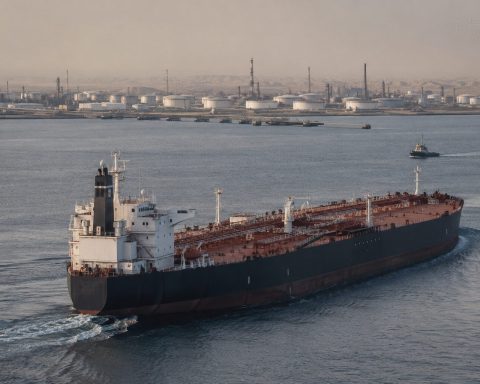
Physical oil supplies are feeling the squeeze, too. According to Reuters, just a small number of Iranian crude carriers exited the Gulf of Oman from April 13 to April 25—an over 80% drop compared to a similar stretch in March. U.S. Central Command, for its part, counted 41 tankers with roughly 69 million barrels sitting idle.
Trump is looking for some extra protection domestically. The administration announced plans to loan as much as 92.5 million barrels from the Strategic Petroleum Reserve—the U.S.’s emergency crude stash—to energy firms. It’s a slice of a broader International Energy Agency push to put roughly 400 million barrels onto the market.
Producers aren’t getting much of a break right now. Even with talk of the United Arab Emirates leaving OPEC—the group steering supply policy—the near-term landscape remains choked by logistical snags. Gulf suppliers like Saudi Arabia, Iraq, and the UAE all face the same shipping squeeze. Simon Flowers at Wood Mackenzie figures a UAE departure would barely budge 2026 fundamentals, assuming Hormuz opens up again.
Risks tug in both directions here. Crude could shed its war premium quickly if a surprise deal reopens the Strait of Hormuz, but any fresh U.S. strikes or moves from Iran might push prices right back up. The timing on resuming flows is critical, Anushree Ganeriwala at the Economist Intelligence Unit told Reuters. Bridget Payne of Oxford Economics added that if the strait remains largely closed for several more months, there’s still a shot at record prices.
Related articles: Energy Markets