
Philadelphia, May 4, 2026, 15:58 EDT
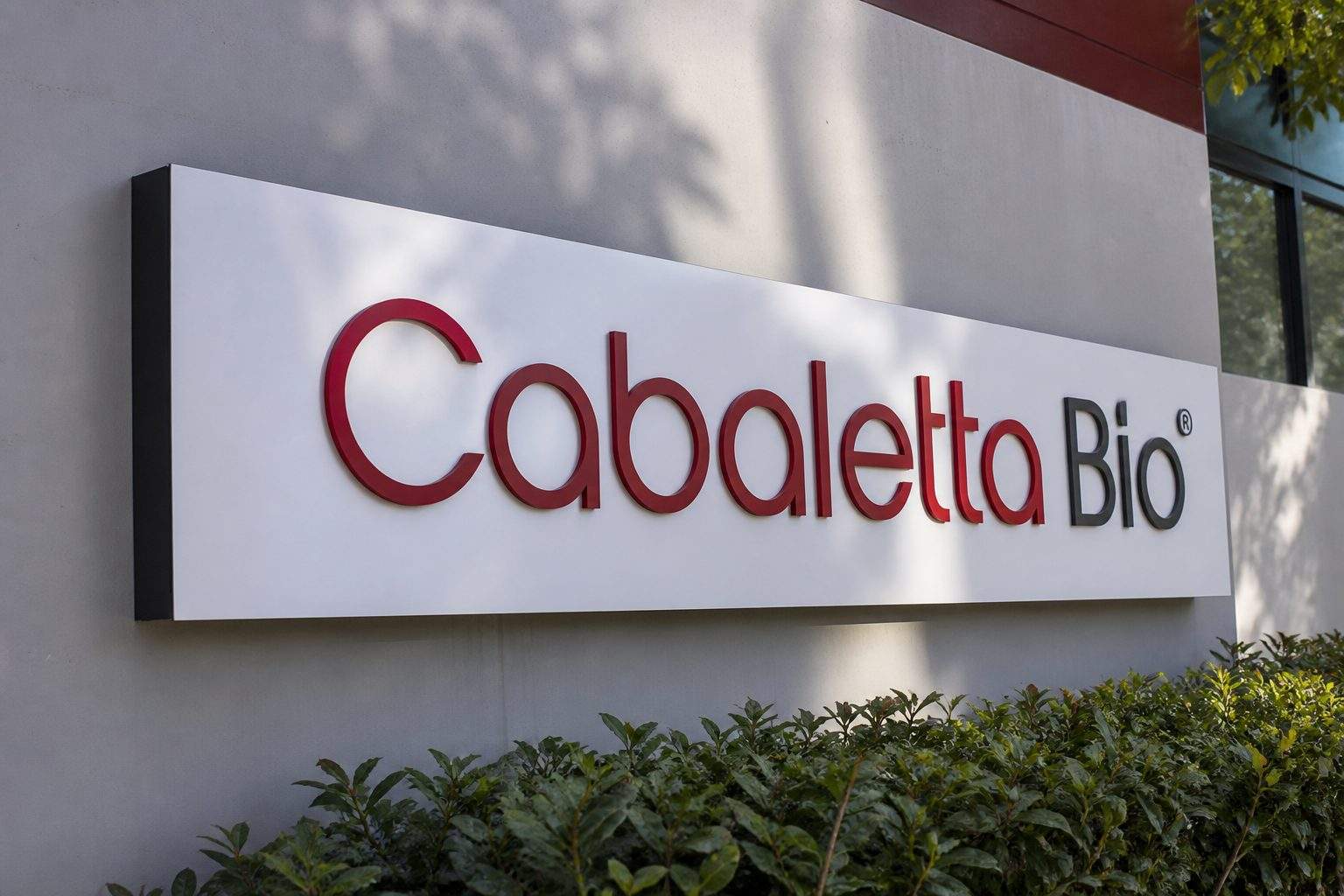
Shares of Cabaletta Bio Inc. surged roughly 32% late Monday, buoyed by news of early results from a small cell-therapy trial and the announcement of a $150 million stock sale that counted Eli Lilly among its participants. Trading hit $3.895 on strong volume, topping out intraday at $4.04, according to market data.
Share sales tend to draw flak from biotech investors worried about dilution, but Cabaletta’s deal played out differently. The company sold 51.7 million shares at $2.90 apiece—the at-the-market price allowed under Nasdaq rules. Bain Capital Life Sciences, Adage Capital Management, Cormorant Asset Management, along with fresh mutual and sovereign wealth funds, and Eli Lilly all took part.
The cash raise gives Cabaletta a bit more runway. According to a prospectus supplement, the company held roughly $117 million in cash and equivalents as of March 31—preliminary numbers. With the new funds and existing cash, management sees enough to cover operating and capital needs into mid-2027.
Cabaletta disclosed in a filing that it will share fresh results from four refractory pemphigus vulgaris patients given rese-cel—its investigational CD19 CAR-T—at the lowest dose, skipping preconditioning. Normally, preconditioning involves chemotherapy, specifically cyclophosphamide and fludarabine in this setting, ahead of cell therapy.
According to the filing, two of the four patients demonstrated “compelling clinical activity” at the six-month mark. By the April 2 data cut, three patients were still off immunomodulators and steroids. The same number—three—achieved complete peripheral B-cell elimination, a key measure of the therapy’s effect. SEC
Safety concerns persist. Out of four patients, Cabaletta saw one case of Grade 1 cytokine release syndrome—an inflammatory immune response—but didn’t observe any immune effector cell-associated neurotoxicity syndrome, a known CAR-T therapy risk. The company has started enrolling additional patients into a higher-dose RESET-PV cohort, with durability data from those participants expected in the back half of 2026.
The American Society of Gene & Cell Therapy meeting in Boston on May 14 is set for the data release. Cabaletta’s got another slot at ASGCT to discuss automated rese-cel manufacturing with Cellares’ Cell Shuttle, a detail catching investor attention given the challenges and expense of scaling up CAR-T drug production.
Cabaletta’s RESET program is testing Rese-cel—previously known as CABA-201—in lupus, myositis, systemic sclerosis, generalized myasthenia gravis, and pemphigus vulgaris. The company says the one-time, weight-based infusion targets CD19-positive B cells, aiming to wipe them out and “reset” the immune system, rather than relying on ongoing treatment. Cabaletta Bio, Inc.
Cabaletta is aiming to carve out an early lead in myositis. According to its prospectus, the company kicked off a registrational cohort for dermatomyositis and anti-synthetase syndrome back in December 2025. The plan: enroll 17 patients. If the results look good, Cabaletta could be ready to file for a biologics license as soon as 2027.
The company has been securing manufacturing resources as well. In an April 28 supply deal with Cellares, Chief Executive Steven Nichtberger pointed to the potential for automated, industrial-scale production to treat “thousands of patients per year with minimal capital investment.” Cellares CEO Fabian Gerlinghaus, for his part, said autoimmune applications would demand a much larger manufacturing footprint than what’s required for oncology CAR-T. Cabaletta Bio, Inc.
Rivals are stepping up. Kyverna Therapeutics is pushing forward with its CAR-T therapy, KYV-101, targeting autoimmune diseases such as lupus nephritis, multiple sclerosis, myasthenia gravis, and systemic sclerosis. Cartesian Therapeutics, meanwhile, has Descartes-08 in the works for generalized myasthenia gravis and myositis—skipping pretreatment chemotherapy.
The catch is obvious. Monday’s clinical numbers come from just four patients, all on the lowest dose. Cabaletta faces open questions on durability, whether higher doses are safe, manufacturing consistency, and regulatory approval. Their prospectus flags another risk: management can use the proceeds however they see fit—and there’s no guarantee they’ll put the cash to good use.