
SALT LAKE CITY, May 13, 2026, 05:06 MDT
- Red Cat set the price for 23.94 million shares at $9.40 apiece, hauling in roughly $225 million. RCAT slid after hours—MarketBeat pegged the stock at $9.70, off 12.09%, at 07:02 a.m. ET.
- This drop mostly comes down to dilution: current shareholders get a smaller piece of the pie, rather than drone demand suddenly drying up. The fresh shares represent roughly 19.6% of the 121.84 million common shares outstanding as of March 31.
- Bulls are sticking with the growth angle: Q1 revenue exploded 849% to $15.5 million, with Red Cat pointing to Black Widow orders from both NATO and Asia-Pacific. Bears don’t need much more than the big red ink—$26.6 million net loss, $31.9 million in operating cash burned in the quarter.
Red Cat Holdings shares slipped ahead of Wednesday’s open after the company priced a new stock offering at $9.40 per share—well under Tuesday’s $11.03 close. Traders responded fast, pulling the stock down to match the deal terms instead of the drone-demand narrative that previously drove gains.
That’s what’s driving the decision here. Selling stock at a discount brings in quick funding for a company like this that’s racing to expand, but it also leaves existing shareholders facing immediate dilution, with any benefits from new facilities, deals, or orders potentially far off. Underwriters picked up an option to grab another 3.59 million shares from Red Cat, so dilution could go even further.
There’s no single project in focus for the proceeds. Red Cat laid out a sweeping range: general corporate needs, chasing growth, acquisitions, R&D, capex, working capital—all on the table. That kind of flexibility gives management a lot of leeway, but it also means investors are betting on follow-through.
The numbers make it clear: Red Cat wanted a bigger cash cushion. At the end of March, cash had slipped to $131.9 million from $167.9 million just three months earlier. Inventory and prepaid inventory? Those shot up, more than doubling to $62.7 million. The company is building inventory in anticipation of a ramp. Expenses are landing ahead of profits.
Q1 delivered a mix of chaos and gains. Revenue soared to $15.5 million, a steep jump from $1.6 million last year. Gross margin swung up to 12.7%, reversing from negative 52.1%. Still, operating expenses climbed to $29.3 million, and net loss landed at $26.6 million. The company is growing fast — but burning cash just as quickly.
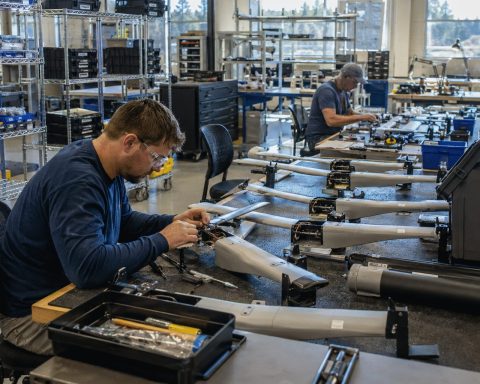
On the call, management struck a restless, expansion-focused note. CEO Jeff Thompson claimed Red Cat can tap its supply chain and inventory to manufacture $220 million in Black Widow drones, and he put the Teal Black Widow pipeline at nearly $700 million. He used the line “Factory is the Weapon” in the release, summing up both the company’s game plan and what’s on the line. Building out that factory, though, means spending cash up front. Investing.com
The argument is getting new backing. Teal Drones, which operates under Red Cat, landed a $9.5 million purchase order from the U.S. Army through the Short Range Reconnaissance Program of Record, with deliveries set for Q2 2026. That positions the capital raise as a bid to ramp up operations rather than a bailout.
U.S. drone suppliers remain in a strong position. Reuters noted the Pentagon’s fiscal 2027 budget request has $53.6 billion lined up for autonomous drone platforms and warzone logistics, with another $21 billion penciled in for counter-drone tech and advanced systems. The AP put it this way: officials want to triple drone-related spending, topping $74 billion.
Not every drone stock is catching a bid today. AeroVironment edged up roughly 1.4% in recent trading, Kratos gained about 0.6%, but Unusual Machines slid 8.1%. The numbers suggest investors are responding to something specific at Red Cat, rather than turning away from the whole sector.
The argument for Red Cat isn’t complicated. As a small-cap, it’s a cleaner play on tactical drones than names like AeroVironment or Kratos, and analysts are still backing it. Needham’s Austin Bohlig kept his Buy after Q1, sticking to a $20 price target. MarketBeat’s average 12-month target sits at $20.67 from four analysts.
The downside argument hits just as forcefully. Even with a solid market, a company like Red Cat can be early-stage, pricey, and prone to sharp swings. In its prospectus, management made clear it holds wide leeway over how to use the money, and flagged the risk of future equity sales leading to further dilution. Traders zeroed in on that overnight and came down hard.
The bigger question now isn’t the offering—which should wrap up by May 14—but conversion. Red Cat has to get inventory and pipeline, plus military demand, over the finish line as real revenue, and preferably at higher margins. For now, the stock trades between two pressures: defense-drone urgency, and the drag from dilution and cash burn.
Related articles: NASDAQ:RCAT