MILWAUKEE, May 5, 2026, 13:03 CDT
- Fiserv fell short of first-quarter adjusted revenue projections, with organic sales declining across both of its primary divisions.
- The stock slid roughly 10% by the afternoon, ratcheting up pressure ahead of the company’s investor day on May 14.
- Margins took a notable hit, though management left the 2026 profit and organic revenue targets right where they were.
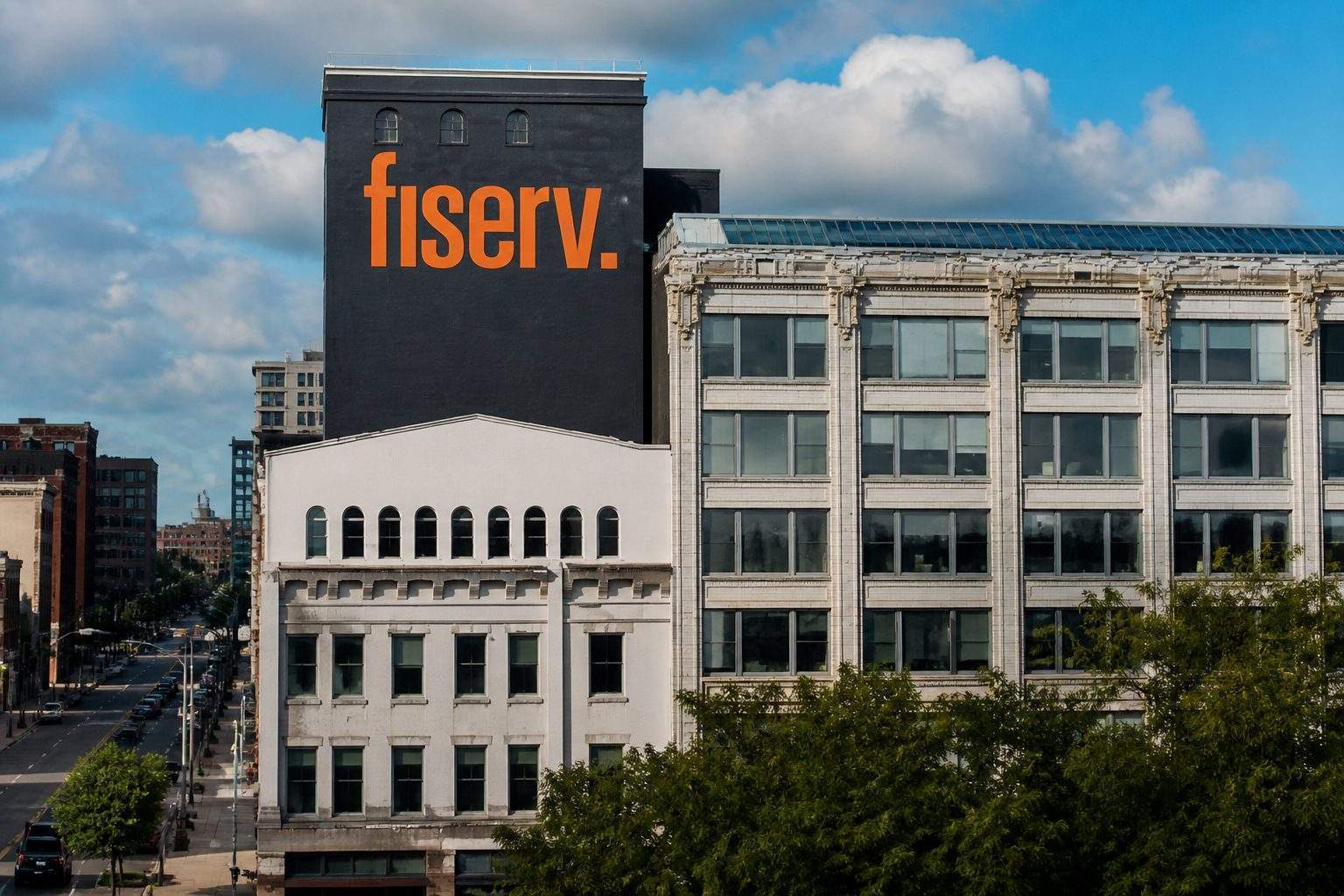
Fiserv Inc. shares dropped 9.9% to $56.59 on Tuesday after the payments and financial tech firm missed Wall Street’s first-quarter revenue target. Disappointing results in both its Merchant Solutions and Financial Solutions segments fueled uncertainty about how quickly the company can deliver a turnaround. Shares of Fidelity National Information Services and Global Payments were also in the red.
The timing of the report is crucial for Fiserv, which is working to restore investor trust after a tough 2025 and just ahead of its May 14 investor day—when management is set to outline more on the medium-term strategy. According to Reuters, adjusted revenue landed at $4.68 billion, falling short of the $4.73 billion consensus estimate from LSEG. Adjusted earnings, though, came in at $1.79 per share, well ahead of the $1.57 expected.
Fiserv reported a 2% slide in GAAP revenue to $5.03 billion for the quarter ended March 31. Organic revenue, which excludes currency changes, acquisitions, divestitures, and select reimbursements, declined 4%. GAAP EPS tumbled 29% to $1.07.
Broad-based pressure cut into results. Organic revenue slipped 1% within Merchant Solutions, the division behind Clover’s merchant-facing point-of-sale business, and tumbled 6% in Financial Solutions, which caters to banks and credit unions. Adjusted operating margin shrank noticeably, landing at 29.7% compared with 37.8% a year ago—a notable contraction for a company prized by investors for its scale and steady processing income.
Mike Lyons, the chief executive, called Fiserv still very much in “execution mode,” pressing ahead with its One Fiserv Action Plan. But Lyons acknowledged, “significant work remains.” CFO Paul Todd pointed to “stable underlying account and volume trends” as a pillar for first-quarter results and reiterated confidence in the company’s full-year outlook. Fiserv, Inc.
Fiserv kept its guidance steady. The company maintained its 2026 organic revenue growth outlook at 1% to 3%, and continues to forecast adjusted earnings per share between $8.00 and $8.30. Those adjusted numbers strip out acquisition-related amortization, severance, and transformation costs.
Timing is the tricky part here. On the call, Todd pointed out that first-quarter adjusted revenue dropped, with last year’s one-off revenue making for a tough comparison. He noted that Financial Solutions is up against first-half headwinds, but expects growth trends to stand out more clearly as the year goes on.
So, the pressure shifts to the back half of the year for investors. Lyons told analysts the company has to deliver before any real improvement in growth is obvious, saying 2027 marks the first full year management expects to see tangible results from these moves.
The picture for consumers is anything but clear. On Monday, Fiserv reported its April Small Business Index was steady at 144. While small-business sales rose 1.1% year over year, transaction counts—seen as a stand-in for foot traffic—dropped 1.7%. “Resilient on the surface,” is how Fiserv’s chief data officer Prasanna Dhore described spending, but he pointed out that higher prices, not greater demand, largely explain the sales growth. Fiserv, Inc.
The battle for merchant and bank tech dollars isn’t letting up. Fiserv is up against FIS, Global Payments, PayPal, and a group of newer payments players muscling in on small-business software, checkout, and embedded finance. According to Reuters, established fintechs are getting squeezed by stiffer competition, weak merchant growth, and some execution missteps.
The risk is straightforward: that hoped-for recovery in the second half might not show up soon enough. Continued declines in Financial Solutions, lagging Clover gains, or margin pressure from insufficient cost cuts—any of these could make the steady 2026 forecast tough to justify.
Fiserv sent its results to the U.S. Securities and Exchange Commission on Tuesday, disclosing them in a Form 8-K. CFO Paul Todd signed off on the filing.