New York, May 7, 2026, 17:38 (EDT)
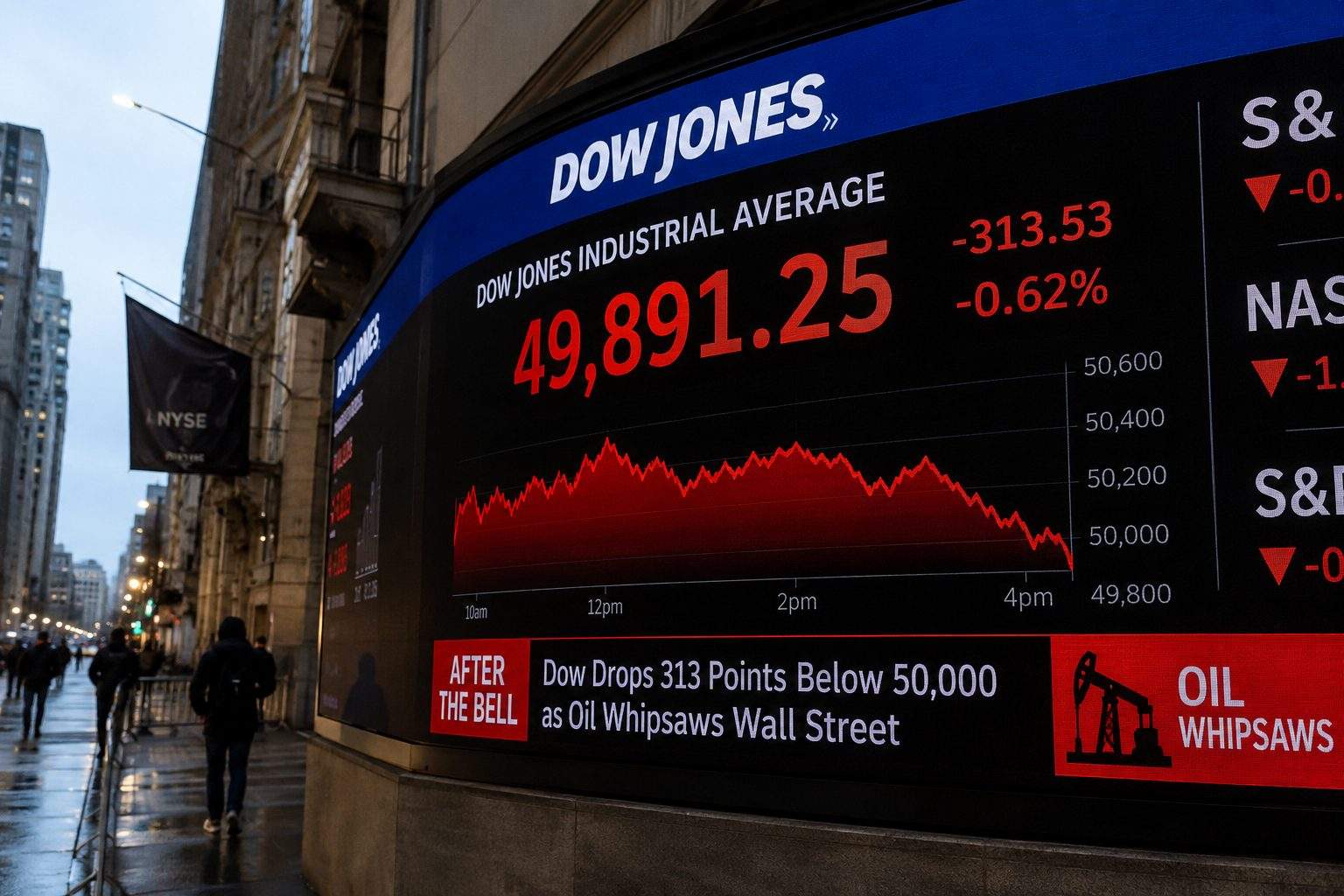
The Dow Jones Industrial Average dropped 313.62 points, or 0.6%, finishing at 49,596.97 on Thursday—falling back under the 50,000 mark, as Wall Street retreated from its highs. A shaky session for oil and a selloff in chip stocks didn’t help. The S&P 500 closed down 0.4% to 7,337.11. The Nasdaq Composite eased 0.1% to 25,806.20.
This shift is notable, with the rally so far fueled by a one-two punch: upbeat AI-driven earnings and bets that a possible U.S.-Iran agreement would cool energy costs. By the close, neither factor seemed quite as solid.
Oil once again took center stage. Brent crude, the international standard, finished 1.2% lower at $100.06 a barrel—after tumbling as much as $5 earlier in the session. U.S. crude ended at $94.81. Costlier fuel tends to stoke inflation, complicating the Federal Reserve’s path if it wants to lower rates.
Chip stocks lost steam following a rapid climb. Arm Holdings’ shares in the U.S. slid, with investor concerns over supplies of its latest AI chip overshadowing upbeat guidance. Intel and Advanced Micro Devices both shed roughly 3%. The PHLX semiconductor index, tracking top chipmakers, slipped 2.7%.
Investors didn’t dump AI across the board. Nvidia and Microsoft each climbed close to 2%, showing appetite for the biggest AI-linked stocks even as the more economically sensitive chipmakers lost ground.
“Rip-roaring quarter of recovery, driven by fundamentals,” is how Mike Dickson, who heads portfolio management at Horizon Investments in Charlotte, sums it up—even with the drop, it hasn’t wiped out gains. The S&P 500 remains about 7% higher for the year. Reuters
Economic numbers kept the rate-cut argument locked in place. Initial jobless claims ticked up by 10,000 to 200,000 for the week ending May 2, still shy of the 205,000 forecast by economists. Meanwhile, continuing claims dropped to their lowest point since January 2024. “Steady as a rock,” said FWDBONDS chief economist Christopher Rupkey about the labor market. Reuters
Cleveland Fed President Beth Hammack didn’t give markets much hope for a rate cut any time soon. “Interest rates will be on hold for quite some time,” she told reporters, pointing to persistent uncertainty and warning that investors shouldn’t count on the Fed’s next move being automatic. Reuters
Parts of the tape found a lift from earnings. Datadog soared 31% after it bumped up its full-year outlook; CrowdStrike and Palo Alto Networks also advanced. But Whirlpool headed sharply lower, dropping 12% after a miss on first-quarter sales and a dividend suspension.
Daniel Skelly, who heads up Morgan Stanley’s Wealth Management Market Research & Strategy Team, flagged oil’s “longer-term impact on inflation is still an open question.” Across the street, Societe Generale strategist Manish Kabra described the earnings setup as a “broad-based profit boom,” pointing to record earnings-per-share beats and better 2026 growth forecasts. Reuters
The peace scenario might just be too tidy, SEB Research analyst Ole Hvalbye pointed out. If a deal gets hammered out, Brent could snap down to $80-$90, he said. But if talks collapse or the U.S. resumes strikes, Hvalbye sees prices “north of $120.” He flagged another concern: even with a fresh agreement, physical crude markets could take weeks or months to get back to normal. Reuters
Friday brings the U.S. nonfarm payrolls report, the next hurdle for markets. Reuters’ survey of economists points to an increase of 62,000 jobs for April, following March’s 178,000 jump. As of Thursday’s close, the Dow was still holding onto a 0.2% weekly gain and up 3.2% so far this year.