
Doha, May 9, 2026, 16:14 (AST)
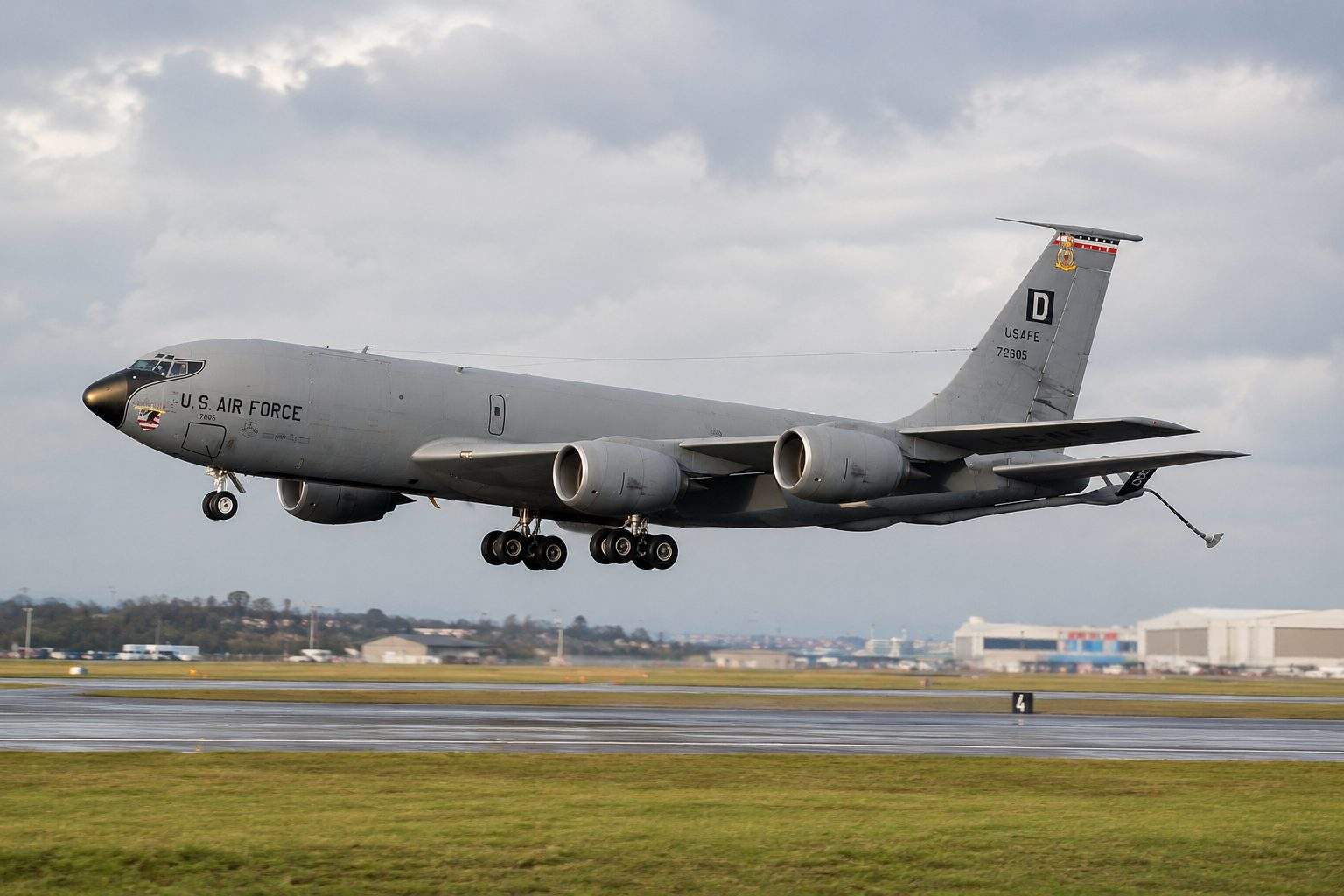
A U.S. Air Force KC-135 Stratotanker sent out a 7700 emergency squawk near the Persian Gulf, then vanished from public radar over Qatar, drawing a fresh spotlight to the critical refuelers supporting U.S. air missions across the region. NDTV, citing flight-tracking data, reported the jet left Al Dhafra Air Base in the United Arab Emirates, spent time in a holding pattern, then started descending. No details have emerged on the reason for the emergency.
The U.S. military has stepped up its activity near the Strait of Hormuz. On May 8, U.S. Central Command reported disabling two Iranian-flagged oil tankers in the Gulf of Oman. The day before, the command said U.S. warships passing through Hormuz encountered Iranian missiles, drones, and small boats.
The KC-135’s significance comes down to endurance. Tankers don’t carry bombs, but they control how long those strike jets, bombers, and surveillance assets can actually keep flying. According to CENTCOM, Project Freedom in the strait calls for guided-missile destroyers, over 100 aircraft operating from land and sea, drones, and 15,000 troops on the ground or afloat.
A 7700 squawk signals a general emergency in aviation—it’s not confirmation that a crash has happened. According to the Federal Aviation Administration, pilots should use Mode A/3 Code 7700 if they can’t quickly reach air traffic control. Flightradar24 points out that a 7700 can flag anything from technical trouble on board to medical events or other unusual situations.
No fresh KC-135 losses have turned up in U.S. public disclosures since news of the incident in Qatar. CENTCOM’s statements between May 6 and 8 zeroed in on blockade operations in the Gulf of Oman and reported attacks near the Strait of Hormuz.
The tanker fleet had already been feeling the pinch. CENTCOM reported that a KC-135 went down in western Iraq on March 12 as part of Operation Epic Fury, after an incident between two tankers; one crashed, while the other made it down safely. Later, the command confirmed all six crew members aboard the downed plane had died, ruling out both hostile and friendly fire as causes.
Defense Secretary Pete Hegseth said the U.S. would press on with operations against Iran after the crash, Reuters reported. “War is hell. War is chaos,” Hegseth told Reuters, describing the KC-135 loss as a “tragic crash.” Reuters
Attention has turned to damage involving other tankers as well. Back in March, Reuters highlighted a Wall Street Journal report stating that five U.S. Air Force refueling planes were hit and damaged at Saudi Arabia’s Prince Sultan Air Base, according to two U.S. officials. Reuters, for its part, noted it couldn’t confirm the report at the time.
The KC-135R with tail number 59-1444, identified by aviation outlets, eventually made it to Tinker Air Force Base in Oklahoma, sporting repair patches along its fuselage after stops at RAF Mildenhall and Bangor, Maine. According to KCRA, which cited KOCO video, the aircraft was damaged at Prince Sultan Air Base before being ferried to Tinker for repairs.
Tinker isn’t just any stop. The Oklahoma City Air Logistics Complex there handles depot-level maintenance and mods for KC-135, KC-46, B-1B, B-52, E-3, and Navy E-6 aircraft. According to its official fact sheet, the complex also handles aircraft battle-damage repair worldwide.
The KC-135 has delivered the backbone of aerial refueling for the U.S. Air Force for over six decades, according to the service. While it’s also used to transport cargo and patients, its primary wartime role is more straightforward: extending the range of combat jets for the Air Force, Navy, Marine Corps, and allies.
Boeing’s KC-46A Pegasus, intended as the next step, hasn’t solved that reliance. Back in March, Reuters pointed out that ongoing delivery delays and technical issues with the KC-46 meant the U.S. still leans on its KC-135 fleet. Military Times put the KC-46 count at 100 aircraft—nowhere near matching the KC-135’s numbers.
Public flight-tracking data can mislead, particularly with military flights—sometimes exaggerating, other times missing key moments. Losing a transponder signal might signal trouble, or simply a routine landing, intentional signal masking, or just a gap in the data. No official incident report has surfaced, so the situation with the Qatar aircraft is still up in the air. What’s certain: every tanker incident now packs more significance as U.S. sorties extend further into what’s become a busier, more contested Gulf airspace.
Related articles: Stock Market