
SANTA CLARA, California, August 30, 2026, 19:36 (EDT)
- Intel dropped 2.85% to $89.47 on Friday, wiping out roughly $13.9 billion in market capitalization.
- The stock ended the session 5.8% under Intel’s $95 equity offering price.
- Revenue for the second quarter climbed 25%, as data-center and AI sales advanced by 59%.
- Analysts are staying cautious, maintaining a Hold consensus even though target prices suggest 20% upside.
Intel Corporation (NASDAQ: INTC) fell 2.85% on Friday, erasing about $13.9 billion in market capitalization. The stock ended the session at $89.47, with trading volume at 86.1 million.
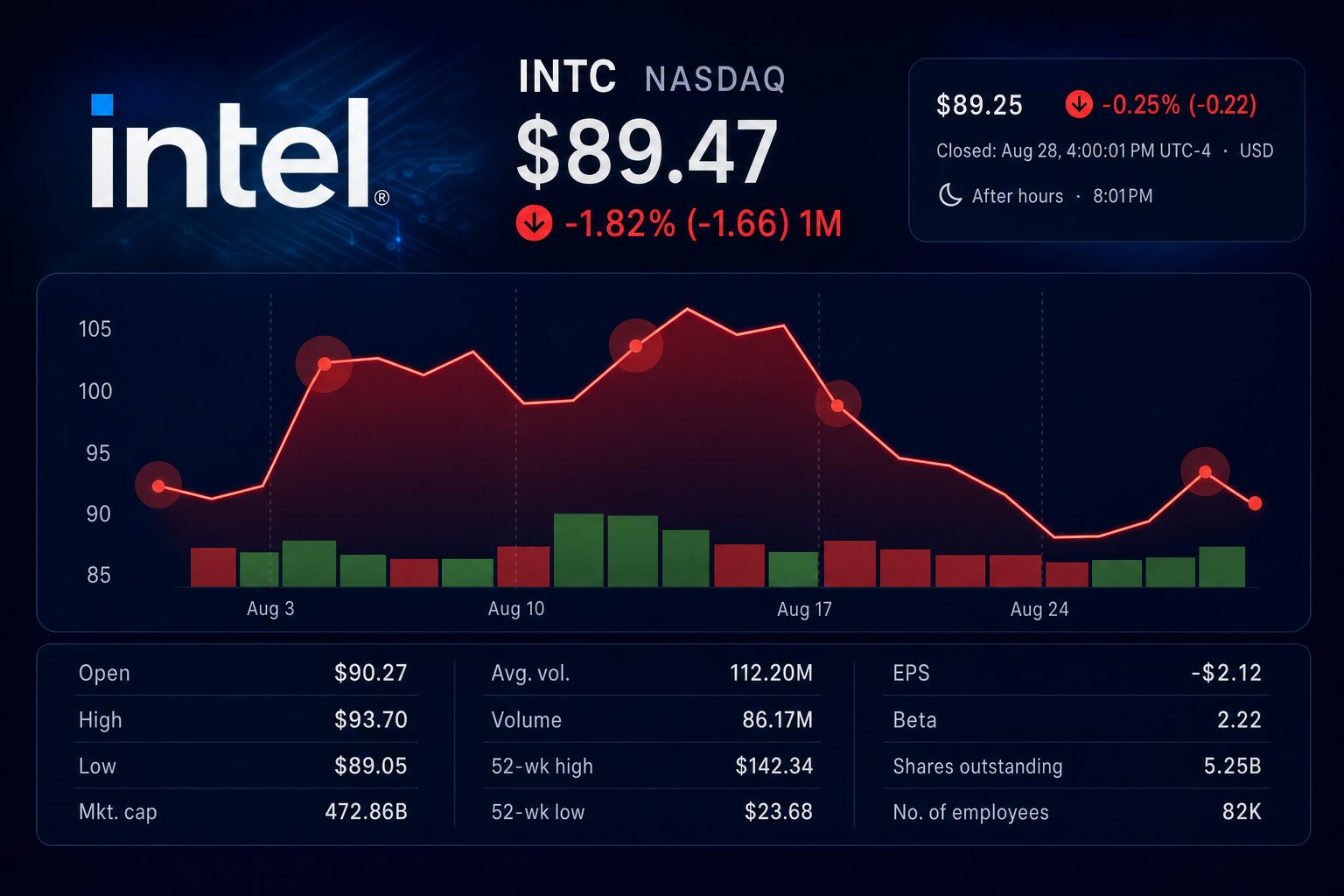
The drop pushed Intel shares 5.8% under its latest $95 offering price. The difference is significant as investors recently contributed nearly $20 billion to support expansion and provide working capital.
There was no similar company-specific alert on Friday. Instead, tech stocks were under pressure after Federal Reserve Chair Kevin Warsh indicated that efforts to curb inflation were ongoing. The Nasdaq Composite declined by 0.52% market report.
| Investor checkpoint | Latest figure | What it says |
|---|---|---|
| Friday close | $89.47, down 2.85% | Roughly $13.9 billion in market value lost |
| Trading volume | 86.1 million | 74% of three-month average |
| Equity offering | $95 a share; $19.7 billion net | Approximately 4.0% dilution before the option |
| Q2 revenue | $16.1 billion, up 25% | Recovery in demand is evident |
| Consensus target | $107.46 | 20.1% higher than Friday’s close |
Earlier this month, Intel set the price for 210.5 million newly issued shares. The offering was upsized from $15 billion to $20 billion, generating approximately $19.7 billion in net proceeds. The underwriters have an option to purchase an additional 31.6 million shares Intel offering release.
The base issuance represents approximately 4.0% of Intel’s present implied share count. The capital improves the balance sheet, but every additional dollar will need to generate a sufficient return.
Management now has an improved foundation thanks to operating results. Revenue for the second quarter totaled $16.1 billion, representing a 25% increase from the same period a year ago. Revenue from Data Center and AI surged 59% to $6.3 billion.
Sales from client computing climbed 13% to reach $8.9 billion. Foundry revenue grew 31% to $5.8 billion, factoring in internal transactions. Intel Products posted $15.1 billion in revenue, an increase of 28% Intel Q2 results.
Margins improved as well. GAAP gross margin increased to 40.4% compared with 27.5%. GAAP operating margin turned positive at 11.1%, up from negative 24.7%.
Cash flow strengthened ahead of the capital increase, as operations generated $7.0 billion in the quarter. However, the GAAP net loss totaled $11.0 billion, highlighting a sharp disconnect between reported profit and the underlying rebound.
Chief Financial Officer Dave Zinsner attributed the outperformance to strong demand and better execution. He additionally pointed to increased spending on equipment, clean rooms and substrates.
Wall Street’s acceptance of the rerating has been limited. Of 50 analysts monitored, the consensus is still Hold. The average target price stands at $107.46, suggesting a potential gain of 20.1%, with forecasts ranging from $50 to $200 analyst consensus.
Capital efficiency remains the main test for investors. Ongoing demand for AI may justify increased investment in factories, but it does not ensure favourable foundry utilization or solid returns.
Risks: Sluggish AI expansion, softer PC demand, or process setbacks may weigh on utilization. Rising rates would further diminish the value of Intel’s capital-intensive turnaround.
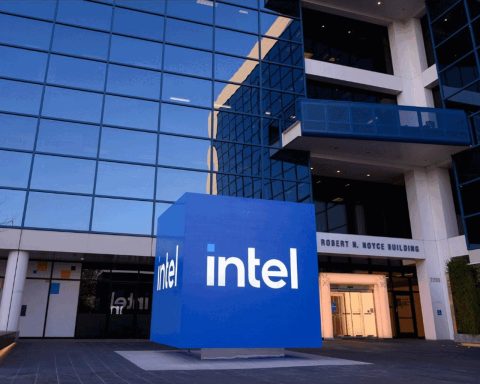
Image: Intel Corporation, obtained from the Intel Newsroom Press Hub. Edited for size and framing to suit editorial use.
Related articles: NASDAQ:INTC