CORNING, N.Y., May 10, 2026, 10:04 EDT
- Nvidia put down a multi-billion-dollar prepayment with Corning, adding to its previously announced equity-linked investment.
- Corning is gearing up to boost its U.S. optical-connectivity output tenfold, reacting to AI-driven data centers putting heavy pressure on fiber supplies.
- Corning is now moving further into Nvidia’s AI infrastructure lineup, joining optics suppliers like Coherent and Lumentum.
Nvidia has handed Corning several billion dollars upfront to support new U.S. plant construction, tacking on a hefty cash outlay to the equity-linked arrangement revealed earlier this week, both CEOs told CNBC in comments picked up by Reuters. “Multi-billion-dollar prepayment,” is how Nvidia chief Jensen Huang described it. Corning’s Wendell Weeks clarified the cash is distinct from Nvidia’s option to take “about a $3 billion position” in Corning stock. Reuters
The AI surge is hitting a hard limit: data transfer speed across thousands of graphics processors packed into sprawling data centers. Optical connections — fiber and related equipment that move information via light — are starting to act as a chokepoint, not just another routine cable order in the background.
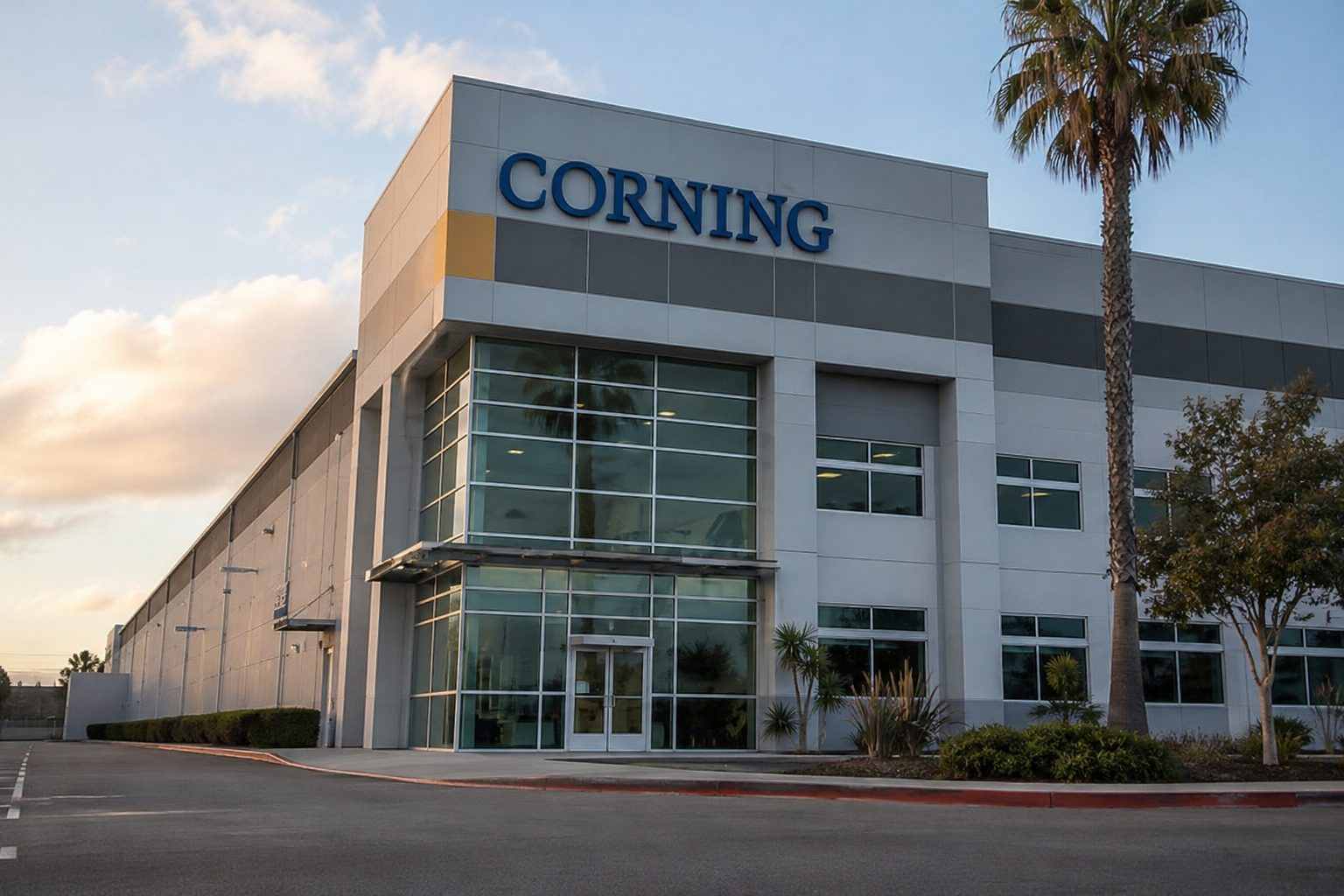
Corning and Nvidia unveiled a multiyear deal on May 6 aimed at ramping up the supply of U.S.-made optical gear for AI infrastructure. Corning plans to boost its U.S. optical-connectivity output tenfold, lift domestic fiber manufacturing by over 50%, and add three plants in North Carolina and Texas. That’s expected to create upwards of 3,000 jobs. Nvidia’s Huang called AI “a once-in-a-generation opportunity” for U.S. manufacturing. Corning CEO Weeks described it simply as “a manufacturing story.” Corning
The initial disclosed investment came in at $500 million, according to a securities filing. Nvidia picked up a warrant for as many as 15 million Corning shares at $180 apiece, plus a pre-funded warrant for up to 3 million shares at just $0.0001 each. Warrants let holders purchase shares at a fixed price.
Corning lifted its long-term sales outlook during an investor meeting at the New York Stock Exchange, projecting an annualized sales run rate of $20 billion by the close of 2026. The company’s internal roadmap points to $30 billion by the end of 2028, and $40 billion by 2030. Annualized run rate refers to the revenue pace during a given period, though it doesn’t guarantee full-year totals. Chief Financial Officer Ed Schlesinger said Corning plans to “appropriately share the risk” tied to its investments via long-term deals with customers. Corning
Corning finished Friday at $186.94, climbing 2.4%. Nvidia wrapped up the session at $215.20, up 1.7%. U.S. markets are shut for the weekend.
Competition keeps heating up. Back in March, Nvidia announced $2 billion investments in both Lumentum and Coherent, aiming to strengthen its position in photonics—tech that shifts data using light instead of electricity, speeding things up and saving power. Add Corning to that list, and it’s clear Nvidia is pushing beyond chips, grabbing pieces of the supply chain critical for scaling its systems.
Corning’s first quarter numbers laid out a split picture across its divisions. Core sales climbed 18% to $4.35 billion, with core earnings per share up 30% to $0.70. Sales at the Optical Communications segment surged 36% to $1.85 billion. Over in Glass Innovations—which covers display and specialty materials—growth was much more modest, inching up just 1% to $1.42 billion.
Still, there’s a hitch: AI optics might not buoy the entire company quickly enough. On April 28, Reuters noted Corning’s second-quarter revenue guidance missed Wall Street’s target, with ongoing softness in areas like consumer electronics glass dragging down the broader outlook. Execution remains a hurdle—new factories need construction, production has to ramp up, and advance payments from customers are only useful once they translate into shipments and real cash flow.
Nvidia’s prepayment hands Corning more than just a supplier contract for now. The deal brings fresh capital to the glassmaker, a clearer view of future demand, and a firmer foothold in the AI supply chain — but investors still have to weigh how much of that promise is baked into GLW stock.